

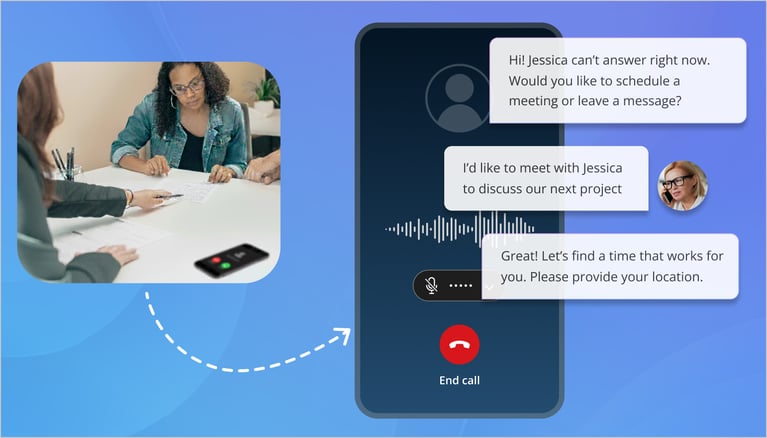
Walk into any scaling business on a Monday morning, and you will see the same bottleneck. Phones are ringing off the hook, unread website chats are piling up, and an overwhelmed administrative staff is struggling to keep up.
The traditional front desk is at a breaking point. When call volume outpaces human capacity, leads go to voicemail. In the end, those missed calls go straight to your competitors.
In fact, Salesforce confirms that 77% of customers expect to reach someone immediately when they call. When you fail to provide that instant connection, your missed leads disappear straight to your competitors.
The days of relying on a rigid keypad phone tree are over. To capture total inbound intent without burning out your team, modern organizations are adopting a fully automated AI front office. Instead of simply dropping callers into a hold queue, this omnichannel ecosystem autonomously manages the frontline of your business by qualifying leads, answering complex questions, and booking meetings instantly.
What Is an AI Front Office?
An AI front office is a fully automated, omnichannel ecosystem that manages a company's frontline. By combining an AI voice agent and an AI website assistant, it handles inbound phone calls, web chats, lead qualification, and appointment scheduling simultaneously. This completely replaces outdated keypad menus with fluid, natural conversations.
For decades, businesses relied on basic Interactive Voice Response systems. You know the drill: a customer calls and hears, "Press 1 for Sales, Press 2 for Support." These rigid phone trees are frustrating and completely incapable of having a real conversation. They do not resolve problems; they simply delay the inevitable transfer to a live person.
An AI front office operates entirely differently. It is not just a digital switchboard. It is a unified virtual layer that actively manages both voice and digital channels to resolve requests from start to finish.
This modern ecosystem is typically built on two core pillars:
- The AI Voice Agent: This technology answers the phone lines using natural language. It can understand interruptions, process complex questions, and handle tasks like booking or canceling an appointment directly over the phone.
- The AI Website Assistant: This acts as the digital counterpart, greeting visitors on your website. It guides users through intake forms, answers live chats, and secures bookings while they browse your pages.
Together, these two elements create a seamless support layer that never sleeps. Whether a customer calls at noon or messages you at midnight, the AI front office provides the same high-quality, instant resolution.
Why the Modern Front Desk Is at a Breaking Point
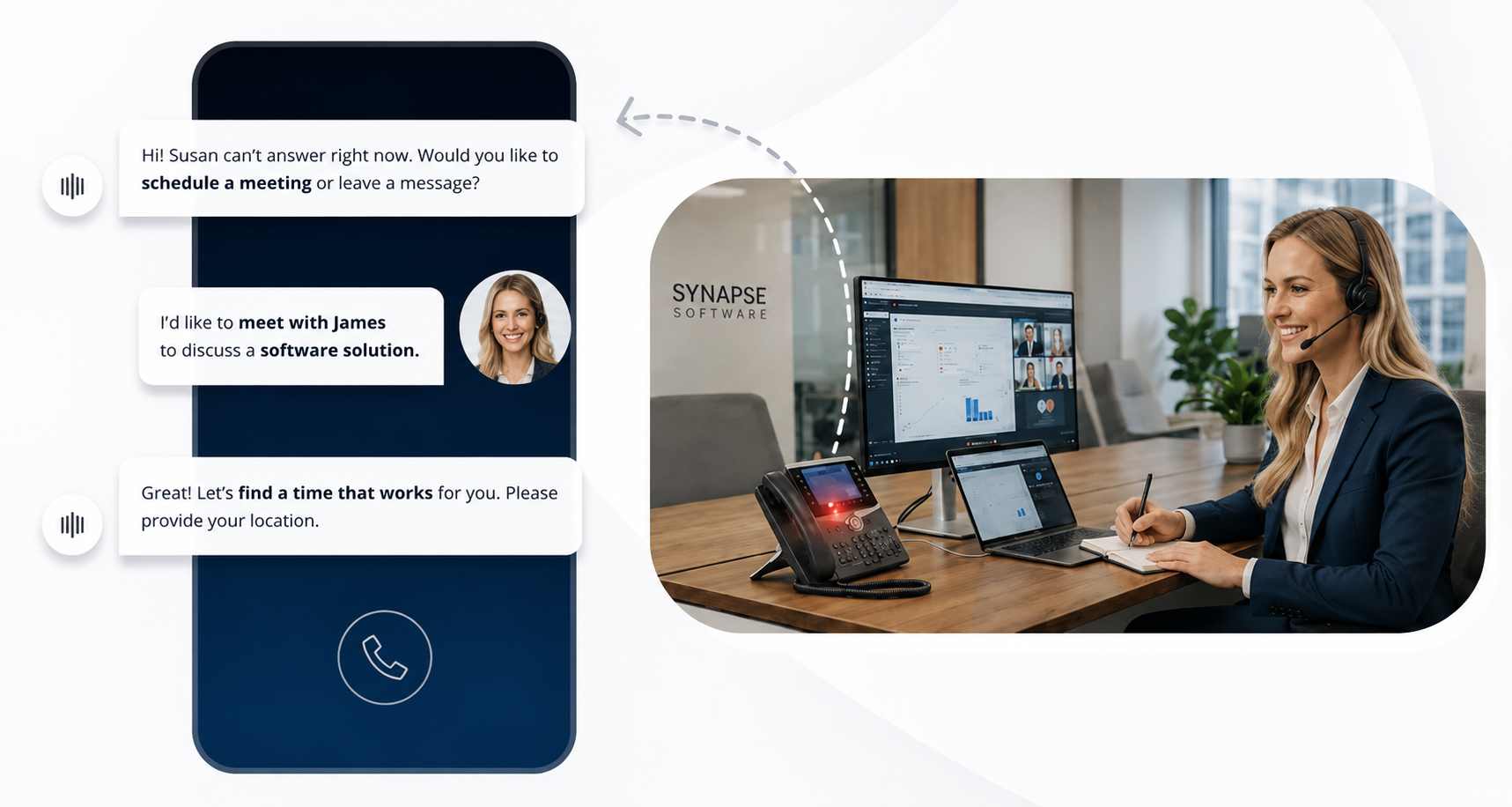
Businesses bleed revenue on the frontline because traditional front desks cannot keep up with modern consumer demands. High call volumes lead directly to missed leads, while repetitive administrative tasks cause severe staff burnout. Today, buyers expect instant omnichannel support, making an AI front office a critical requirement for survival.
Core Capabilities: What an AI Front Office Actually Does
A complete virtual ecosystem does not just wait for the phone to ring. It takes proactive control of your inbound pipeline across six clear focus areas.
1. Instant, 24/7 Answering via an AI Receptionist
An automated AI receptionist ensures that your business never misses another operational window. Unlike a human staff member who can only answer one line at a time, this system removes the busy-signal bottleneck entirely, capturing high-intent prospects during nights, weekends, and holidays when your physical office is closed.
can handle many simultaneous conversations at once. Every single call or chat is greeted on the very first ring with zero hold times. This removes the busy-signal bottleneck entirely, capturing high-intent prospects during nights, weekends, and holidays when your physical office is closed.
2. Omnichannel Support: AI Voice Agent + AI Website Assistant
A modern front office unifies your communication channels into a single smart system. An AI voice agent manages incoming telephone traffic using fluid, natural spoken language. At the exact same time, an AI website assistant handles digital visitors through live text chat on your landing pages. Because these two elements share the same central data matrix, your brand delivers a completely unified experience whether a customer prefers speaking out loud or typing on a screen.
Also Read: What Is an AI Voice Agent? The Complete Business Guide
3. Dynamic AI Front Office Customer Service and Complex FAQ Resolution
The best automated systems do much more than repeat basic operating hours. They deliver advanced AI customer service by extracting information from your internal policy documents, spreadsheets, and training files. When a customer asks a complex, multi-step question about refund rules, tier parameters, or service criteria, the system applies strict logic guardrails to provide an instantaneous, highly accurate answer without needing human intervention.
4. Automated AI Lead Qualification and Intake
A major drain on corporate productivity is spending time with unverified leads. An intelligent frontline solves this issue by running automated AI lead qualification conversational sequences. The system gently interviews prospects to collect critical data points such as budget restrictions, project timelines, and operational scope. If a lead matches your pre-defined business criteria, they move forward in the funnel. If they do not qualify, the system can gracefully route them to alternative resources.
5. Intelligent AI Appointment Scheduling and Meeting Automation
Securing a commitment while interest is high is essential for conversion optimization. A modern digital front desk features deep calendar integration to drive seamless AI appointment scheduling. The platform cross-references live availability to execute complete AI meeting automation directly inside the conversation. Callers and web visitors can book initial assessments, reschedule existing consultations, or cancel upcoming appointments autonomously without a human supervisor touching a mouse.
6. Automated Post Call Actions and Follow Ups
The automation process does not stop when the conversation ends. The system instantly initiates a sequence of back-office actions based on what occurred during the interaction. It can trigger an immediate SMS confirmation containing useful resource links, dispatch a structured calendar invite via email, or log a complete transcribed summary of the exchange directly into your central database. Your human team can review these insights instantly to prepare for the upcoming meeting.
Coexistence Not Replacement: How AI Front Offices Work With Human Teams
An AI front office is designed to support human staff rather than replace them. Through intelligent triage, the system scans conversations for urgency or high-value requests and executes a warm transfer to a live representative. Paired with instant database syncing, your team receives full conversation context before they even say hello.
Automation tools do not exist to replace human employees. Instead, an automated frontline supports your team by completely removing the burden of repetitive administrative work.
When software handles the routine scheduling and basic policy questions, your human staff is finally free to focus on complex client relationships that require genuine empathy and critical thinking.
Here is exactly how an automated system operates in perfect harmony with your human staff.
- Intelligent Triage: The platform constantly monitors every interaction for specific urgency markers. If a caller uses distressed language, reports a critical emergency, or requests a massive enterprise contract, the system immediately recognizes that human intervention is required.
- Warm Contextual Routing: Once an escalation trigger is hit, the system does not just drop the caller into a blank hold queue. It executes a live call transfer directly to the most appropriate department or available representative.
- Instant Database Syncing: Before your human teammate even answers the line, the software pushes a complete transcribed summary of the initial conversation directly to your CRM screen. The employee picks up the phone already knowing the customer name and exactly what they need, creating a completely frictionless transition.
How Different Sectors Deploy an AI Front Office
An AI front office adapts to various industries by mapping custom workflows to sector specific user intents. While healthcare practices use it for patient intake and insurance FAQs, professional services and financial firms deploy it to automate high intent lead qualification, schedule initial consultations, and reduce administrative overhead.
The best automated systems adapt to the specific conversational nuances of your particular field. Here is how different industries use this technology to transform their daily operations.
Professional Services and Financial Advisors
Wealth management firms and independent advisors use an AI answering service to act as a highly secure gatekeeper. The system screens inbound prospects to ensure they meet minimum asset thresholds before taking up an advisor's time. It also executes automated meeting scheduling for quarterly portfolio reviews and instantly logs every interaction into the firm CRM to maintain strict regulatory compliance.
Healthcare and Medical Practices
Medical clinics face immense pressure from high-volume patient phone calls. Instead of forcing sick patients to wait on hold, a virtual receptionist answers routine scheduling questions instantly. It automates pre-appointment intake forms, verifies basic insurance network FAQs, and uses intelligent triage to flag urgent medical requests for immediate human review. This proactive approach significantly reduces staff burnout while elevating the overall patient experience.
Legal and Consulting Firms
Attorneys cannot afford to waste billable hours on unqualified leads. An automated frontline acts as a primary intake specialist. It can explain basic retainer structures, field initial consultation pricing inquiries, and qualify specific case types. If a prospect needs urgent representation for a legal claim, the system seamlessly books that high intent client directly onto an available attorney calendar.
Home and Field Services
Plumbers, electricians, and HVAC technicians rely heavily on after-hours emergency calls. A 24/7 AI phone assistant ensures no late-night repair lead goes to a competitor. The system captures the caller's details, qualifies the scope of work to ensure it matches the company's services, and routes urgent dispatch calls straight to the technician on duty.
Key Features to Look For When Evaluating AI Front Office Software
When auditing different automation platforms, you need to look beyond basic call routing. The best systems offer a comprehensive suite of tools designed to manage your entire inbound pipeline seamlessly.
Here is an actionable checklist of must-have capabilities to look for when choosing your virtual frontline.
- Multichannel and Multilingual by Design: The system must support diverse local and global markets. Look for automatic language detection so your AI voice agent can instantly switch from English to Spanish or French without skipping a beat.
- No Code Conversation Builders: Your non-technical managers need the ability to update workflows, change pricing rules, or modify AI lead qualification parameters instantly without writing a single line of code.
- Real-Time Analytics: A robust platform provides detailed performance dashboards. Tracking peak call hours, common query patterns, and overall resolution rates helps you continually refine your AI customer service strategy.
- Deep Tech Stack Integrations: The software must connect natively to your existing database and calendar architectures. This deep integration ensures your AI appointment scheduling workflows function flawlessly and no critical customer data gets lost in translation.
Also read: Best AI Phone Agents for Small Businesses: A 2026 Buyer's Guide
Conclusion and High Value Industry Trends
Moving from traditional call forwarding to a fully operational AI front office removes the bulk of administrative overhead, captures far more inbound intent than a human-only front desk, and protects internal human teams from burnout. When you connect your business intelligence to an automated frontline, you transform how your business interacts with the world.
As we look toward the future of customer communication, several high-value trends are reshaping the B2B and B2C landscape:
- Agentic Workflows: Frontline automation is moving beyond simply answering questions. The next wave of tools will actively execute back-office tasks on behalf of the customer, such as changing reservations or securely processing client invoices completely hands-free.
- Hyper-Personalized Context: By instantly cross-referencing an incoming caller ID with your historical CRM database, your virtual assistants will be able to tailor their tone, reference past purchase histories, and anticipate specific client needs before the user even states their problem.
- Voice Biometrics: Security protocols are becoming increasingly seamless. Advanced systems will securely verify a customer's identity simply by analyzing their unique vocal blueprint during a live conversation, completely eliminating the need for frustrating PIN codes and security questions.
Transform Your Frontline with OnceHub
Stop losing high-intent leads to busy signals and voicemail boxes. Discover how the OnceHub’s AI phone receptionist serves as your ultimate front office multiplier by answering every call instantly, qualifying prospects, and booking meetings directly onto your calendar 24/7.
Explore the OnceHub’s AI Phone Receptionist Today
Frequently Asked Questions
What is the difference between a traditional IVR and an AI front office?
A traditional IVR is a rigid, push-button routing tool that forces callers through a preset menu. An AI front office uses natural language processing to understand spoken sentences, answer complex questions directly, and execute tasks without human help.
Can an AI front office qualify leads before booking a meeting?
Yes. The software uses automated conversational flows to interview incoming prospects. It collects crucial details like budget, scope, and timeline to ensure a lead is fully qualified before booking them into your calendar.
How does an AI voice agent handle interruptions during a call?
Advanced voice engines feature real-time interruption detection. The moment a customer speaks over the assistant, the AI immediately stops talking, listens to the new input, and adjusts its response dynamically just like a human would.
Does deploying an AI receptionist mean replacing my human staff?
No. The system handles repetitive tier-one support queries and routine appointment scheduling. This frees up your human staff from administrative bottlenecks so they can focus on high-value client relationships and escalations.
What is a virtual receptionist?
A virtual receptionist is software that answers calls and messages on a business's behalf, using AI to greet callers, answer routine questions, and schedule appointments without a human on the line. Unlike a traditional answering service, it works around the clock and can hold a real conversation instead of just taking a message.