

What Is an AI Phone Assistant and How Can It Transform Your Business?
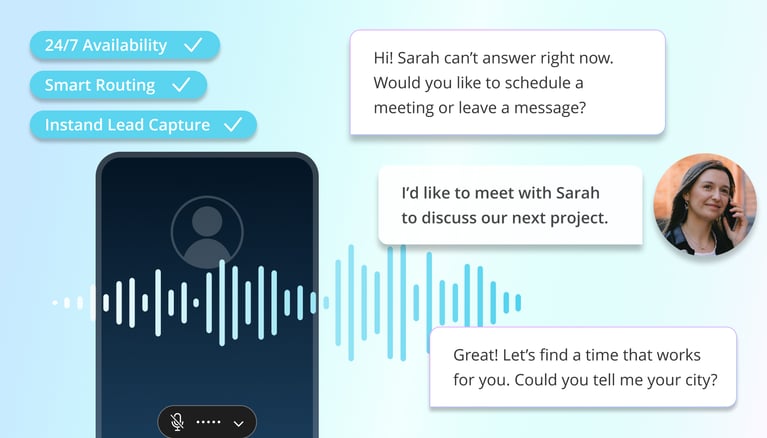
An AI phone assistant is a voice-based system that answers inbound calls automatically, conducts a natural two-way conversation with the caller, and completes a defined action — booking an appointment, qualifying a lead, answering a common question, or routing to a human — without requiring a live person to be present.
That is the definition. What it means in practice depends on the specific problem a business is trying to solve — and on whether this technology is the right fit for that problem at all.
This article explains what AI phone assistants are, how the technology works at each layer, what they can and cannot handle, and which business types benefit most. If you are ready to compare specific tools, see our Best AI Phone Assistants for Business in 2026 guide.
TL;DR
- An AI phone assistant is a voice-based system that answers inbound calls automatically and completes a defined action — booking, qualifying, answering, or routing — without a live person present
- It is not an IVR phone tree, not a consumer voice assistant like Siri, and not a virtual receptionist service
- The technology combines speech recognition, natural language processing, large language models, and calendar or CRM integration
- This article is a zero-awareness explainer — covering what the technology is, how it works, what it handles well and poorly, and which business types benefit most
What Is an AI Phone Assistant?
An AI phone assistant is an intelligent voice system that automates inbound calls through natural two-way conversation without human intervention. Unlike legacy robotic routing systems, modern AI assistants understand natural language and respond contextually — performing complex tasks like checking live calendar availability, asking qualification questions, and updating customer records in real time.
The distinction from what came before matters. Earlier phone automation systems — interactive voice response trees, auto-attendants, basic answering services — required callers to navigate structured menus, press specific numbers, or wait for scripted prompts. They processed keypad inputs, not language. A caller who deviated from the expected input path got stuck, transferred incorrectly, or abandoned the call entirely.
Modern AI phone assistants work differently. They listen to what the caller says, interpret what they mean, and respond in kind — asking follow-up questions, adapting the conversation based on the answers, and completing the relevant action before the caller hangs up. The experience is closer to speaking with a well-briefed team member than navigating a phone tree.
What an AI phone assistant is NOT
Understanding what this technology is not is as important as understanding what it is — because the term is used inconsistently across marketing materials and product descriptions, and confusion between categories leads to the wrong purchase decisions.
It is not an IVR system or auto-attendant
Interactive voice response systems — the "press 1 for sales, press 2 for support" systems most callers have encountered — route calls mechanically through keypad inputs. They do not understand natural language. They do not conduct two-way conversations. They cannot ask a follow-up question based on what the caller said, qualify a prospect, or confirm a booking during the call. An AI phone assistant replaces this model with genuine conversational interaction — the caller speaks naturally and the system understands and responds. This is not a minor improvement. It is a fundamentally different operational layer.
It is not a consumer voice assistant
Siri, Alexa, and Google Assistant are designed for personal device control and information retrieval on individual devices. They answer questions, play music, set reminders, and control smart home devices. They are built around the needs of a single user interacting with their own device. A business AI phone assistant is built for an entirely different outcome — handling inbound calls from prospects and clients who have never used the system before, qualifying those callers against business-defined criteria, and moving them toward a confirmed next step. The architecture, training, integration layer, and use case are all different.
It is not a virtual receptionist service
Virtual receptionist services use humans — sometimes supported by AI for triage or transcription — to take messages and pass them to the business. They handle the call in the moment but do not typically complete the booking step on the caller's behalf. The caller leaves with a promise to be called back rather than a confirmed appointment. An AI phone assistant completes the booking during the original call — the caller leaves with a confirmed time in their calendar. For businesses where the gap between inbound interest and confirmed booking is where revenue is most at risk, this distinction is operationally significant.
What it is, in one sentence: A business AI phone assistant answers like a person, qualifies like a salesperson, and books like a scheduler — automatically, at any hour, without a human needing to be present.
How Does an AI Phone Assistant Work?
An AI phone assistant works by combining four technology layers that operate simultaneously during every call. Understanding each layer helps explain both what the technology can do and where its boundaries lie.
Speech Recognition — Converting Voice to Structured Data
When a caller speaks, the system converts audio into text in real time using automatic speech recognition. This layer handles variation in accents, background noise, incomplete sentences, and natural speech patterns — not just clear, deliberate diction delivered in a quiet room.
Modern speech recognition has improved dramatically. Earlier systems required callers to speak slowly and clearly into specific keywords. Current systems process natural conversational speech at a quality level that makes the layer largely invisible to the caller — they speak normally and the system understands them.
Natural Language Understanding — Determining Intent
The system analyses the converted text to determine what the caller actually means — not just what they said. A caller saying "I want to book a meeting" and a caller saying "can I schedule something with you?" and a caller saying "I was hoping to come in and see someone" are all expressing the same intent. Natural language understanding recognises all three without requiring exact keyword matches.
This layer is also what allows the AI to understand context across a multi-turn conversation — remembering what was said earlier in the call and adapting responses accordingly, rather than treating each statement in isolation.
Conversational AI — Generating Relevant Responses
The system generates contextually appropriate responses in real time using a large language model — the same category of technology behind tools like ChatGPT and Claude. This is what makes the interaction feel like a conversation rather than a scripted exchange. Responses adapt to what the caller says rather than following a fixed sequence regardless of the caller's answers.
This layer is also responsible for the tone and voice of the interaction — which is configurable by the business. A financial advisory practice and a home services company can have the same underlying AI technology producing entirely different interaction styles that reflect their specific brand and client relationships.
Workflow Integration — Taking Action
The previous three layers handle the conversation. This layer handles the outcome. The system connects to live business data to complete the action the caller needs — checking a booking calendar to find open time slots, connecting to a CRM to log lead data, applying routing logic to direct the call to the right team member, or triggering an automated follow-up sequence.
This integration layer is what transforms a voice conversation into a business outcome. Without it, the AI can hold a conversation but cannot confirm a booking, update a record, or route a call. With it, the entire inbound workflow — from first ring to confirmed appointment — happens automatically within the original call.
How Does an AI Phone Assistant Recover When It Does Not Understand a Response?
This is one of the most important questions to answer before deploying any AI phone assistant on live inbound calls — and one that most platform marketing materials address inadequately.
A well-designed AI phone assistant handles the edge of its capability gracefully. When it encounters a response it was not configured to handle — an unexpected question, an unusual phrasing, a topic outside its scope — it has two options: attempt an improvised answer, or acknowledge the gap and route to a human. The former creates risk. The latter creates trust.
Good platforms are designed to choose the latter. When the system cannot confidently respond, it says something like: "That is a great question for [advisor name] directly — let me check their availability and connect you now." The transition to a human is handled with the context of the conversation already captured — the person picking up does not ask the caller to repeat themselves.
This boundary behaviour is one of the most important things to test during evaluation. Call your own number and ask something the AI was not configured to handle. A system that improvises unreliably at that moment is more damaging than one that routes gracefully — particularly in regulated industries where an improvised answer about investment performance or medical treatment is not just unhelpful but potentially harmful.
What Are the Business Benefits of an AI Phone Assistant?
"Service and support leaders are looking to AI for a wide variety of goals — efficiency, better CX, lead generation, and delivering other value back to the business. The most impactful use cases are those that enable assisted agents, empower customers through self-service, automate operational support, and introduce agentic AI across their stack." — Keith McIntosh, Sr. Principal Research, Gartner Customer Service & Support Practice
The primary business benefits of an AI phone assistant include reduced operating costs, 24/7 availability, and an improved caller experience. Each of these is more specific in practice than the headline suggests.
Reduced Operating Costs
Voice AI handles calls for a fraction of the cost of hiring a full-time receptionist. Gartner predicted conversational AI would reduce contact centre agent labour costs by $80 billion globally by the end of 2026. According to Aircall's 2026 AI voice agent pricing analysis, a traditional answering service costs around $800 per month for basic after-hours coverage — while an AI voice agent providing 24/7 intelligent call handling runs approximately $400 per month. The same analysis found that businesses moving from a three-person in-house support team to a hybrid AI and human model save approximately $40,000 annually while improving response times and scalability.
The cost reduction is not just in labour. It is also in the administrative overhead that surrounds missed calls — callback loops, voicemail management, manual CRM data entry, and the scheduling coordination that compounds across every week where inbound calls arrive during unavailable hours.
24/7 Availability and After-Hours Coverage
An AI phone assistant answers at any hour — during client sessions, after business hours, at weekends, during campaign spikes — with the same quality of first response regardless of when the call arrives. For businesses that only answer during standard hours, a significant proportion of inbound calls arrive when no one is available to respond.
According to Ruby's 2025 after-hours call analysis, for businesses that only answer during 9-5 hours, a third of potential callers reach voicemail or no answer. These are not low-intent casual enquiries. They are people who searched for a business, found a number, and decided to call — the motivation was present. The coverage was not. An AI phone assistant closes that gap without requiring additional staffing, extended hours, or weekend coverage.
Improved Caller Experience
The most immediate impact of an AI phone assistant on the caller experience is the elimination of hold times and transfer loops. Callers who reach a well-configured AI phone assistant get an immediate, coherent first response — not a queue, not a recording, not a menu. They are asked relevant questions, offered available time slots, and leave the call with a confirmed next step.
According to Invoca's 2025 benchmark analysis of over 60 million phone conversations, more than one-third of phone leads converted during the call itself — making the quality of the first response the single most commercially important moment in the inbound journey. An AI phone assistant ensures that moment is handled consistently, at any hour, without variation in quality based on who happened to answer or how busy they were when the call arrived.
What Can an AI Phone Assistant Actually Handle?
Understanding what this technology handles well, partially, and not at all is the most useful evaluation framework available — and the one most commonly absent from platform marketing materials.
Handles well
Immediate first-ring answering at any hour
No queue, no hold time, no degradation in quality between the first call of the day and the last. The response is consistent regardless of call volume, time of day, or what the team is doing when the call arrives.
Structured qualification conversations
Three to five pre-configured questions delivered conversationally before offering a calendar slot or routing to a human. The AI applies the same qualification criteria to every caller consistently — something human receptionists, whose energy and thoroughness naturally vary, cannot guarantee.
Real-time calendar booking
Checking live availability and confirming a booking during the original call — before the caller hangs up. The caller leaves with a confirmed appointment rather than a promise. For businesses where the gap between inbound interest and confirmed booking is where prospects are lost, this is the highest-value single capability.
FAQ responses from configured information
Answering common questions the business has provided answers to — services offered, pricing range, service area, onboarding process, typical timeline. Accurate and consistent across every call.
CRM data capture without manual entry
Qualification responses, caller details, and booking outcomes captured and pushed to connected CRM systems automatically — so the host arrives at every meeting with context already established.
Simultaneous call handling at unlimited volume
All inbound calls handled concurrently without limit — no queue, no call that goes unanswered because another line is busy. Particularly relevant during campaign periods, referral surges, or seasonal peaks.
Handles partially
Unexpected questions at the edge of the configured scope
The AI can acknowledge the gap and route to a human — but it cannot reliably improvise an accurate answer to a question it was not configured to handle. This is a boundary, not a failure mode, when the system is designed to route gracefully rather than attempt unreliable improvisation.
Emotionally sensitive calls
A well-configured AI phone assistant can recognise urgency signals — a distressed caller, an emergency situation — and route immediately to a human. What it cannot provide is the relationship continuity, genuine empathy, or human judgment that sensitive calls require. The AI handles the first 30 seconds of recognition and routing. The human handles everything that matters after that.
Complex multi-topic conversations
Structured intake flows — qualification questions, booking confirmation, FAQ responses — are handled reliably. Extended free-form conversations covering multiple topics, returning to earlier points, or requiring contextual judgment across a long interaction are better handled by a human.
Calls requiring professional judgment in regulated industries
In financial advisory, healthcare, and legal contexts, calls involving investment recommendations, clinical assessment, or legal advice require the advisor's or practitioner's professional judgment. An AI phone assistant handles the intake and booking layer — not the advisory layer. The distinction must be configured explicitly.
Does not handle
Calls requiring the specific expertise or relationship of the professional
The advisory conversation, the coaching session, the legal consultation — these require the human. An AI phone assistant handles the structural first-contact problem, not the professional relationship itself.
Callers who explicitly want a human and will not engage with AI
Some callers will say directly that they want to speak to a person. A well-configured system routes immediately rather than attempting to continue an unwanted AI interaction.
High-stakes crisis situations requiring immediate human judgment
Any situation where the stakes of an incorrect response are high — a medical emergency, a legal crisis, a compliance-sensitive enquiry in a regulated industry — should be routed immediately to a human. The AI's job in these situations is recognition and routing, not resolution.
Who Is an AI Phone Assistant Best Suited For?
Not every business benefits equally from an AI phone assistant. The technology creates the most operational value when three specific conditions are present simultaneously — and understanding these conditions prevents deploying an expensive tool to solve a problem it is not the right fit for.
Condition 1: Inbound calls are the primary acquisition or client communication channel Businesses where phone calls are the main way prospects and clients make contact have the most to gain. For financial advisors, coaches, local service businesses, and professional services firms, the phone call is often the first and highest-stakes touchpoint a prospect has with the practice. Businesses where most client interaction happens through email, web forms, or in-person channels have a smaller problem to solve with this technology.
Condition 2: The owner or team is genuinely unavailable for portions of the working day The structural gap an AI phone assistant closes is the availability gap — calls that arrive during sessions, on job sites, in meetings, or after hours. Solo practitioners, small teams, and businesses where the person who delivers the service is also the person who would answer the phone face this gap most acutely. Businesses with dedicated reception staff available during all operating hours have a smaller coverage problem — though volume spike coverage and after-hours handling may still create value.
Condition 3: The primary goal of most inbound calls is a confirmed booking For businesses where every call is primarily a scheduling event — discovery calls, consultations, expert service providers — an AI phone assistant that books natively during the call delivers direct, measurable operational value. For businesses where calls primarily involve ongoing service delivery, complex troubleshooting, or relationship management, the value is lower and the human element is more central.
"Agentic AI has emerged as a game-changer for customer service, paving the way for autonomous and low-effort customer experiences. Unlike traditional GenAI tools that simply assist users with information, agentic AI will proactively resolve service requests on behalf of customers, marking a new era in customer engagement." — Daniel O'Sullivan, Senior Director Analyst, Gartner Customer Service & Support Practice
Business types where AI phone assistants have the highest impact:
Independent financial advisors and RIAs
Structurally unavailable during client sessions — the exact hours when high-intent inbound calls arrive. Warm referrals from significant existing clients represent the highest-value prospect calls a practice receives. A missed first call from a warm referral is often a permanently lost prospect — not a delayed one. Every minute spent on administrative scheduling is time not spent on client relationships or business development. For a detailed breakdown of the specific RIA workflow, see How Financial Advisors Use AI Phone Assistants to Automate Appointments.
Coaches and consultants
Unavailable during client sessions — the exact hours when prospects call on specific moments of motivation. The motivation window for a prospect calling after a webinar or referral is narrow and fades within hours, not days. A callback 90 minutes later arrives at a different emotional moment than the original call. The AI captures that intent at its highest point rather than losing it to a callback loop.
Local service businesses and trades
On job sites during working hours — physically unable to answer safely while under a sink, on a roof, or driving between sites. The inbound call from a homeowner with a burst pipe is a time-critical revenue opportunity. The first business to answer wins that job. A ServiceDirect survey found that 35% of US homeowners say answering the initial phone call is the single most important hiring factor — above price, reviews, and years of experience.
Healthcare and wellness practices
Front desk capacity is consistently stretched during peak hours by in-person patients — the ringing phone competes directly with the person standing at the desk. Routine appointment booking and common FAQ responses can be handled automatically, preserving front desk attention for the interactions that require human engagement.
High-ticket sales teams
Campaign-driven inbound spikes frequently exceed human coverage capacity — multiple calls arrive simultaneously while SDRs are already on qualification calls. The AI handles all concurrent inbound without limit, qualifies each caller, and routes qualified prospects to the right closer's calendar. No dropped calls during campaign peaks. No callbacks required for callers the AI already qualified and booked.
Business types where AI phone assistants add less value or require more careful configuration:
Businesses where most inbound calls involve complex unpredictable conversations
If the typical inbound call for your business is a detailed technical support discussion, a complex service delivery question, or an ongoing relationship management conversation — the structured intake model of an AI phone assistant adds limited value. The human element is too central to the call for the AI to handle it well.
Businesses where the first impression is heavily relationship-dependent
Some practices are built on a brand identity where the first interaction is always a person. High-end advisory practices, bespoke service businesses, and relationship-intensive professional services firms may choose human reception as a deliberate positioning decision. Smith.ai's hybrid model — AI triage, human interaction — is a practical middle path for these contexts.
Regulated industries requiring documented human oversight of every client interaction
In some regulatory contexts, every client-facing communication requires documented human review. AI can still handle the booking step in these contexts, but the compliance configuration must be reviewed with a qualified compliance officer before deployment.
For scheduling-led expert service businesses where the three conditions above are met — platforms like OnceHub's Phone Agent are built specifically for this use case, with booking confirmation handled within a native scheduling engine rather than through a third-party calendar integration.
Where Does an AI Phone Assistant Fit in Your Existing Workflow?
An AI phone assistant sits at the very beginning of the client workflow — the first point of contact before any other tool is engaged. It is not a replacement for what comes after a meeting is booked. It is the layer that determines whether a meeting gets booked at all.
"Service organizations are entering a period where AI and human expertise must work in tandem. Leaders are not just deploying AI — they are redesigning service models to ensure that technology enhances the customer experience while humans provide context, empathy, and judgment." — Kim Hedlin, Director of Research, Gartner Customer Service & Support Practice
Understanding where this layer sits helps clarify both its value and its limits.
For businesses replacing voicemail with active lead capture
The most basic workflow change an AI phone assistant creates is replacing the passive voicemail inbox with an active conversation. Rather than a caller leaving a message that generates a callback task hours later, the AI answers immediately, qualifies the caller, and confirms a next step — all before the business owner is even aware the call arrived.
The downstream effect is significant. The CRM record is created at the moment of the call rather than manually entered during a callback. The qualification data is captured before the discovery meeting rather than during it. The callback task — the administrative overhead that consumes the most time in a typical missed-call workflow — is eliminated entirely.
See How AI Phone Assistants Replace Voicemail and Phone Tag for a detailed before/after breakdown of exactly how this workflow change plays out for a professional services business over the course of a typical week.
For financial advisors managing missed calls from high-value prospects
For an advisory practice, the AI phone assistant is the layer that sits before the meeting intelligence tools, before the CRM, and before the advisor's involvement. It ensures that the discovery meeting — which Jump, Zocks, or Zeplyn then capture, transcribe, and summarise — actually makes it onto the calendar in the first place.
Without this layer, the meeting intelligence tools are processing a subset of the prospects who should have become meetings but were lost to voicemail and callback delays. With it, the practice captures the inbound demand it generates — not just the fraction that made it through despite the availability gap.
See How Financial Advisors Use AI Phone Assistants to Automate Appointments for the specific RIA workflow, compliance considerations, and tool comparison for this context.
For businesses ready to compare and choose a specific platform
Once the definition is clear, the workflow fit is understood, and the business type is confirmed as a strong match — the next question is which specific platform fits the workflow, the compliance requirements, and the operational constraints of the practice.
See our Best AI Phone Assistants for Business in 2026 guide for a structured comparison of the leading tools — including OnceHub, Synthflow, Bland AI, Lindy, and Smith.ai — evaluated against scheduling capability, qualification depth, CRM integration, and compliance requirements.
Sign up for a free OnceHub account today to deploy OnceHub's AI phone agent and automate your phone scheduling process.
Turn Every Incoming Call Into a Booking Opportunity
Answer calls 24/7, qualify leads automatically, and book appointments instantly with AI-powered phone scheduling.
Frequently Asked Questions
What is the difference between an AI phone assistant and an auto-attendant?
An auto-attendant routes calls mechanically through keypad menus — "press 1 for sales, press 2 for support." It does not understand natural language, cannot adapt to what the caller says, and cannot complete actions like booking appointments or qualifying leads. It routes based on number presses, not on understanding.
An AI phone assistant understands what the caller says in natural speech, responds contextually in a two-way conversation, asks follow-up questions based on the answers, and completes the relevant action — booking, qualifying, routing — before the call ends. The difference is the shift from mechanical routing to genuine conversational interaction. For most businesses, this is not an upgrade to the same tool. It is a replacement of one operational model with a fundamentally different one.
Do AI phone assistants use the same technology as Siri or Alexa?
They share some underlying technology — natural language processing and speech recognition are common components — but they are built for entirely different purposes with different training data, architecture, and integration layers. Consumer voice assistants like Siri and Alexa are designed for personal device control: answering questions, setting reminders, controlling smart home devices, playing media. They are optimised for a single user interacting with their own device across a wide range of personal tasks.
Business AI phone assistants are designed for a specific commercial outcome: handling inbound calls from first-time callers, applying business-defined qualification logic, and completing a booking or routing action. The conversational model, the integration layer, and the definition of "success" are all different. Siri's success is a correctly played song. A business AI phone assistant's success is a confirmed booking notification in the host's calendar.
How accurate are AI phone assistants in 2026?
Accuracy has improved significantly with the maturation of large language models and neural voice synthesis over the past two to three years. For structured intake flows — three to five qualification questions with defined routing outcomes — modern AI phone assistants handle the majority of calls reliably when properly configured.
The most significant accuracy variables are: the clarity of the configuration (well-defined qualification questions produce more consistent outcomes than vague or open-ended ones), the specificity of the boundary instructions (explicit instructions for out-of-scope calls produce better routing than undefined boundaries), and the quality of the pre-launch testing (systems tested thoroughly against real call scenarios before going live perform measurably better in the first 30 days than those deployed without pre-launch testing).
The most reliable accuracy assessment available is calling your own number as a prospect would and evaluating the interaction end to end — before the system handles any live inbound calls.
What data does an AI phone assistant collect?
A typical AI phone assistant captures: caller name and contact details, the nature of the enquiry, responses to configured qualification questions, booking outcome (confirmed, declined, or routed), and — where recording is enabled — a transcript or summary of the call. Where CRM integration is active, this data pushes to the business's contact records automatically at the end of the call.
For businesses in regulated industries — financial services, healthcare, legal — data handling practices, retention periods, recording consent requirements, and access controls must all be confirmed with the vendor before deployment. The 2024 Regulation S-P amendments created explicit vendor oversight obligations for regulated firms — every AI tool that touches client data requires documented evaluation and written vendor documentation before deployment.
Can an AI phone assistant handle multiple simultaneous calls?
Yes — and this is one of the clearest operational advantages over human reception, particularly for businesses experiencing campaign-driven inbound spikes or seasonal peaks. An AI phone assistant handles all inbound calls concurrently without limit. There is no queue, no hold time, and no call that goes unanswered because another line is busy. A human receptionist handles one call at a time.
During periods when three calls arrive simultaneously — as often happens during marketing campaigns, referral surges, or Monday mornings after a weekend of after-hours activity — an AI phone assistant processes all three with identical quality. The first caller, the second caller, and the third caller all receive the same immediate, professional first response. For high-ticket sales teams and practices running paid advertising campaigns where inbound volume is deliberately variable, this simultaneous handling capability is often the primary operational justification for deployment.
References
- Gartner — Conversational AI Will Reduce Contact Center Labor Costs by $80 Billion in 2026
- Gartner — Most Valuable AI Use Cases for Customer Service and Support
- Gartner — Agentic AI Will Autonomously Resolve 80% of Common Customer Service Issues Without Human Intervention by 2029
- Gartner — 91% of Customer Service Leaders Under Pressure to Implement AI in 2026
- Invoca — Call Conversion Industry Benchmarks Report 2025
- Aircall — AI Voice Agent Pricing in 2026: Cost Breakdown, Comparisons, and ROI
- AInora — Business Phone Call Statistics 2026
- ServiceDirect — Survey: What Matters to Homeowners Choosing a Contractor
- Market.us — Voice AI Agents Market Size and Forecast 2024–2034
Better scheduling starts here
No credit card required