

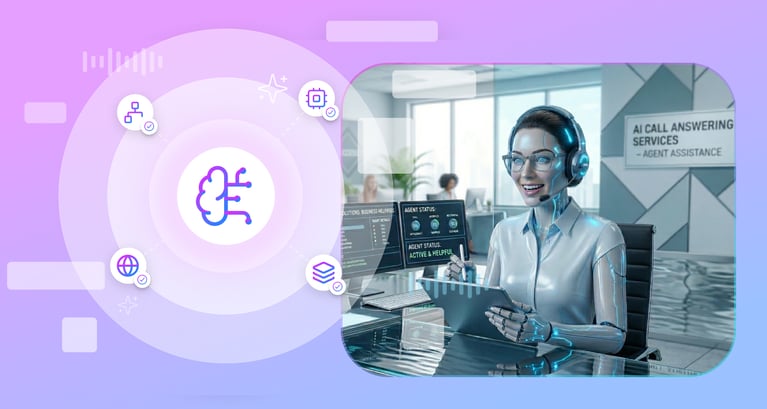
An AI answering service is an automated software platform that uses conversational artificial intelligence to manage inbound business phone calls. It operates as a virtual receptionist around the clock. Instead of just recording basic voicemails, this technology actively answers customer questions, qualifies inbound leads, and directly schedules appointments onto your corporate calendar without any human intervention.
However, keeping up with inbound volume is a constant challenge for growing teams. According to a recent study, small and mid-sized businesses miss an estimated 25%–60% of inbound calls, depending on staffing and after-hours coverage.
To stop this operational bleed, forward-thinking organizations are shifting away from relying solely on human receptionists or basic voicemail, turning instead to automated call handling. Driven by advancements in voice AI, natural language processing, and workflow automation, these modern systems do far more than just take a message. Acting as an intelligent, 24/7 virtual receptionist, they actively engage callers, understand complex conversational nuances, and execute real-time actions.
Let us look at exactly what these next-generation AI platforms actually do and how they are fundamentally changing the way modern businesses capture and convert leads.
What Are AI Call Answering Services?
An AI call answering service is a software solution that uses artificial intelligence and natural language processing to answer inbound phone calls. Acting as an autonomous virtual receptionist, it can hold human-like conversations, answer FAQs, route calls, and schedule appointments without human intervention.
By deploying this automated call handling, businesses can instantly upgrade their phone lines from a passive messaging system into an active revenue-generation tool.
How AI Call Answering Services Work to Automate Inbound Calls
The AI system manages the entire interaction from the first ring. Here is the core workflow behind inbound call automation:
- Answer Inbound Calls Instantly: The system picks up the phone on the very first ring, ensuring zero wait time and eliminating the risk of a dropped lead.
- Understand Intent (Voice AI): Using advanced audio processing, the AI listens to the caller's request, filtering out background noise and comprehending exactly what the customer needs (e.g., "I'd like to book an appointment for tomorrow at noon").
- Respond in Real-Time: The system generates a highly accurate, conversational response in a natural voice, completely replacing rigid, pre-recorded scripts.
- Take Action (Routing and Booking): Based on the caller's intent, the system executes the next logical step. It can seamlessly transfer the call, update a CRM, or schedule the appointment directly onto your live calendar.
Key Technologies Behind AI Call Agents
“AI-enabled customer service transformations can drive a 40% to 50% reduction in service interactions and a more than 20% reduction in cost-to-serve in the case they describe.” - McKinsey & Co
Three core technologies power modern AI call agents:
What Can AI Call Answering Services Do?
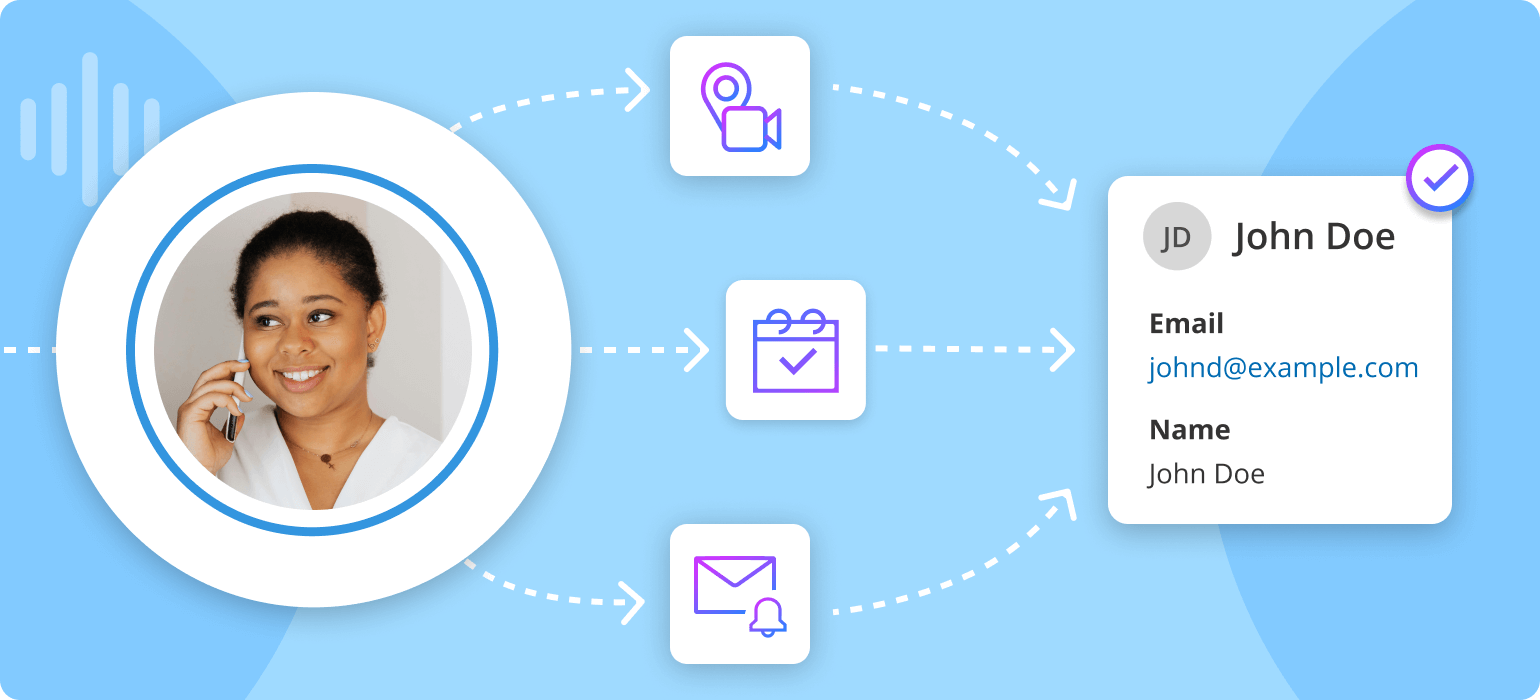
AI call answering services can independently manage high volumes of inbound calls, route customers to the correct departments, answer frequently asked questions, qualify sales leads, and natively book appointments onto live calendars. Because this automation handles unlimited simultaneous calls in the cloud, it completely eliminates hold times and frees human staff for high-value tasks.
By leveraging inbound call automation, these systems perform a massive variety of revenue-generating tasks far beyond taking a simple message:
Answer Inbound Business Calls
The most fundamental capability of a virtual receptionist is providing an immediate response. The system answers every single dial on the first ring, 24 hours a day, 7 days a week. This ensures your business never misses an opportunity, even during holidays, weekends, or massive call volume spikes.
Handle Customer Inquiries
Rather than sending every caller to overloaded staff, an AI phone agent can serve as a frontline support layer, handling common questions such as business hours, pricing, and location details before passing on more complex requests. That’s important because 85% of callers whose calls go unanswered will not call back, making instant response essential for preventing lost opportunities.
Route Calls to the Right Person
When a caller has a complex issue that requires a human touch, the AI uses intent recognition to execute precise automated call handling. If a client needs technical support, the AI seamlessly routes the call to the IT desk. If a high-net-worth investor wants to discuss their portfolio, the system instantly transfers them to the senior advisory team.
Capture and Qualify Leads
Not every caller is ready to buy, and your sales team shouldn't waste billable hours talking to unqualified prospects. The AI system can ask strategic, pre-programmed filtering questions (e.g., budget, timeline, or company size) to gather critical lead data. It then updates your CRM in real-time, ensuring your human team only spends time closing highly qualified deals.
Schedule Appointments Automatically
This is where AI voice solutions drive revenue. If a qualified lead wants to book a consultation, the system doesn't just promise a callback. It natively integrates with your booking software, reads your live calendar availability, and schedules the appointment instantly while the caller is still on the phone. It automatically accounts for time zones, meeting buffers, and team availability, eliminating the back-and-forth email tag.
🛑 Stop Losing High-Intent Callers to Voicemail
See how automated call handling can answer your phones instantly, capture leads, and book meetings directly onto your live calendar 24/7. 👉 Explore OnceHub's AI Phone Booking Today
Follow Up on Missed or Dropped Calls
Even the best systems occasionally encounter dropped connections due to poor cellular service. If a caller hangs up abruptly, advanced AI platforms can trigger automated follow-up workflows. The system can instantly send a personalized SMS text message with a secure scheduling link, actively recovering abandoned leads and turning them back into booked appointments.
Why Businesses Are Switching to AI Call Answering Services
.png?width=1150&height=588&name=Offer%20A%20Smooth%20Phone%20Booking%20Experience_%20(1).png)
Businesses are adopting automated call handling to drastically reduce reception staffing costs, manage increasing call volumes without placing customers on hold, and provide 24/7 customer service. This ensures no high-intent lead is ever lost to a voicemail or busy signal.
Businesses are adopting conversational AI to reduce support costs, improve efficiency, and automate more customer interactions at scale.
Increasing Call Volume and Expectations for Automated Call Handling
Consumer patience is at an all-time low. When a customer calls a business, they expect immediate assistance, not a 15-minute wait queue accompanied by elevator music. As call volumes surge, businesses are deploying inbound call automation to ensure that every single dial is met with an instant, intelligent response, keeping customer satisfaction scores high even during peak hours.
The Need for 24/7 Virtual Receptionist Availability
Your business hours might end at 5:00 PM, but your customers’ needs do not. High-intent buyers often do their research in the evenings or over the weekend. Employing a 24/7 virtual receptionist ensures your business remains entirely open around the clock, capturing lucrative leads while your human team is offline and your competitors are asleep.
The Rising Cost of Hiring Live Reception Staff
Hiring and retaining human receptionists or call-center staff is expensive. Industry comparisons show that human call handling can cost about $6 to $7.68 per call, while AI voice handling can cost roughly $0.30 to $0.50 per call, helping businesses reduce overhead and avoid staffing gaps. By switching to AI, businesses dramatically slash overhead while eliminating the headaches of sick days, breaks, and staff turnover.
Demand for Instant Response via AI Phone Answering
These days, buyers are highly transactional. If they cannot get a quote, an answer, or an appointment on their first try, they will simply hang up and dial the next business on Google. AI call answering guarantees an instant, frictionless response, effectively turning your phone number into an active lead-generation engine.
Real Use Cases of AI Call Answering Services
The most common real-world use cases for AI call answering include automated appointment scheduling, 24/7 lead capture and qualification, after-hours emergency call routing, and front-line customer support for frequently asked questions.
Here is how modern businesses deploy automated call handling to drive daily operations:
AI Call Answering for Appointment Scheduling and Booking
This is the most profitable use case for service-based businesses. When a client calls to request a consultation, the AI securely accesses your live calendar, cross-references your availability, and books the meeting instantly. It handles the entire transaction autonomously, removing the manual labor from calendar coordination.
Lead Capture from Inbound Call Automation
Instead of letting an unqualified lead waste your top salesperson's time, an AI receptionist asks pre-programmed filtering questions right at the start of the call. It seamlessly collects the caller's name, company size, and budget, passing only the highest-quality, sales-ready leads to your closing team.
Customer Support Automation via AI Receptionists
Support desks are frequently bogged down by repetitive queries. By integrating with your company's knowledge base, the AI can instantly resolve tier-one support tickets, such as checking an order status, updating an address, or answering billing FAQs, freeing up your human agents for complex problem-solving.
After-Hours AI Call Handling
When an urgent call comes in at 2:00 AM, the AI answers politely, assesses the urgency of the situation, and determines the next step. If it is a routine inquiry, it logs the message for the morning. If it is a genuine emergency (such as a burst pipe for a plumbing business), it triggers an emergency escalation protocol to page the on-call technician.
Automated Call Routing for Sales Teams
Nobody likes repeating their problem to three different departments. Advanced inbound call automation listens to the caller's intent and uses predictive routing to transfer the prospect directly to the correct department or the specific account executive best suited to close the deal.
How AI Call Answering Services Handle Appointment Scheduling
.jpg?width=1542&height=882&name=Why%20Unanswered%20Phone%20Calls%20Lead%20to%20Lost%20Revenue%20(1).jpg)
AI answering services handle appointment scheduling by using voice AI to understand the caller's intent, checking the business's connected calendar for live availability, verbally negotiating a time slot, and instantly booking the meeting directly into the CRM.
Here is exactly how an intelligent virtual receptionist handles the complete booking lifecycle:
Understanding Caller Intent in Real Time
When the caller says, "I'd like to set up a time to look at the property next week," the AI instantly recognizes the "scheduling" intent. It bypasses generic support prompts and smoothly pivots the conversation directly into the booking workflow.
Checking Live Calendar Availability Automatically
The AI system does not guess or promise a callback. It silently pings your connected scheduling software (like Google Calendar or Outlook) in milliseconds. It reads your true, up-to-the-minute availability, respecting all configured meeting buffers, personal time blocks, and team routing rules.
Booking Meetings Directly During the AI Call
Instead of texting a link, the AI receptionist negotiates the time verbally. ("I have an opening on Tuesday at 2:00 PM or Wednesday at 10:00 AM. Which works best for you?") Once the caller confirms, the AI locks in the appointment immediately, completely securing the lead before they hang up the phone.
Sending Appointment Confirmations Automatically
As soon as the call concludes, the automated call handling workflow triggers the next operational step. It instantly updates your CRM and sends a customized SMS or email confirmation to the caller with all meeting details, significantly reducing the risk of a no-show.
💡 Pro Tip for Higher Show Rates: Don't just rely on email confirmations. Configure your AI’s automated workflow to send an immediate SMS text message the second the call ends, containing the meeting details and a direct calendar invite link. Follow this up with an automated SMS reminder two hours before the meeting to drop your no-show rate near zero.
Also read: How to Turn Every Missed Call into a Confirmed Booking
Benefits of AI Call Answering Services for Businesses
The primary benefits of implementing voice automation include zero missed calls, instant response times, highly scalable call volume handling, and up to a 30% reduction in some cases, and even 50%–85% lower costs depending on the deployment and volume.
Intelligent voice technology removes customer friction, delivering an immediate and measurable return on investment:
Never Miss a Call with 24/7 AI Phone Answering
Every single time a call goes to voicemail, a competitor gains an advantage. Implementing a 24/7 AI receptionist guarantees a 100% answer rate. Whether a prospect calls during a busy lunch rush or at three in the morning, the system answers instantly, ensuring your business captures every single opportunity.
Faster Response Times via Automated Call Handling
Modern consumers expect immediate answers. Studies show that engaging a lead within the first 60 seconds can boost conversion rates by nearly 400%. Automated call handling eliminates hold queues. Instead of waiting for a human agent to finish a previous conversation, multiple callers are assisted simultaneously, the exact second they dial.
Reduced Operational Costs Using a Phone Agent
Staffing a traditional reception desk for round-the-clock coverage requires multiple full-time salaries, benefits, and constant training. By deploying a phone agent, businesses can reduce their baseline customer service costs by up to 20%. You pay only for the software's active usage, eliminating the financial drain of idle staff during slow periods.
Increased Lead Conversion Rates from AI Call Answering
Friction is the enemy of sales. When an AI call answering service handles an inbound inquiry, it doesn't just take a message; it actively moves the prospect down the sales funnel. By capturing intent and scheduling the appointment instantly while the caller is highly motivated, conversion rates naturally skyrocket.
Scalable Inbound Call Automation for High Volume
Traditional businesses struggle to manage sudden spikes in call volume, often leading to abandoned calls and frustrated clients. Inbound call automation provides infinite scalability. Whether your marketing campaign generates ten calls a day or a thousand calls in a single hour, the AI scales its bandwidth instantly without requiring you to hire temporary or seasonal staff.
Limitations of Traditional Call Answering Services
While human-powered call centers and live answering services have existed for decades, they are fundamentally limited by human bandwidth and manual processes. When you compare these legacy systems to modern AI's capabilities, the operational gaps become glaringly obvious.
Because traditional services rely on manual note-taking and email to relay messages, they often create a second bottleneck, forcing your team to play "phone tag" to actually book the lead. To overcome these friction points, businesses are moving toward autonomous systems that don't just take messages but actually complete the work. For example, the OnceHub's Phone Agent eliminates these legacy limitations by natively accessing your calendar to book appointments in real-time, ensuring the lead is converted before the call even ends.
|
Feature / Capability |
Traditional Answering Services |
AI Call Answering Services |
|
Response Time |
Subject to wait queues and hold times during busy hours. |
Instant. Answers every dial on the first ring, 24/7. |
|
Call Capacity |
Limited by human headcount; cannot handle sudden massive call surges. |
Infinite scalability; handles unlimited simultaneous calls in the cloud. |
|
Action & Resolution |
Primarily acts as a message-taker; emails notes to your team for later. |
Actively resolves queries, qualifies leads, and updates CRMs in real time. |
|
Meeting Scheduling |
Cannot securely access live corporate calendars; promises a "callback." |
Natively reads live calendar availability and books meetings on the call. |
|
Operational Cost |
High per-minute billing, monthly retainers, and holiday/after-hours surcharges. |
Highly cost-efficient software subscription (approx. $0.30 to $0.50 per call). |
Also read: Guide to Virtual Receptionist Services & AI's Impact
How to Choose the Right AI Call Answering Service
To choose the best AI call answering service, businesses should evaluate the platform's ability to handle complex conversational intent, its native calendar booking capabilities, its integration with existing CRMs, and its ease of setup without requiring custom coding.
To ensure you get the highest return on investment without disrupting your daily operations, follow these five steps when evaluating your options:
Identify Your Call Handling Needs
Before purchasing software, analyze your current phone traffic. Are you primarily struggling to answer basic FAQs, or are you losing high-value sales calls because your team is busy? If your main goal is capturing and converting leads, you need a highly capable AI receptionist designed to manage complex, multi-turn conversations rather than a basic system that simply takes a voice message.
Evaluate Inbound Call Automation Capabilities
Not all AI is created equal. The best platforms go far beyond simple voice-to-text transcriptions. Evaluate whether the automated call handling system can actively qualify leads, ask strategic filtering questions, and execute predictive routing.
OnceHub's Phone Agent, for example, is a zero-configuration solution that turns your phone line into an automated booking agent in minutes. Because it is a native scheduling engine, it speaks directly to your calendar to secure meetings without any manual setup or complex coding. If a caller needs specialized help, the system can even route the call to a live team member, ensuring every inquiry is handled correctly.
Check Scheduling and Booking Features
This is the most critical differentiator for revenue-focused businesses. If the AI cannot book a meeting, you are still leaving money on the table. Ensure the AI phone answering solution has deep, native calendar capabilities. It must be able to read your live availability, respect your personal time buffers, and secure the appointment verbally while the prospect is still on the line.
Look for Integrations (CRM and Calendars)
A virtual receptionist is only as smart as the data it can securely access. Your chosen service must natively integrate with your existing technology stack. Look for solutions that automatically sync with major platforms like Google Calendar, Outlook, Salesforce, or HubSpot. Integrating your AI with your CRM ensures that every caller interaction, captured lead detail, and scheduled meeting is instantly logged in your database without manual data entry.
Consider Ease of Setup
You should not need a team of software engineers to deploy a new phone system. Avoid inbound call automation tools that require complex custom coding or massive prompt-engineering workflows just to get started.
The best platforms offer plug-and-play deployments, seamlessly inheriting your existing calendar rules and routing logic so you can start capturing missed revenue on day one.
💡 Pro Tip for Evaluating Vendors: Never buy a voice AI platform based on a feature list alone. Always ask for a live phone number to call the AI yourself. Test it by speaking naturally, pausing mid-sentence, asking a complex question, and listening for "latency" (how long the AI takes to respond). A true enterprise-grade system should feel indistinguishable from a normal phone call.
The Future of AI Call Answering Services
As machine learning and natural language models continue to advance at a breakneck pace, the scope of what voice AI can accomplish is expanding rapidly. We are already seeing a massive shift in how businesses treat their phone lines, transforming them from reactive communication channels into proactive revenue engines.
The Shift From Answering to Action
The first generation of virtual receptionists was strictly informational; they took messages and transcribed voicemails. The future is entirely action-oriented. Modern systems don't just listen; they resolve. Whether it is processing a secure payment over the phone, updating a shipping address in the company database, or troubleshooting a technical error, voice AI is becoming an autonomous digital employee capable of completing complex tasks from start to finish.
Deep Integration with Scheduling and Workflows
AI is no longer a standalone tool. Its true power lies in its ability to orchestrate tasks across your entire software ecosystem. Moving forward, we will see even deeper integrations between voice agents, CRMs, and marketing platforms. When a caller dials in, the system will instantly recognize their phone number, pull up their historical account data, and seamlessly trigger automated workflows, such as booking an immediate follow-up meeting while simultaneously alerting the account manager via Slack or email.
A Central Role in Customer Experience
Speed and personalization are the defining metrics of modern customer experience. Because AI can handle thousands of simultaneous conversations instantly, the dreaded "please hold" queue will soon become completely obsolete. Businesses that adopt this technology will offer a friction-free, highly personalized customer journey that traditional, human-staffed contact centers simply cannot match.
Conclusion: AI Call Answering Services Are Evolving Beyond Call Handling
An AI call answering service is no longer just a digital answering machine. It is a highly capable software solution that uses advanced voice AI and natural language processing to engage callers, understand their intent, and execute real-time business tasks.
The era of merely taking messages is over. The operational standard has officially shifted from passive answering to active automation, and specifically, real-time scheduling. Growing businesses can no longer afford to let high-intent inbound leads hit a voicemail inbox or sit in a hold queue. Implementing intelligent voice technology is now a mandatory strategy to ensure your business remains open, responsive, and ready to capture revenue 24 hours a day.
Turn Every Missed Call Into Revenue
Stop losing high-intent prospects to busy signals and voicemails. Turn every inbound call into a booked appointment with OnceHub’s AI Phone Agent.
👉 Activate Your Phone Agent Today
Frequently Asked Questions (FAQ)
What are AI call answering services, and how do they work?
They are sophisticated software platforms that act as autonomous virtual receptionists. When a customer calls, the system answers instantly, uses natural language processing to understand the caller's request, and converses in a human-like voice to provide answers, route the call, or execute specific tasks like booking a meeting.
Can AI call answering services schedule appointments automatically?
Yes. The most advanced platforms connect directly to your live corporate calendars. By reading your up-to-the-minute availability, the AI can negotiate a time with the caller and securely book the appointment while they are still on the phone, eliminating manual email coordination.
Are AI call answering services better than live receptionists?
It depends on your business needs. While humans are better at highly empathetic, emotionally complex conversations, AI is vastly superior when it comes to answering calls instantly (zero hold times), operating 24/7 without breaks, handling infinite simultaneous callers, and minimizing overhead costs.
How much do AI call answering services cost for small businesses?
Unlike traditional answering services that charge high per-minute fees or require full-time salaries, AI software typically operates on a scalable subscription model. This reduces standard call center costs by up to 30%, as businesses only pay for active software usage rather than idle human labor.
Can AI answering services reduce no-shows?
Absolutely. Because the AI integrates with your internal workflows, it can automatically trigger an SMS or email confirmation the exact second an appointment is booked over the phone. It can also send automated reminders leading up to the meeting, significantly reducing your no-show rate.
Do AI call answering services integrate with Google Calendar?
Yes. Top-tier platforms offer native, real-time integration with major calendar providers like Google Calendar, Microsoft Outlook, and Office 365. This ensures the AI never double-books your staff and instantly respects your personal time blocks.
Are AI call answering services secure?
Yes. Reputable, enterprise-grade AI platforms are built with strict security protocols and data encryption. Because these purpose-built tools operate within closed environments and do not train their underlying models on your proprietary data, customer information remains completely confidential and compliant with industry regulations.
Read Next: Narrow AI vs General AI: AI Answering Services for Coaches