

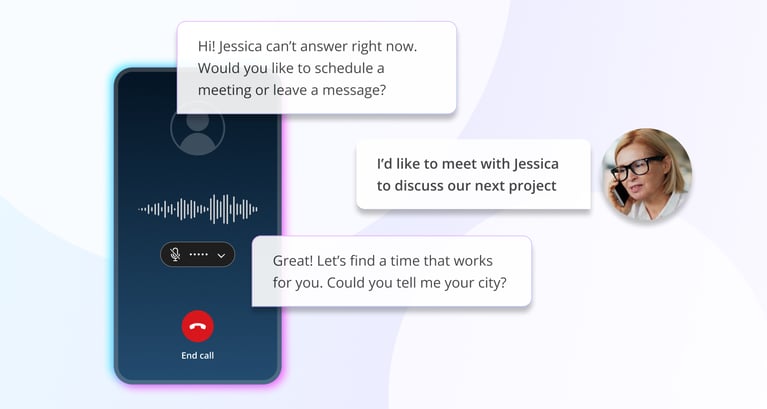
You know the drill. You call a business, pressed for time, and instead of a human, you get "The Robot."
You mash the "0" button, hoping to bypass the menu, but the voice just loops back to the start. It’s frustrating. It’s outdated. And frankly, if you run a business, it’s costing you money.
The phone remains one of the highest-value channels for customers, yet most businesses are still running it on technology from the 1990s. But a shift is happening. We are moving away from systems that simply route calls to systems that actually handle them.
Enter the ai voice agent.
This isn't just a slightly smarter voicemail. It is the evolution of phone automation - an intelligent system that listens, understands, and actually gets work done.
In this guide, we will break down exactly what an AI voice agent is, how the technology works under the hood, and how businesses are using agents to turn missed calls into confirmed revenue.
What Is an AI Voice Agent?
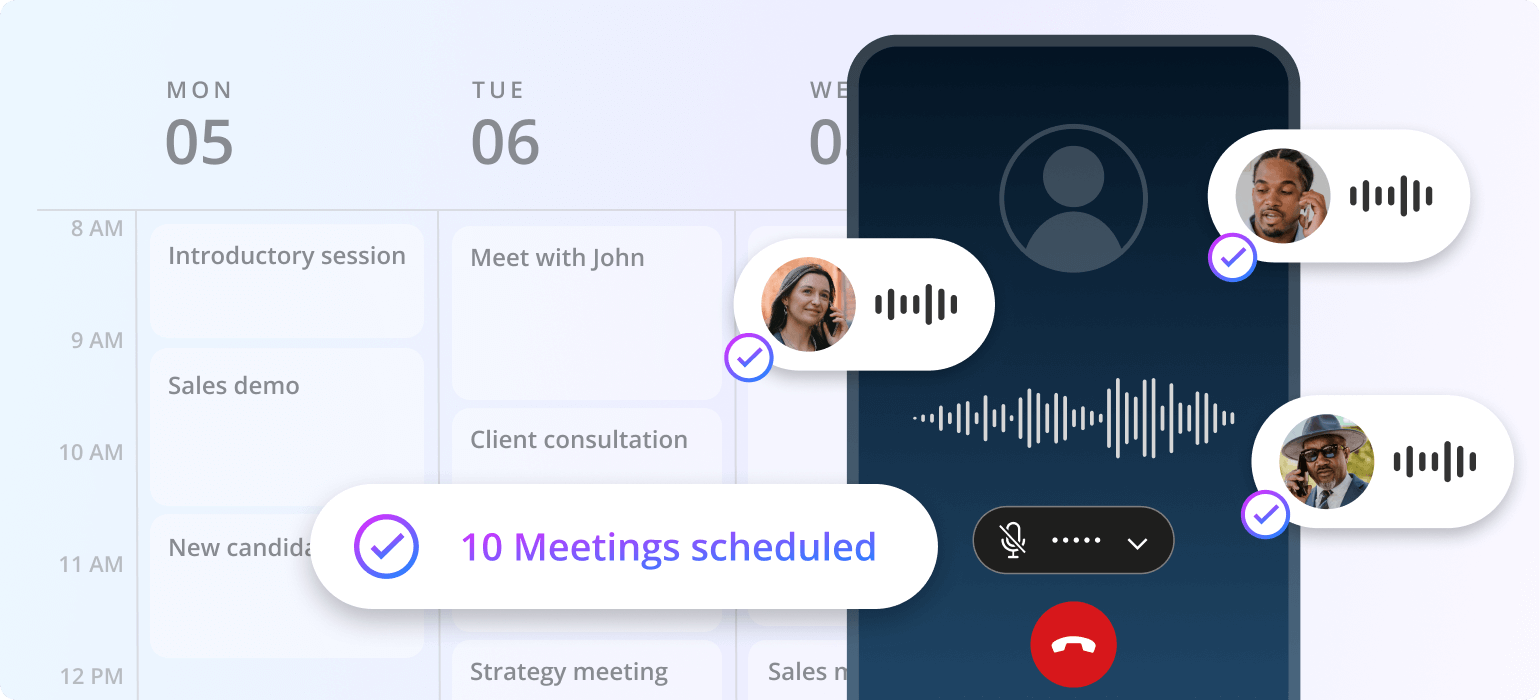
An AI voice agent is a software system that uses artificial intelligence to hold natural, spoken conversations with humans over the phone.
Unlike a traditional IVR (Interactive Voice Response) system that forces you to press buttons to navigate a maze, an AI voice agent listens. You speak to it just as you would to a human receptionist. It processes your speech, understands your intent, and responds instantly with a relevant, spoken answer.
But the real differentiator - and the reason we call it an "agent" - is its ability to do work.
A basic voicebot might answer FAQs. An AI voice agent connects to your business systems to perform actions. It can look up an order status, check your calendar for availability, or qualify a sales lead, all within the flow of the conversation.
How AI Voice Agents Work?
"The true magic of AI voice technology isn't just in the speaking; it’s in the listening. It’s about moving from systems that follow scripts to systems that understand human intent." - Satya Nadella, CEO of Microsoft
You don’t need to be a machine learning engineer to grasp the mechanics, but understanding the workflow helps you see why these systems are so powerful. When a customer speaks to an ai voice agent, a complex, split-second process occurs to deliver a fluid conversation.
1. Automatic Speech Recognition (ASR)
First, the system captures the raw audio input. It instantly transcribes the spoken words into text. Advanced ASR models are designed to handle the nuances of real-world communication, filtering out background noise and adapting to different accents, speeds, and natural pauses.
2. Natural Language Understanding (NLU) & Large Language Models (LLMs)
Once the audio is text, the system analyzes it to determine intent. NLU breaks down the sentence to figure out exactly what the caller wants, whether they are asking about pricing, complaining about a bug, or trying to schedule a visit. Large Language Models then generate the most appropriate, conversational response based on that context.
3. Text-to-Speech (TTS) Synthesis
Finally, the system converts its text response back into audio. Modern TTS engines produce human-quality speech with natural intonation and pacing, eliminating the robotic, disjointed sound that plagued older phone systems.
4. The Decision & Action Engine
This is the critical step that separates a true agent from a simple chatbot. Before replying, the system checks your business rules and data. If a caller requests an appointment for "next Tuesday," the agent queries your connected calendar to verify availability. It ensures the response isn't just polite, but accurate and actionable.
Also read: What Is Conversational AI? From Basic Bots to Intelligent Agents
Why AI Voice Agents Matter for Modern Businesses?
.png?width=1150&height=588&name=Offer%20A%20Smooth%20Phone%20Booking%20Experience_%20(1).png)
Why are companies suddenly rushing to adopt this technology? It isn't just about being cutting-edge; it is about survival in a high-expectation economy.
We know what they are. Now, let’s look at how they effectively replace the outdated systems that have been frustrating your customers for years.
Replacing Outdated IVRs and Phone Menus
We have accepted Interactive Voice Response (IVR) systems as a necessary evil for decades. You know the drill: "Press 1 for Sales, Press 2 for Support, Press 3 if you know your party's extension."
These systems were built to route traffic, not to help customers. They place the heavy lifting on the caller, forcing them to categorize their own problem into a rigid menu structure. If their issue doesn't fit neatly into "Option 1" or "Option 2," they are stuck mashing "0" until they reach a human.
An ai voice agent functions as a drop-in replacement that flips this dynamic. Instead of navigating a menu, the customer simply speaks.
-
The Old Way: "Listen to 5 options > Press 2 > Listen to 3 more options > Press 1."
-
The New Way: The customer says, "I think I was overcharged on my last invoice." The agent recognizes the intent (Billing Dispute), verifies the account, and routes the call directly to the finance team or answers the specific question immediately.
Use Cases Across Industries
Because these agents can handle complex logic, they are being deployed across sectors to handle specific, high-volume tasks. It’s not one-size-fits-all; the application changes based on what matters most to that specific business model.
-
Professional & Financial Services: For wealth managers, law firms, and consultants, trust is the product. AI agents ensure high-net-worth clients never reach a voicemail dead-end. They screen incoming calls to distinguish between a new client who needs immediate attention and a vendor selling toner, while seamlessly booking consultations directly into advisors' calendars.
-
Technology & SaaS Companies: Tech buyers expect instant answers. AI agents handle first-level support queries, troubleshoot common account issues, and qualify inbound sales leads by asking key technical questions before routing them to an account executive.
-
Education & Coaching: From universities to private coaching practices, the administrative load of student inquiries is massive. Agents automate the intake process, answering FAQs about course details or enrollment deadlines, and scheduling admissions interviews without burdening the administrative staff.
-
Property Management & Real Estate: In a fast-moving market, speed wins. Agents handle tenant inquiries, schedule property viewings instantly, and triage maintenance requests 24/7, ensuring that property managers are only disturbed for true emergencies.
-
Healthcare Practices: Front desk burnout is real. Agents handle patient intake, answer FAQs about hours or insurance, and manage appointment scheduling or cancellations, allowing medical staff to focus entirely on the patients in the room.
-
Home Services: When a pipe bursts, customers call the first number they find. An AI agent ensures that plumbing or HVAC companies capture every lead instantly, taking down emergency details and scheduling service calls even after the office has closed for the day.
Now that we see where they are used, let's look at the biggest shift in technology: moving from simply providing information to actually getting work done.
Learn more: When to Use Phone Booking for Scheduling
The Rise of Action-Oriented Voice Conversations
This is the most critical evolution in the market. Early voice technology was strictly informational - it could tell you the store hours or read back your account balance. Modern ai voice agents are different because they are action-oriented.
They don't just talk; they execute workflows.
By integrating directly with your business tools - such as your CRM, Helpdesk, or Calendar - the agent moves from a passive observer to an active participant in your business operations.
-
Capture Intent: It doesn't just record a voice message; it identifies that the caller wants to "upgrade their plan" and tags the lead accordingly.
-
Qualify Leads: It asks the necessary vetting questions ("What is your budget?" or "How soon are you looking to buy?") before passing the call to a human.
-
Trigger Workflows: It can open a support ticket, update a customer record, or send a follow-up SMS immediately after the call ends.
This ability to do work, rather than just discuss it, brings us to the single most valuable use case for voice automation.
Of all the actions an agent can take, one stands out as the biggest revenue driver: the ability to put a meeting on the calendar without a human ever picking up the phone.
AI Phone Booking - The Most Critical Action for Service Businesses
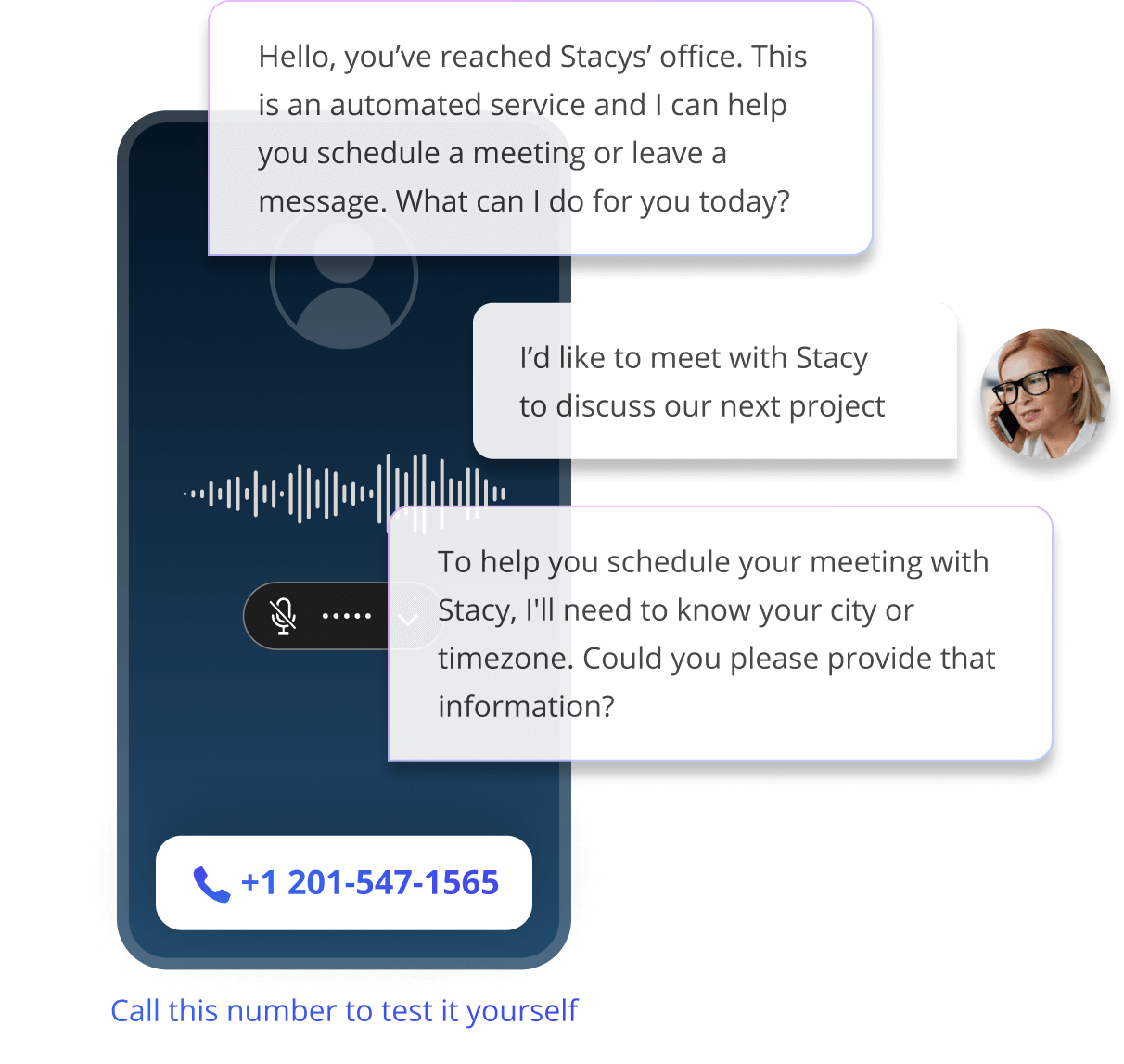
We have all played phone tag. You leave a voicemail. They call back while you’re in a meeting. You call back, and they are in a meeting. It’s a game nobody wins.
For many businesses, the goal of a phone call is simple: get an appointment on the calendar. Traditionally, this is a friction-heavy process involving spreadsheets and hold times.
Here is how the workflow operates using a tool like OnceHub:
-
Intent Detection: The caller says, "I need to book a demo." The agent instantly recognizes this isn't a support question - it's a scheduling request.
-
Live Availability Check: The AI doesn't guess. It instantly queries your team’s connected calendars to show actual openings in real time.
-
Negotiation: The agent acts like a human assistant, offering specific slots: "I have Tuesday at 2 PM or Wednesday at 10 AM available. Do either of those work?"
-
Confirmation: Once the caller agrees, the agent books the slot, sends a calendar invite to both parties, and logs the activity in your CRM.
This removes the human bottleneck completely. It ensures that you capture the lead at the exact moment of highest intent, converting a casual phone inquiry into a confirmed revenue opportunity without you lifting a finger.
The potential is huge, but a bad bot is worse than no bot at all. How do you ensure the experience builds trust instead of destroying it?
What Makes AI Voice Conversations Effective?
You wouldn't hire a receptionist who ignores you when you speak. You shouldn't accept that from your technology, either.
The difference between a frustrating "bot" and a helpful "agent" usually comes down to how natural it feels.
-
Context Retention: Effective AI remembers what you just said. If a customer asks, "Do you have appointments next week?" and follows up with, "How about Tuesday?", the agent must understand that "Tuesday" refers to next week. If it asks, "Tuesday of which week?", the illusion breaks, and the experience feels broken.
-
Handling Interruptions (Barge-In): Humans interrupt each other constantly. We say "wait," or "no, actually," in the middle of sentences. A sophisticated AI voice agent handles "barge-in,” meaning if the customer speaks while the AI is talking, the AI stops immediately and listens. It doesn't just keep reading its script like a robot.
-
Speed (Latency): In a phone conversation, silence is awkward. If the AI takes five seconds to "think" after every question, the caller will hang up. Top-tier agents are optimized for low latency, responding in milliseconds to keep the conversation flowing naturally.
A smooth conversation is great, but a useful one is better. Let's look at how to ensure the chat actually leads to a result.
Also read: Guide to Virtual Receptionist Services & AI’s Impact
How to Make Voice Agent Interactions Actionable?
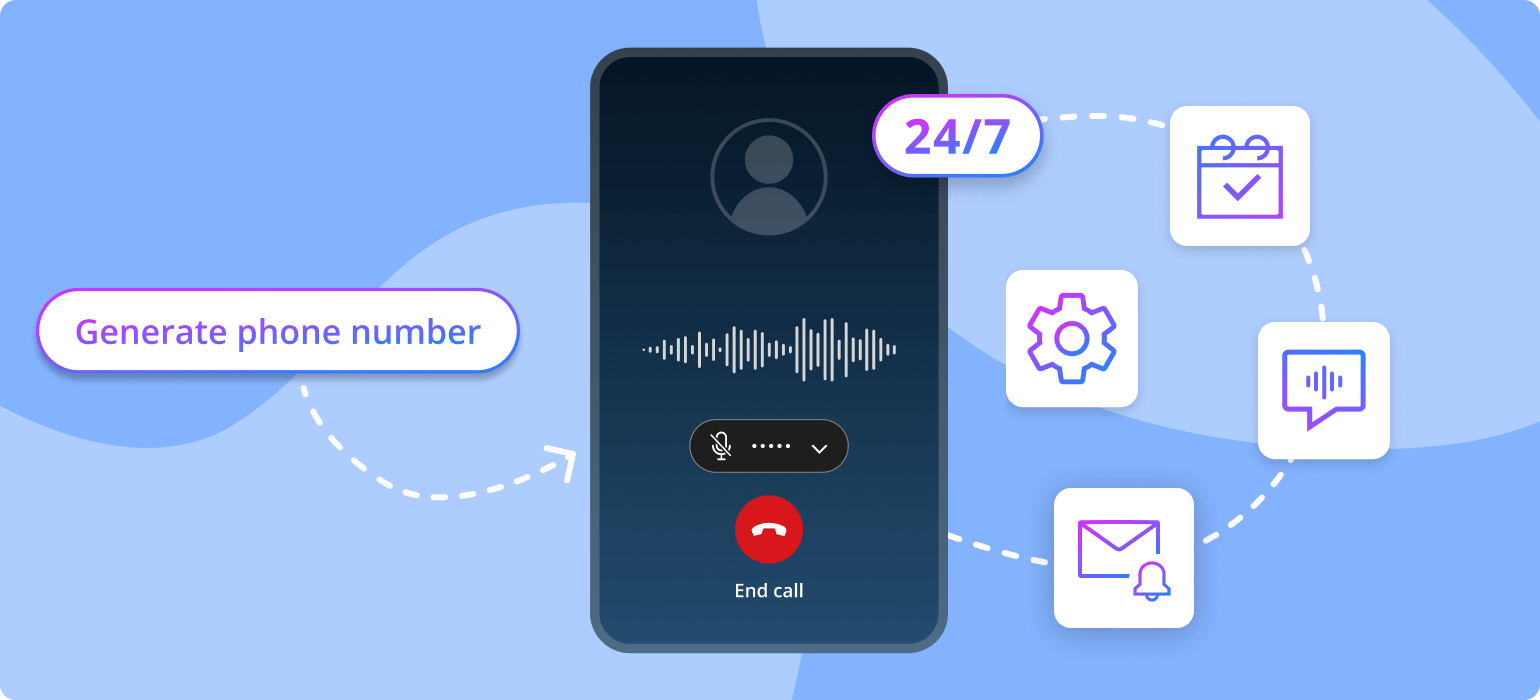
This is the biggest missed opportunity for most businesses. They set up an agent to talk, but not to do.
To get a real return on your investment, you need to connect your ai voice agent to your actual business tools. This transforms the interaction from a passive chat into a completed task.
-
Link to Your Calendar: Don't just have the agent say, "Please visit our website to book." That is a dead end. Instead, let the agent find the slot and book it directly during the call. For example, OnceHub’s phone booking doesn't just tell a caller your hours; it also agrees on a time and adds the meeting to your calendar instantly.
-
Qualify, Then Route: Use the conversation to filter leads. If the agent asks, "How large is your company?" and the answer meets your criteria, the agent should automatically transfer that call to a live sales rep. If the lead is too small, it might politely direct them to a self-serve checkout page.
-
Trigger Automated Follow-Up: The moment the call hangs up, the work shouldn't stop. The agent can trigger an SMS with a confirmation link or an email with a resource guide, ensuring the customer feels taken care of even after the line goes dead.
Despite these capabilities, many business owners are still hesitant. Let’s clear up the myths that are holding them back.
Common Misconceptions About AI Voice Agents
Because this technology is moving so fast, many business owners are making decisions based on outdated information. Let’s clear up the biggest myths preventing companies from adopting ai voice agents.
-
Myth 1: "They Sound Like Robots." We all remember the metallic, stilted voices of the early 2000s. Today’s text-to-speech models are nearly indistinguishable from human speech. They pause, use inflection, and can even vary their tone to sound empathetic or professional. Most callers won't even realize they aren't speaking to a human until the agent identifies itself.
-
Myth 2: "AI Will Replace My Entire Support Team." This is the wrong way to view automation. AI isn't here to fire your staff; it's here to free them. An ai voice agent handles the repetitive 80% of calls - scheduling, FAQs, status checks - so your human experts can focus on the complex, emotional 20% that actually require empathy and judgment.
-
Myth 3: "It’s Only for Big Enterprises." Five years ago, this was true. Today, platforms like OnceHub have democratized the technology. A small dental practice or a solo consultant can deploy a sophisticated AI scheduling agent for a monthly subscription cost that is a fraction of a single receptionist’s salary.
So, how does this actually stack up against your other options? Let's look at the numbers side by side.
AI Voice Agents vs. IVR vs. Human Agents
It can be difficult to decide which solution fits your business. Do you stick with the cheap IVR? Do you invest in expensive human staff? Or do you adopt AI?
Here is a direct comparison of how they stack up against each other.
|
Feature |
Legacy IVR System |
Human Receptionist |
AI Voice Agent |
|
Availability |
24/7 |
Limited (9-5 Business Hours) |
24/7 |
|
Customer Experience |
Frustrating (Keypad menus) |
Excellent (High empathy) |
Natural (Conversational) |
|
Intelligence |
None (Rigid rules only) |
High (Complex problem solving) |
High (Context & Logic) |
|
Scalability |
High (Unlimited callers) |
Low (1 call at a time) |
Infinite (Unlimited callers) |
|
Cost |
Low |
High (Salary + Benefits) |
Low/Moderate (SaaS Model) |
|
Action Capability |
None (Routing only) |
High (Manual entry) |
High (Instant Integration) |
The Verdict:
-
IVRs are cheap, but they cost you, customers, in terms of frustration.
-
Humans are premium but unscalable and expensive.
-
AI Voice Agents offer the "sweet spot": the scalability of software with the conversational intelligence of a human, all while executing tasks like booking meetings instantly.
Of course, no technology is perfect. You need to know where the guardrails are. Let's look at the risks.
Risks and Limitations
While powerful, this technology isn't magic. It has limits, and smart business leaders manage them upfront to avoid frustrating their customers.
-
Misinterpreted Intent: Sometimes, the AI gets it wrong. A customer might speak in confusing ways, use slang that the model doesn't understand, or change topics rapidly. If the agent gets stuck, you must provide a clear "escape hatch." The system should recognize when it is failing and automatically transfer the call to a human or offer to take a message.
-
Handling High Emotion: AI excels at logic, not empathy. If a caller is shouting, crying, or clearly distressed, an ai voice agent might come across as cold or indifferent. The best systems detect "sentiment" - if they hear an angry tone, they immediately escalate the call to a manager.
-
Privacy and Compliance: You need to be careful with data. If you are in healthcare (HIPAA) or finance, you cannot just use any generic AI tool. You must ensure your voice agent is compliant and secure. Never set up an agent to request sensitive details such as credit card numbers or passwords unless the platform is specifically encrypted for payment processing.
-
Accuracy (The "Hallucination" Risk): Generative AI can sometimes make things up. You don't want your agent promising a discount that doesn't exist. To prevent this, use systems that rely on RAG (Retrieval-Augmented Generation). This forces the AI to stick strictly to your uploaded business documents and policies, preventing it from "improvising" answers.
You’ve built it, you’ve secured it. Now, how do you prove it’s actually making you money?
Measuring Success of AI Voice Agents
You can’t improve what you don’t measure. Implementing an ai voice agent is an investment, and like any employee, you need to review its performance to ensure it is delivering a return.
KPIs and Metrics That Matter
Don't just look at how many calls were handled. To really understand the impact, you need to track the metrics that drive efficiency and revenue.
-
Call-to-Appointment Conversion Rate: This is the "money metric" for service businesses. Out of 100 callers who asked about services, how many ended up with a confirmed meeting on the calendar? If this number is low, your agent’s script might be too confusing or passive.
-
First-Contact Resolution (FCR): Did the agent solve the issue immediately, or did the customer have to call back? A high FCR score means your agent has the right permissions and knowledge to actually help people, rather than just acting as a gatekeeper.
-
Call Deflection Rate: This measures the percentage of calls handled entirely by the AI without human intervention. Every point here represents time given back to your staff.
-
No-Show Reduction: If your agent is sending automated reminders and confirmations, you should see a tangible drop in missed appointments. This directly correlates to recovered revenue.
-
Customer Satisfaction (CSAT): It doesn't matter how fast the system is if customers hate using it. Simple post-call surveys ("Thumbs up or down?") or monitoring for "sentiment" (frustrated tone) will tell you if your agent is helping or hurting your brand reputation.
Metrics tell you if it's working. ROI tells you if it's worth it. Let's look at the financial impact of switching to action-based automation.
ROI of Action-Based Voice Automation
Let’s be real for a second. When businesses calculate ROI, they usually look at cost savings: "I saved $3,000 by not hiring a receptionist."
That is true, but it misses the bigger picture.
The real ROI comes from revenue generation. Ask yourself: How much is one new client worth to you? $500? $5,000? Now, how many times has that $5,000 client hung up because they didn't want to leave a voicemail?
We have covered the technology, the strategy, and the financial impact. Now, let’s wrap it up.
Conclusion
"The goal of AI isn't just to talk—it's to do. AI agents are shifting from providing answers to taking actions, allowing businesses to resolve customer issues instantly without human intervention." - Intercom, State of AI in Customer Service Report
The business phone call is not dead; it was just neglected.
For too long, we forced customers to endure rigid menus and wait times, treating their time as disposable. But the technology has finally caught up with expectations.
We have moved from the era of "Press 1 for Sales" to "How can I help you today?"
AI voice agents represent the most significant shift in business communication since the invention of the call center. But remember: the goal isn't just to have a computer talk to your customers. The goal is to solve their problems.
The future belongs to action-driven AI. It belongs to systems that don't just take messages; they actually check calendars, qualify leads, and book appointments in real time. By adopting this technology, you aren't just modernizing your phone system - you are building a 24/7 revenue engine that never calls in sick.
If you are ready to stop missing calls and start booking meetings, the next step is to look for a solution that prioritizes action over talk.
Ready to transform your phone line? Discover how OnceHub’s AI-powered phone booking can turn your missed calls into confirmed appointments today.
Frequently Asked Questions (FAQ)
What is the difference between an AI voice agent and an IVR?
An IVR (Interactive Voice Response) is a static menu system where callers press buttons ("Press 1 for Sales"). It is rigid and often frustrating. An ai voice agent is a dynamic system that listens to natural speech, understands intent, and holds a two-way conversation to solve problems without buttons.
Can AI agents actually book appointments?
Yes. Advanced agents, like those provided by OnceHub, integrate directly with your calendar. They can check real-time availability, offer slots to the caller, and confirm the booking instantly during the conversation.
How accurate are AI voice agents?
Modern agents are highly accurate. They use Natural Language Understanding (NLU) to grasp context, accents, and slang. However, top-tier systems also include "guardrails" to ensure they stay grounded in your business facts and don't make up information.
Do AI voice agents replace human staff?
Not necessarily. They are best used to handle high-volume, repetitive tasks (like scheduling and FAQs), freeing your human staff to handle complex issues, provide emotional support, and manage high-value clients.
Which businesses benefit most from voice AI?
Any business that relies on appointments or high volumes of inbound calls will see immediate ROI. This includes healthcare practices, law firms, home service providers (plumbing and HVAC), consultants, and sales teams.