

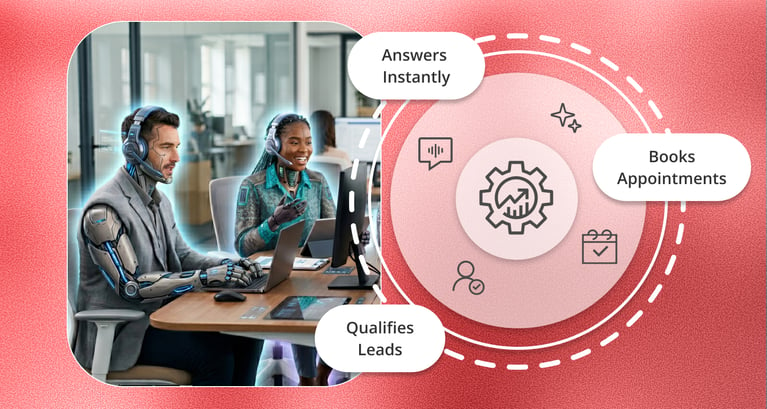
When your business phone rings and nobody answers, that caller is already dialing a competitor. A modern voice agent solves this by answering calls, scheduling appointments, and holding natural conversations without human intervention.
According to Ambs Call Center, the direct cost of a single missed call is $12.15. And as low as that sounds, it adds up to a significant annual loss that most small businesses never see coming.
77% of customers expect to reach someone immediately when they contact a business. Not a voicemail. Not a callback within the hour. Immediately. An AI receptionist meets that expectation at every hour of the day, without a salary, without sick days, and without a training period.
TL;DR:
What is an AI receptionist?
An AI receptionist is a voice-based virtual assistant that uses natural language processing to answer inbound phone calls, hold human-like conversations, and execute business tasks without human intervention.
It is important to understand that this is not an old-school press 1 dial pad menu. Legacy phone trees force callers down rigid paths and frequently hang up on them. In contrast, an intelligent voice agent understands conversation context, heavy accents, and natural speech patterns. It allows your callers to speak exactly as they would to a human receptionist, ensuring they feel heard and valued the moment the call connects.
How does an AI receptionist work?
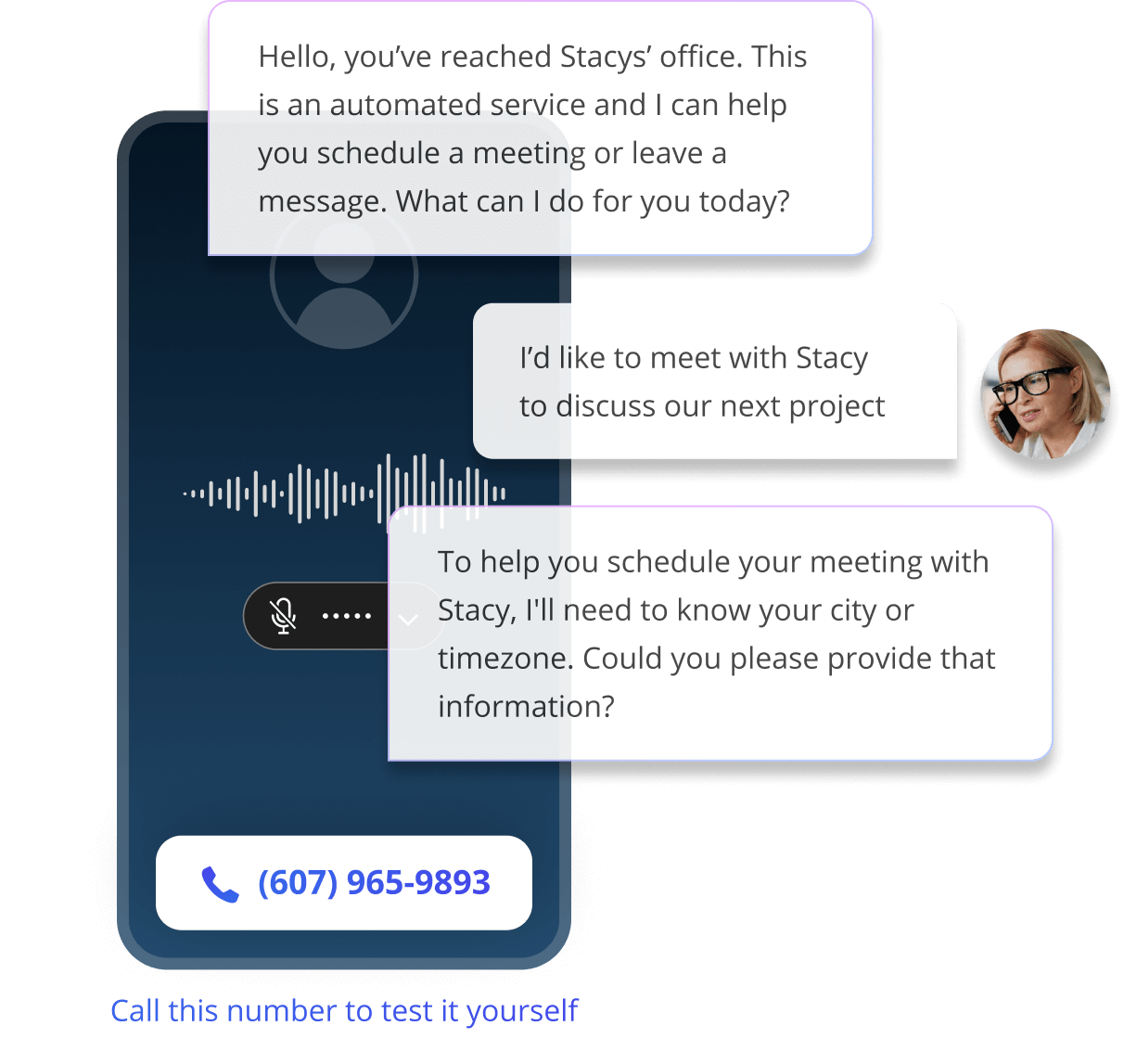
An AI receptionist works by using advanced speech recognition to transcribe caller audio into text, analyzing the intent of the request, and instantly generating a conversational response or executing a workflow.
- Listening: The system uses speech-to-text capabilities to instantly transcribe what the caller is saying in real time, even if there is background noise or they speak with a heavy accent.
- Thinking: Using natural language understanding, the AI analyzes the transcription to determine the actual intent of the caller. It figures out if the person wants to book an appointment, ask about business hours, or file a complaint.
- Acting: Once the intent is clear, the agent takes immediate action. It checks your live calendar to book the meeting, searches your business knowledge base to answer the question, or instantly transfers the call to the right human department.
Also read: Best AI Call Answering Services for High-Ticket Sales 2026
AI Receptionist vs Traditional Answering Service: What is the difference?
The primary difference between an AI receptionist and a traditional answering service is how they handle call routing and resolution. An AI receptionist uses automated voice technology to answer calls immediately and manage routine tasks, whereas a traditional answering service relies on live human operators who provide a personal touch for complex or highly sensitive inquiries.
For years, businesses that needed overflow support relied on outsourced call centers. A live human operator is highly valuable when callers are navigating nuanced issues or require deep empathy. However, traditional services often focus primarily on taking messages and routing calls, meaning customers with routine requests might still wait for a callback to get their problem solved.
An AI receptionist serves a different purpose. It addresses high-volume, routine requests by automating appointment booking and answering standard frequently asked questions. By handling the administrative baseline, the AI allows your internal staff or traditional answering service to focus entirely on the complex, high-value interactions.
Here is how the two approaches compare:
|
Feature |
AI Receptionist |
Traditional Answering Service |
|
Wait Times |
Immediate automated pickup |
Variable hold times depending on call volume |
|
Task Completion |
Can automate meeting booking and basic FAQs |
Excels at message taking and empathetic escalation |
|
Availability |
Consistent round-the-clock coverage |
Standard business hours with potential after-hours fees |
|
Cost |
Predictable software subscription |
Staffing retainers and per-minute human labor fees |
|
CRM Integration |
Can route transcripts and data to supported platforms automatically |
Often requires manual data transfer or custom setups |
What Are the Top Benefits of Using an AI Receptionist?
The top benefits of using an AI receptionist include 24-hour availability, lower operational costs, zero caller wait times, increased team productivity, consistent caller experience, and intelligent lead qualification.
- Round-the-Clock Availability: Most businesses miss calls after 5 PM and on weekends. Those callers rarely leave a voicemail; they dial the next competitor on Google. An AI receptionist captures leads at midnight, on Sundays, and during public holidays, ensuring your business stays open for booking even when your physical doors are closed.
- Zero Hold Times: A human receptionist can only speak to one person at a time. If three people call simultaneously, two of them are waiting. An AI receptionist handles unlimited concurrent calls at peak hours, giving every single caller an immediate answer and eliminating hold queues.
- Lower Operating Costs: According to the US Bureau of Labor Statistics, the median receptionist salary is $37,232 per year, and that is before employer payroll taxes, health benefits, and training costs are added on top. An AI receptionist delivers the same front desk coverage for a predictable monthly subscription at a fraction of that cost.
- Increased Team Productivity: Your trained staff should not spend their day answering repetitive questions about parking, business hours, or basic pricing. Offloading routine inquiries to an AI agent frees your team to focus entirely on high-value tasks, closing sales, serving existing clients, and doing the work they were actually hired to do.
- Consistent Caller Experience: A human receptionist has good days and bad days. An AI receptionist delivers the same professional, on-brand greeting on every single call, whether it is the first call of the morning or the hundredth call of the day, at any hour, at any volume.
- Intelligent Lead Qualification: Not every caller is a qualified prospect. An AI receptionist screens callers before offering a time slot, asking the specific questions your business requires: budget, service type, location, and urgency. Qualified leads go straight to the calendar. Unqualified callers are directed to the right resource without consuming any staff time. Once booked, an automated Meeting Coordinator handles attendance confirmation, meeting follow-ups, and no-show recovery.
What are the key features to look for in an AI receptionist?
The key features to look for in an AI receptionist include direct calendar syncing, instant live call handoffs, customizable voice personas, and native CRM integrations.
- Direct calendar syncing: This is an absolute must-have feature. The platform should read your live calendar availability and book appointments natively, without requiring you to stitch together third-party middleware that might cause double bookings.
- Instant live call handoffs: The software must be able to recognize when a caller is frustrated or has a highly complex issue. It should instantly transfer that caller to a live staff member with the full conversation transcript attached.
- Customizable voice personas: Your brand has a specific tone. You should be able to select or clone a voice that matches your company identity, ensuring the agent sounds like a natural extension of your team.
- Native CRM integrations: After every call, the system should automatically push the call summary, action items, and contact details directly into your customer relationship management software to eliminate manual data entry.
- Holistic front office suite: An AI receptionist shouldn't operate in a silo. Look for a platform that provides a broader suite of extended AI workers, such as a Web Assistant for chat-based lead qualification and a Meeting Coordinator to handle SMS/email reminders and no-show follow-ups. Expanding beyond just voice ensures a more holistic approach to your front-office operations, unifying your web presence, call handling, and meeting management.
Top 3 AI Receptionist Providers in 2026
When searching for the right voice automation platform, the best choice depends entirely on your specific business goals and existing software stack. Here are the top three providers leading the market today:
1. OnceHub’s AI Phone Receptionist: Best for Lead Capture and Automated Scheduling
.jpg?width=1540&height=700&name=OH%20Screenshot%20(2).jpg)
OnceHub's AI Phone Receptionist is a purpose-built scheduling engine designed for businesses that need every inbound call to result in a confirmed appointment. Unlike generic answering tools or phone systems with AI bolted on as an afterthought, the Phone Receptionist is built from the scheduling layer up, reading your live calendar availability, asking qualifying questions, and confirming the booking before the caller hangs up. It is live on your phone line in minutes with minimal setup.
Key Features
- Minimal setup: Inherits your existing calendar connections, buffer times, and qualification criteria the moment it is switched on. No developer, no integration project, no delay.
- Native calendar sync: Reads live Google and Microsoft calendar availability directly within OnceHub's own system, ensuring every time slot offered to a caller reflects real availability in real time.
- Intelligent lead qualification: Asks your pre-configured screening questions before offering a single time slot, budget, service type, location, urgency, or any criteria your business sets.
- 24-hour, always-on answering: Answers every call at midnight, on weekends, and during public holidays with full professionalism, capturing every lead your team cannot physically answer.
- Full conversation logging: Automatically logs a complete audio recording and written transcript of every call directly into the OnceHub Activities dashboard post-call.
- Unified web and voice scheduling: The AI Front Desk includes a Website Assistant that answers questions via web chat and navigates guests across unlimited booking configurations. The same routing logic, qualification rules, and calendar connections that handle web visitors also handle phone callers, giving every prospect a consistent experience regardless of how they contact you.
Use Cases
- A financial advisory firm uses the Phone Agent to qualify prospects by investable assets after hours, booking them directly into the right advisor's calendar before the team starts the next day.
- A law firm screens inbound callers by legal issue and jurisdiction before a single attorney minute is spent on the call.
- A home services company captures emergency booking requests while contractors are on-site, booking arrival windows automatically without the contractor stopping work.
- A multi-location business uses round-robin routing to distribute inbound calls across its team without any receptionist or manual coordination.
Pricing
Phone Agent functionality is available on the Engage tier and above, with a 14-day free trial included.
Get started: oncehub.com/product/phone-booking
2. Dialpad: Best for Enterprise Sales Teams and Contact Centers
Dialpad is an AI-powered business communications platform that integrates voice, chat, SMS, and email into a single interface, with real-time transcription, intelligent call routing, and voice analytics built natively into the platform. Dialpad is built around the full communication stack, making it the right fit for enterprise sales floors and contact centers that need AI layered across every channel, not just inbound booking.
Key Features
- Real-time AI transcription: Transcribes every call automatically as it happens, with no manual note-taking required and full searchable records after every interaction.
- Live sentiment analysis: Agents receive AI-generated suggestions during calls in real time, providing agents with real-time guidance and post-call insights designed to support customer interactions more efficiently.
- AI-powered call summaries: Generates automatic post-call summaries with action items, reducing the time agents spend on after-call work.
- Multilevel auto attendant: Includes a multilevel auto attendant with all subscriptions, allowing businesses to set up multiple layers of call routing beyond single-menu IVR systems.
- CRM integrations: Connects natively with Salesforce, HubSpot, and Google Workspace, logging call data and interaction history automatically.
Use Cases
- An enterprise sales floor uses Dialpad's real-time sentiment analysis and coaching prompts to improve rep performance across hundreds of daily outbound calls.
- A contact center consolidates voice, SMS, email, and chat into one unified agent dashboard, eliminating the need to switch between multiple tools.
- A healthcare organization uses Dialpad's HIPAA-compliant stack to handle patient communications with a full audit trail and secure data handling.
- A remote sales team uses Dialpad's mobile apps, which support a broad range of communication workflows through its mobile applications, to run their full communication workflow from anywhere.
Pricing
Dialpad Connect plans start at $15/user/month on annual billing, rising to $25/user/month for Pro and custom pricing for Enterprise. The AI contact center product starts at $80/user/month for Essentials. A 14-day free trial is available.
3. RingCentral AI Receptionist: Best for Businesses Already on the RingCentral Ecosystem
RingCentral AI Receptionist is one of the company's fastest-growing AI products, expanding across new channels and workflows, including e-commerce, scheduling, and messaging, enabling businesses to automate responses and manage higher communication volumes more efficiently. It is built as an add-on to the RingCentral business phone platform, meaning it works best for organizations already embedded in the RingCentral ecosystem rather than as a standalone solution.
Key Features
- Auto-generated setup from your website: Add your website URL, and AIR auto-generates a receptionist using your business hours, services, and FAQ content, reducing the amount of manual scripting required for setup.
- Calendar booking integration: Checks Google Calendar and Outlook availability when a caller books, schedules the appointment, and automatically generates video links for virtual meetings.
- SMS inbox and call queue overflow: New May 2026 capabilities include SMS support and call queue overflow handling, helping businesses manage inbound conversations across both voice and text channels.
- Multi-language support: supports automatic language detection and multilingual interactions.
Use Cases
- A business already running RingCentral for its phone system adds AIR to handle after-hours calls and appointment booking without switching platforms or rebuilding its communication stack.
- A retail brand uses AIR's Shopify integration to handle order status inquiries and product questions automatically over the phone.
- A multilingual customer service team uses AIR's auto-language detection to route callers in their native language without requiring separate agents or numbers per region.
- A professional services firm uses AIR's calendar integration to book consultations directly from inbound calls, with automatic video conferencing links generated for remote meetings.
Pricing
AIR as a standalone solution starts at $49/month, including 100 minutes, reduced from $59 as of May 2026. RingEX customers can add AIR from $39/month. Note that AIR is an add-on; a RingCentral business phone plan at $30 to $45/user/month is required underneath it, and the businesses may incur additional platform subscription costs depending on their RingCentral plan and usage requirements. For a single user, before overage charges.
What Industries Benefit Most From an AI Receptionist?
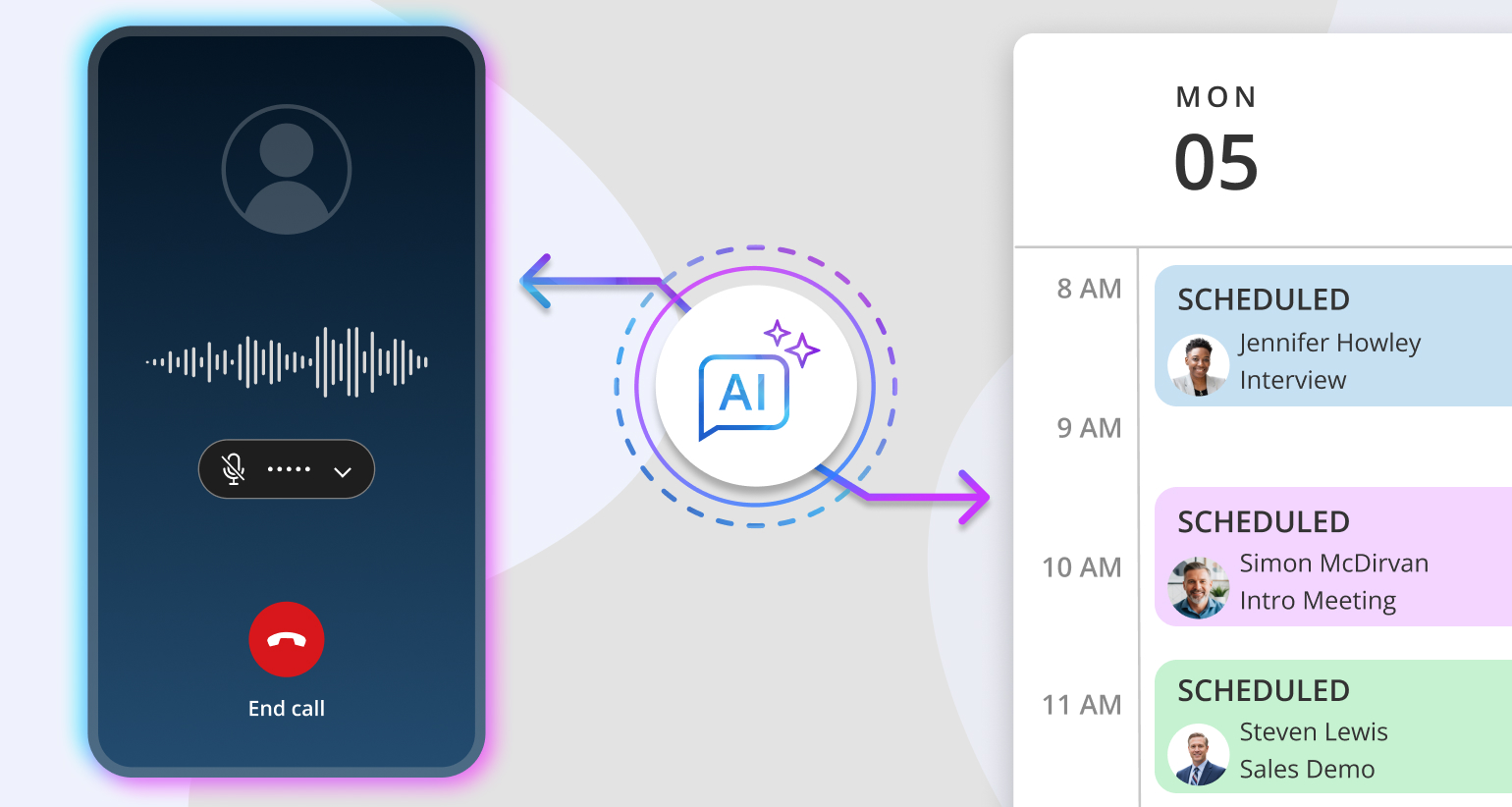
Industries that benefit most from an AI receptionist include financial advisors, professional coaches, healthcare clinics, home service contractors, law firms, and real estate agencies that rely on instant lead capture. While almost any business can use voice automation, companies that depend heavily on inbound phone appointments see the fastest return on investment.
Financial Advisors
- Wealth management firms use AI receptionists to screen inbound prospects by investable assets, retirement timeline, and service type before a single advisor minute is spent on the call.
- Qualified prospects are routed directly to the right advisor's calendar based on their financial profile and the firm's minimum criteria.
- After-hours calls from high-net-worth clients are answered immediately and booked professionally, reflecting the standard of service clients expect from a premium practice.
- Firms running paid digital campaigns use the AI receptionist to filter unqualified leads automatically, protecting advisor time from prospects who will never convert.
Professional Coaches
- Business and life coaches use AI receptionists to manage inbound discovery call requests without interrupting their active client sessions.
- The agent answers questions about coaching packages, session formats, and pricing before offering a booking slot to interested prospects.
- Rescheduling requests and calendar changes are handled automatically without the coach needing to step in manually.
- After-hours inquiries from prospective clients in different time zones are captured and booked instantly, ensuring no opportunity is lost to a slow response.
Healthcare Clinics
- Medical office managers use HIPAA-compliant scheduling assistants to answer patient questions about insurance coverage and appointment availability.
- The agent books routine consultations directly into the provider's calendar without front desk involvement.
- This clears jammed waiting room phone lines and allows staff to focus entirely on patients physically standing in front of them.
- After-hours patient calls are answered immediately, reducing missed appointment opportunities and front desk voicemail backlogs.
Home Service Contractors
- Plumbers, HVAC technicians, and electricians deploy voice agents to answer emergency calls instantly while they are out in the field.
- The agent captures the caller's location, describes the issue, and secures the booking before the contractor finishes the current job.
- No emergency lead goes unanswered, regardless of how busy the crew is or what time the call comes in.
- Contractors stop losing repair jobs to competitors simply because they cannot pick up the phone while driving between sites.
Law Firms
- Attorneys use voice assistants to handle initial client intake securely without consuming any paralegal or partner time.
- The agent asks basic screening questions to identify the legal issue and filter out conflicts of interest before a human ever joins the conversation.
- Qualified consultations are booked directly onto the right calendar automatically based on practice area and availability.
- After-hours inquiries from prospective clients are captured and scheduled immediately rather than lost to voicemail.
Real Estate Agencies
- Property managers and realtors use AI receptionists to answer after-hours buyer and seller inquiries when agents are unavailable or in active showings.
- The agent captures the caller's budget, target neighbourhood, and timeline before scheduling a property viewing automatically.
- Weekend and evening calls are answered with the same professionalism as business hours, ensuring no commission is lost to a missed call.
- High-intent buyers browsing listings outside business hours receive an immediate response and a confirmed next step before a competitor agent picks up the phone.
Also read: Narrow AI vs General AI: What Works Best for Businesses?
Are there any drawbacks to using an AI receptionist?
The main drawback to using an AI receptionist is that certain highly emotional or complex customer service issues still require the empathy and nuanced judgment of a live human being.
It is important to address the elephant in the room with complete candor: AI is not a complete human replacement. If a customer is calling to report a deeply sensitive issue, or if their problem requires a creative workaround that is not documented in your knowledge base, a robotic response will only frustrate them further.
This limitation is exactly why the best platforms feature an instant live handoff. A properly configured system acts as the ultimate filter. It handles the vast majority of routine scheduling and FAQ tasks automatically, but instantly routes complex, highly emotional calls directly to your real staff so they can provide the human empathy required to save the customer relationship.
Conclusion: Never Lose Another Lead to Voicemail
An AI receptionist is a critical business tool that separates growing companies from those losing revenue to missed calls. By upgrading to an intelligent voice agent, you eliminate frustrating hold times, securely capture after-hours leads, and free your staff to focus entirely on in-person clients. It listens, understands, and executes tasks just like a human receptionist, but at a fraction of the cost.
If you are ready to stop sending valuable leads to voicemail, OnceHub’s AI Phone Receptionist is the ultimate solution. Built as a dedicated scheduling engine, it requires zero complex configuration. It natively reads your live calendar, asks your qualifying questions, and securely books appointments directly onto your schedule.
Do not let another missed call cost you a customer. Sign up for a free OnceHub account today to deploy your fully functional AI phone receptionist in minutes.
Frequently Asked Questions
How much does an AI receptionist cost?
An AI receptionist costs significantly less than hiring a full-time human employee, typically operating on a predictable monthly subscription or a per-minute usage rate that easily scales with your business volume.
Can an AI receptionist transfer calls to a real person?
An AI receptionist can transfer calls to a real person by using intelligent intent recognition to identify complex issues and instantly route the caller to the correct human department with the full conversation transcript attached.
How long does it take to set up an AI receptionist?
It takes only a few minutes to set up an AI receptionist when using a modern no-code visual builder, allowing you to connect your calendar, type your business instructions, and deploy a live voice agent on the same day.
Are AI receptionists secure for handling sensitive customer data?
AI receptionists are highly secure for handling sensitive customer data, with top-tier providers offering enterprise-grade encryption and strict compliance measures to protect medical details, appointment records, and caller histories.
Will an AI receptionist completely replace my front desk staff?
An AI receptionist will not completely replace your front desk staff, but rather act as a powerful filter that handles routine scheduling and repetitive questions automatically so your human team can focus entirely on high-value, in-person customer interactions.