

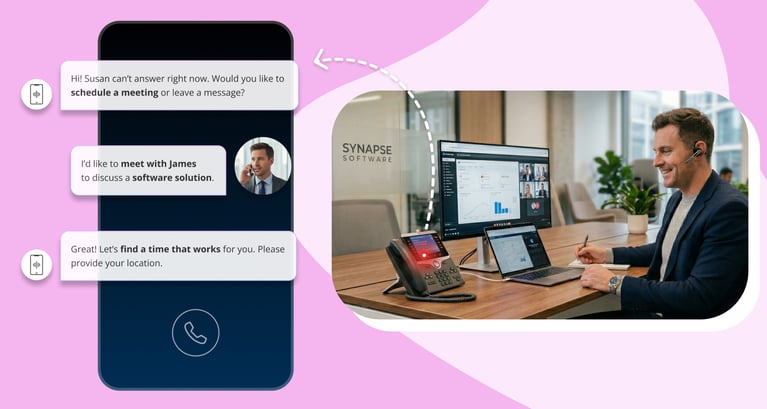
The best AI call answering services for high-ticket sales go beyond taking messages. They act as intelligent virtual sales development representatives that qualify inbound leads, handle initial objections, and book premium prospects directly onto an account executive’s calendar.
In high-ticket sales, a missed call carries outsized consequences. Human SDRs (Sales Development Representatives) and closers (account executives or senior sales representatives) cannot be available 24/7, and standard answering services function as message-takers, stalling buyer momentum by forcing prospects to wait for a callback. The question for any serious sales team is not whether to automate first response; it is which system handles that response with the precision high-ticket buyers expect.
What is an AI answering service, and how does it work for high-ticket sales?
An AI answering service is a voice-based system that answers inbound calls automatically, conducts a real conversation with the caller, and completes a defined action, such as booking a meeting, routing to a human, or capturing qualification data, without requiring a live agent to be present.
While often searched as an "AI call answering service," the more useful distinction for high-ticket sales teams is between two fundamentally different types of tools:
- A basic AI receptionist takes messages, answers simple FAQs, and logs call details for human follow-up. It removes the voicemail problem but does not advance the sale.
- A specialised AI voice agent qualifies the caller against your criteria, handles common objections, and routes or books the prospect directly — functioning as the first step in your sales process rather than a message-taking layer in front of it.
For businesses where a single deal can represent significant revenue, the difference between these two categories is not a feature distinction, it is a pipeline distinction.
Also Read: What is an AI Answering Service, and How to Handle Calls Automatically
How a specialised AI voice agent handles high-ticket inbound calls
Intent detection: Distinguishing between an existing customer with a support issue and a high-intent buyer ready to engage with your sales process.
Lead qualification: Working through your qualification criteria - budget, authority, need, timeline, in a natural conversational flow rather than a scripted interrogation.
Routing or booking: Directing the qualified prospect to the right closer's calendar, or triggering a live transfer if the situation warrants immediate human involvement.
Why high-ticket workflows demand more than standard answering services
High-ticket sales environments place specific demands on call-handling infrastructure that standard tools were not built to meet.
Conversation quality and response speed
Premium buyers form an impression of your brand within the first seconds of a call. A hesitant, robotic, or laggy response signals the wrong thing about a business asking someone to make a significant financial commitment. The AI handling your inbound calls needs to sound and respond like a capable, attentive representative — not a phone tree.
Complex qualification logic
Routing a $500 software subscription and a $50,000 consulting engagement requires very different intake processes. High-ticket AI call handling needs to support branching qualification logic, not just a linear script.
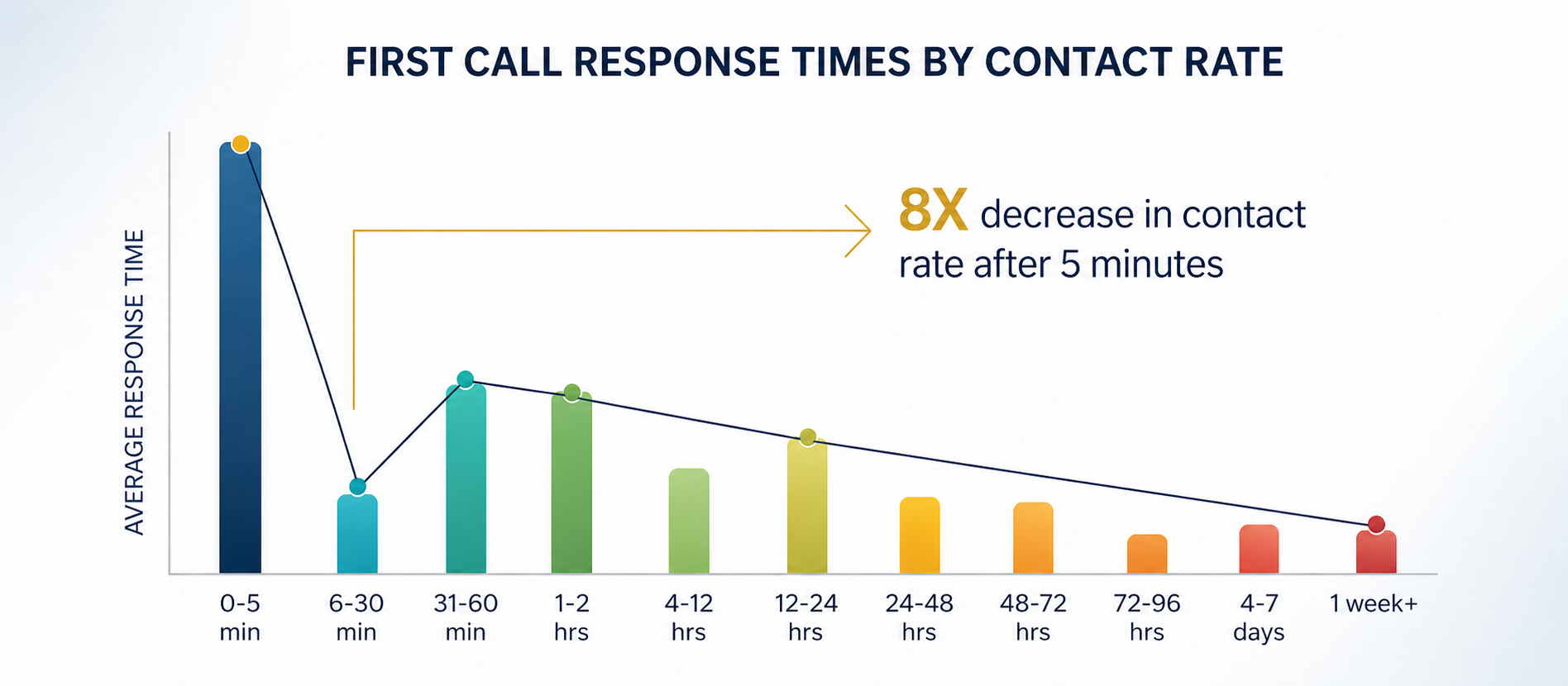
The practical implication for high-ticket teams is that inbound interest captured and qualified on the first call is meaningfully more likely to convert than interest that enters a callback loop.
Calendar precision
In high-ticket environments, a double-booked closer or a promised time slot that does not actually exist is not a minor administrative inconvenience; it is a trust failure at the worst possible moment. The booking step needs to be reliable.
What high-ticket sales teams need from an AI answering service
Strict lead qualification and filtering
Your AI should not book every caller; it should filter for the prospects who meet your criteria. This requires context-aware qualification logic built around your specific BANT thresholds, not a generic intake script.
Conversation quality with no added latency
High-ticket buyers expect a responsive, natural conversation. Systems that route calendar requests through third-party APIs introduce delays that break conversational flow. Look for platforms where calendar logic is handled natively rather than through external connections, which eliminates the lag associated with third-party API calls.
Native calendar synchronisation
A significant risk with basic AI tools is booking a time slot that does not actually exist, caused by API lag between the voice system and the calendar. High-ticket teams need a scheduling engine that reads live availability directly, inheriting your existing routing rules, round-robin logic, and buffer times without a separate integration layer.
Live transfer for high-priority callers
When a highly qualified prospect calls, waiting until tomorrow for a scheduled meeting is not always the right response. The system should support an immediate live transfer to a human advisor while the prospect is still on the call.
Zero configuration overload
Many AI voice platforms require building complex dialogue trees, writing custom code, or configuring integrations before the system is operational. For sales teams, particularly smaller ones without dedicated technical resources, this overhead is a real barrier. A tool that works within your existing calendar and routing configuration from day one removes that friction entirely.
Purpose-built intake, not a generic bot
There is a meaningful difference between a configurable AI platform and a tool built specifically for sales intake. Generic bots can be adapted to many use cases, but a purpose-built sales intake tool arrives with the right defaults, qualification frameworks, objection handling patterns, and booking logic already in place.
Two scenarios: standard answering service vs. AI voice agent
Scenario A — The standard loop
An inbound lead from a targeted campaign calls at 8 PM. A traditional answering service takes a generic message. The closer calls back the next morning, plays phone tag across two attempts, and the prospect has already booked a demo with a competitor.
Scenario B — AI voice agent
The same lead calls at 8 PM. The AI answers immediately, works through three qualification questions, handles a "we're just exploring options" response, and confirms a meeting in the closer's calendar for the following morning — all before the call ends.
The operational difference is not just speed. It is that the prospect's intent was captured at its peak, on their preferred channel, without requiring anyone on your team to be available.
Best AI Call Answering Services for High-Ticket Sales
OnceHub's Phone Agent — Best for high-ticket precision intake
OnceHub's Phone Agent is built around scheduling as the primary outcome, giving it a structural advantage in sales environments where booking precision and routing accuracy matter.
- Native scheduling engine: Calendar availability is read and confirmed directly within OnceHub's own system rather than through an external API. This removes the lag associated with third-party calendar connections — if a time slot is offered, it reflects live availability.
- No configuration overload: OnceHub's Phone Agent inherits your existing routing rules from the moment it is set up — round-robin logic, buffer times, and lead qualification criteria — without requiring a technical build-out. It is designed to handle high-ticket sales call volume around the clock.
- Instant live handoff: When the AI identifies a high-priority prospect, it can transfer the call directly to a human closer while the prospect is still on the line.
Best for: Sales teams that need precise inbound qualification and calendar booking with minimal setup overhead, particularly lean teams without dedicated technical resources. See pricing.
Bland AI — Best for high-volume outbound campaigns
Bland AI is a developer-oriented platform built for large-scale outbound calling. It is designed for teams that need to run high-volume automated call sequences at speed.
- Outbound volume: Handles large-scale outbound campaigns with strong throughput — well-suited to teams running structured prospecting sequences.
- Developer flexibility: Highly configurable for technical teams who want precise control over call flows, scripting logic, and integration architecture.
- API and webhook-based: Calendar and CRM connections are handled through external integrations, giving technically resourced teams flexibility in how they build their stack.
Best for: Teams running high-volume outbound campaigns who have the technical resources to configure and maintain custom workflows. See pricing.
Synthflow AI — Best for agency-scale no-code builds
Synthflow is designed for agencies and teams that need to deploy voice agents quickly across multiple clients or use cases without writing code.
- No-code interface: Accessible for non-technical users, with a template library that allows agents to be configured and deployed without developer involvement.
- Multi-client flexibility: Well-suited to agencies managing voice agent deployments across a broad roster of clients with varying requirements.
- API-connected scheduling: Calendar booking is triggered through third-party integrations at the end of the call flow, giving teams flexibility in which tools they connect.
Best for: Agencies and technically accessible teams building and managing voice agents across multiple clients or varied use cases. See pricing.
Smith.ai — Best for hybrid human-in-the-loop triage
Smith.ai combines AI with live receptionists, making it a strong option for businesses where certain calls genuinely benefit from human judgment in the first-response layer.
- Human + AI hybrid: Live receptionists handle nuanced or sensitive calls, with AI supporting triage and routing — a model that adds warmth and adaptability to complex inbound situations.
- Custom call scripts: Receptionists follow your intake script, with the flexibility to respond to unexpected conversation turns that fall outside a scripted AI flow.
- Guided onboarding: Script setup and onboarding are handled collaboratively with the Smith.ai team, reducing the configuration burden on your side.
Best for: Practices where sensitive, complex, or high-touch calls benefit from a human in the first-response layer. See pricing.
Quick Comparison: AI Call Answering Services for High-Ticket Sales
|
Capability |
OnceHub's Phone Agent |
Bland AI |
Synthflow AI |
Smith.ai |
|
Primary job |
Inbound sales intake engine — qualifies prospects and books them directly onto a closer's calendar within the original call |
High-volume outbound calling platform — executes large-scale automated call sequences |
No-code voice agent builder — deploys customisable AI agents across multiple clients or use cases |
Human + AI hybrid service — live receptionists supported by AI triage for nuanced call handling |
|
Scheduling architecture |
Native scheduling engine — availability is read and confirmed directly within OnceHub's own system, with no third-party API calls in the booking step |
API and webhook-based — calendar connections handled via external integrations |
API-connected — calendar booking triggered through third-party integrations at the end of the call flow |
Human-confirmed — receptionists handle booking coordination with AI assisting triage |
|
Lead qualification |
Configurable qualification logic built around your BANT criteria — filters prospects before offering a calendar slot |
Qualification scripting available — best suited to structured outbound sequences |
Fully customisable qualification flows — branching logic configurable without code |
Live receptionist follows your intake script — human judgment applied throughout |
|
Setup and configuration |
Works within your existing calendar and routing configuration — round-robin logic, buffer times, and routing rules inherited from your current setup |
Developer-oriented — requires technical resources to build and maintain call flows |
No-code interface — accessible for non-technical users, with strong template library |
Guided onboarding — script setup handled with support from the Smith.ai team |
|
Live transfer capability |
✓ Instant live handoff to a human closer when a high-priority prospect is identified |
✗ Not a primary feature — built for outbound volume rather than inbound transfer |
● Available via configuration — requires custom build |
✓ Native — human escalation is central to the hybrid model |
|
Best for |
Sales teams that need precise inbound qualification and booking with minimal configuration overhead — particularly lean teams without dedicated technical resources |
Teams running large-scale outbound campaigns who need volume and speed over inbound precision |
Agencies or technically confident teams building custom voice agents across multiple clients |
Practices where sensitive or complex calls benefit from a human in the first-response layer |
Note: Pricing for all platforms is subject to change — verify directly with each vendor.
How to choose the right AI phone answering system for your sales floor
Identify your primary bottleneck
Are you losing leads because calls go unanswered, because qualification is inconsistent, or because closers are spending too much time on unqualified prospects? The right tool addresses your specific gap — not just the most visible one.
Evaluate calendar integration depth
This is where many platforms fall short in practice. Confirm whether the tool reads your calendar natively or via a third-party API, and test what happens when availability changes mid-call. Attribution and routing accuracy depend on this working reliably.
Assess conversation quality
Test the AI yourself, as a prospect would experience it. Does the conversation feel natural? Does it handle an unexpected response without breaking? For high-ticket buyers, the quality of this interaction reflects directly on your brand.
Consider your team's technical capacity
If your sales team is small or does not have dedicated technical resources for configuration and ongoing maintenance, the setup overhead of a highly flexible but complex platform may not be worth the trade-off. A purpose-built tool like OnceHub's Phone Agent that works within your existing calendar configuration from day one is often a better fit for lean teams than a fully customisable platform that requires significant build time.
Evaluate cost against deal value
In high-ticket sales, the ROI calculation is relatively straightforward: if the tool captures one additional qualified meeting per month that would otherwise have been lost to a missed call or a callback delay, what is that worth against the monthly cost? Run that calculation against your average deal value before making a decision.
Use cases: AI answering services in high-ticket industries
Enterprise SaaS sales
Routing complex enterprise enquiries to the right Account Executive based on company size, use case, or deal size — without a human SDR in the loop. The AI qualifies on the call and routes the booking to the appropriate rep's calendar automatically.
Real estate and luxury brokering
Capturing high-net-worth buyer enquiries around the clock, including from international buyers in different time zones. A high-intent buyer calling at an unusual hour receives an immediate, professional response and leaves with a confirmed viewing or consultation booked.
Financial and wealth advisory
Screening inbound enquiries for investable assets and financial goals in a natural, conversational tone before the advisor's calendar is offered. Closers enter every discovery call with qualification data already captured.
High-end consulting and mastermind programmes
Filtering inbound call volume against strict revenue or qualification prerequisites, so closers only speak to prospects who meet the criteria. Prospects who do not qualify are directed to appropriate next steps rather than simply declined.
Benefits of AI voice agents for high-ticket sales teams
Consistent qualification:
Every inbound call is handled against the same criteria, removing the variability that comes with human SDRs operating at different times or energy levels.
Captured intent:
Prospects are engaged at the moment they call — when their interest is highest — rather than through a callback that arrives after the initial impulse has faded.
Protected closer time:
Closers receive only pre-qualified meetings, with qualification data already captured, rather than spending time on calls that should have been filtered earlier in the process.
Scalable during campaign peaks:
When inbound call volume spikes during a marketing push, an AI voice agent handles the volume without dropped calls or degraded response quality.
Reduced customer acquisition cost:
Automating the qualification and booking steps reduces the overhead of manual SDR triage, lowering the cost per qualified meeting over time.
Conclusion
In high-ticket sales, the gap between an inbound call and a confirmed meeting on a closer's calendar is where deals are won or lost. Traditional answering services widen that gap. A well-configured AI voice agent closes it.
The right platform for your team depends on your workflow, your technical capacity, and where your current process is losing qualified prospects. What matters most is that the tool you choose completes the booking step — not just answers the call.
FAQs
What is the best AI call answering service for high-ticket sales?
The right choice depends on your specific workflow. For sales teams that prioritise native calendar precision and minimal configuration overhead, OnceHub's Phone Agent is a strong fit. For teams running high-volume outbound sequences, Bland AI offers strong capabilities. For hybrid human-AI triage, Smith.ai is worth evaluating. The best starting point is identifying where your current process is losing qualified prospects and matching the tool to that gap.
Can AI effectively handle sales objections on a call?
Advanced AI voice agents can navigate common first-response objections — around timing, pricing exploration, or the need to involve a partner — using pre-configured conversation logic. For complex, multi-layered objections that require real-time judgment and relationship nuance, human involvement remains the stronger option. The most effective use of AI in this context is handling the qualification and booking step, not the full sales conversation.
Do AI answering services sound natural enough for high-ticket buyers?
Modern AI voice agents built for sales use cases have improved significantly in conversational naturalness. The most important factors are response speed and the ability to handle unexpected replies without breaking the flow. Testing the system as a prospect would experience it — before deploying it on live inbound calls — is the most reliable way to assess this for your specific use case.
Will an AI voice agent integrate with my CRM like HubSpot or Salesforce?
Most platforms in this category offer CRM integration for logging call data, updating lead status, and syncing meeting bookings. The depth and reliability of that integration varies. Confirm whether the connection is native or relies on a middleware tool like Zapier, as this affects both data accuracy and the speed of the sync.
When should a sales team implement an AI phone agent?
A few clear signals suggest the timing is right: inbound call volume is growing faster than your SDR team can handle it, closers are spending a disproportionate amount of time on calls that should have been pre-qualified, or your speed-to-lead metrics are consistently slipping past the window where conversion rates are highest.
What happens to calls that come in outside business hours?
This is one of the clearest practical advantages of an AI voice agent. A high-intent prospect calling after hours, or from a different time zone, receives an immediate, professional response rather than a voicemail. The qualification and booking step can be completed on that call, capturing the prospect's intent at the moment it is highest regardless of when they called.
How do I know if an AI voice agent is right for a small or lean sales team?
For smaller teams without dedicated technical resources, the most important factor is setup simplicity. A platform that requires building custom dialogue trees or maintaining ongoing integrations may create more overhead than it removes. Tools that work within your existing calendar and routing configuration from the start, like OnceHub's Phone Agent, tend to be a better fit for lean teams than highly flexible platforms that require significant build time to reach the same outcome.
What is the real cost of a missed high-ticket call?
In premium sales, a missed call is not just a missed message; it is a live prospect who called you, did not reach anyone, and is now evaluating your competitors. Traditional answering services create an artificial barrier between inbound intent and a confirmed booking. An AI voice agent removes that barrier by handling the call immediately, in the caller's preferred medium, at any hour.