

The best RingCentral alternatives for 2026 depend on your business needs: OnceHub is the top pick for automated meeting scheduling. For unified team communications (UCaaS), Nextiva, Dialpad, and Zoom Phone offer flexible, cost-effective alternatives. For high-volume enterprise contact centers, Five9, Talkdesk, and Genesys Cloud CX are the leading options.
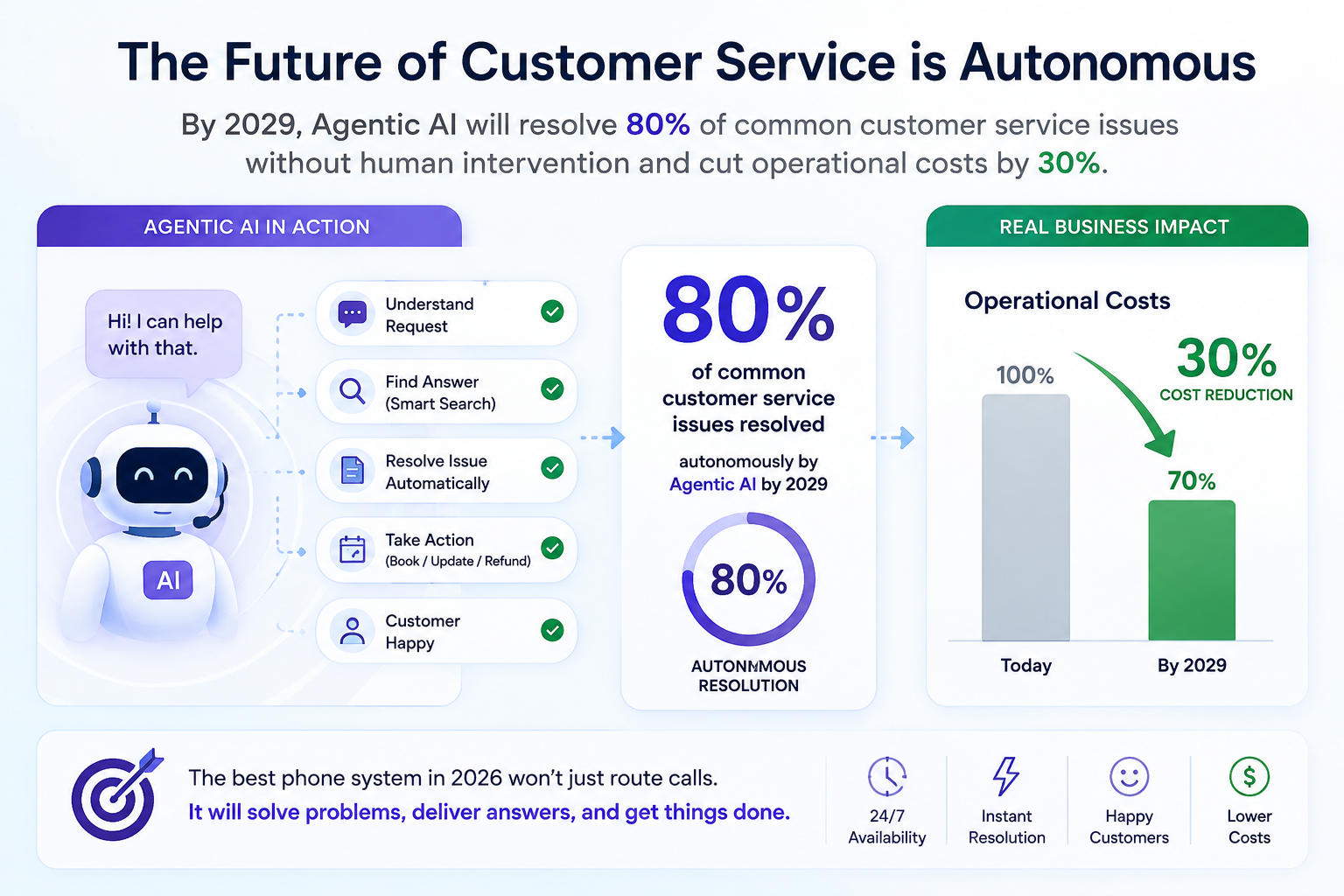
This shift isn't speculative. According to Gartner, by 2029, agentic AI will autonomously resolve 80% of common customer service issues without human intervention, cutting operational costs by 30%. In other words, the phone system you pick in 2026 should be judged on what its AI can finish, not just what it can route.
The specific problem isn't RingCentral's base license, which is competitively priced at $20 per user per month for Core. It's that the pieces most teams actually want in 2026 sit behind separate purchases. CRM integrations with Salesforce or HubSpot wait until the $25 Advanced plan. The AI Receptionist is a metered add-on from $39 per month alongside a RingEX license, or $49 standalone. Conversation Intelligence, now called AI Conversation Expert and formerly RingSense, runs about $60 per user. The RingCX contact center is a separate license again, at $65 per agent. RingCentral remains a strong choice for large distributed teams looking to standardize on a single, comprehensive voice, video, SMS, and collaboration stack.
None of that is hidden, but it stacks. According to third-party breakdowns from CloudTalk and Nextiva, real RingCentral invoices can range from 20% to over 50% above advertised rates at scale once regulatory fees and SMS overages land. In fairness, RingCentral commonly offers steep volume discounts on multi-year contracts.
What to evaluate before switching from RingCentral
Four questions separate the tools on this list more than any feature checklist will.
Passive AI or active AI
This is the distinction that matters most in 2026, and it's the one most comparison articles skip. Passive AI listens: it transcribes the call, summarizes it, and scores sentiment afterward. That's what RingCentral's conversation intelligence does. Active AI speaks: it holds the conversation, qualifies the caller, and completes an action while the caller is still on the line. A transcript of a call you missed is not the same as a booked meeting.
Most platforms on this list are passive by default and sell active AI as a metered add-on, if they offer it at all, so the question isn't whether a vendor has AI. It's whether the AI is included in the seat or billed by the minute. We've written a fuller breakdown of that gap in our comparison of IVR systems versus AI phone agents.
UCaaS or CCaaS
Unified communications (UCaaS) is built for internal collaboration plus everyday external calling. Contact center software (CCaaS) is built for high-volume queue management, workforce scheduling, and compliance. Buying CCaaS for a 12-person team is one of the more expensive mistakes in this category.
Integration depth
Does the system natively write call data into Salesforce or HubSpot, or does it need a middleware connector? Worth checking at your actual price tier, not the tier on the marketing page. Dialpad, for instance, includes AI transcription on its cheapest plan but withholds CRM integrations until the next tier up.
Category 1: Automated scheduling
This is the category built to handle the customer directly, before a human is ever involved.
1. OnceHub's AI Phone Receptionist: Best for automated inbound calls and calendar booking
%20(1).jpg?width=1540&height=748&name=OH%20Screenshot%20(1)%20(1).jpg)
The RingCentral gap: RingCentral is architected to route calls to human workers. That's a real strength when your staff is available. When they aren't, the call defaults to voicemail unless a human is free to pick up.
RingCentral does offer an AI Receptionist add-on, and to be fair, it can book appointments. The difference is in how it's packaged and where the calendar lives. It's metered rather than native: roughly $39 per month bundled with a RingEX license, or $49 standalone, with 100 minutes included, $0.50 per minute after that, and call time rounded up in 30-second increments. For a business taking more than a few calls a day, that turns into a usage-monitoring exercise rather than a fixed line item.
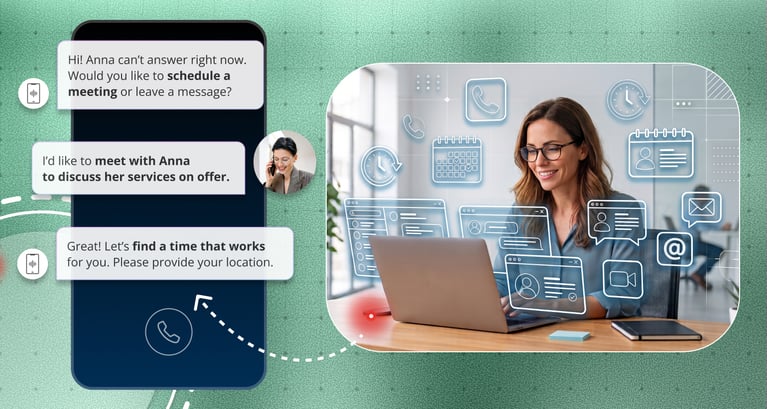
Why OnceHub was built differently: OnceHub is not trying to replace a phone system's internal calling. OnceHub's AI Phone Receptionist was designed to handle the one moment a routing system structurally cannot: the inbound call that should have become a booked meeting. It answers 24/7, speaks naturally rather than reading a menu, works through qualifying questions, checks live calendar availability, and confirms the appointment, ensuring the booking is complete. No callback promise, no booking link sent by text.
The piece the platform cares most about is less visible. The availability check and the booking happen inside the same native engine. Tools that check a calendar through a third-party API introduce a gap between "this slot looks open" and "this slot is now yours," and in that gap a slot can get taken. It sounds like a technical footnote until it happens to a client meeting. OnceHub wrote up how that failure actually unfolds in its guide to double booking.
The platform extends past voice with the same logic. Routing Forms qualify and distribute inbound leads before they reach a person, and web-based chatbots hold a conversation on your site and hand off to a live rep when a query needs one.
Key features
- 24/7 AI phone receptionist that qualifies callers and books meetings without human involvement
- Native scheduling engine, so availability checks and bookings happen in one system
- Routing Forms for pre-qualification and round-robin distribution
- Web-based AI chatbots with live handoff
- Native calendar sync with Google Workspace and Microsoft 365, plus Zoom, HubSpot, and Salesforce
- A native n8n integration, plus direct connections to Zapier, Make, and Microsoft Copilot Studio
Pros
- Purpose-built for the moment a routing-first phone system structurally cannot cover
- Native scheduling removes the double-booking risk that comes with API-based availability checks
- Per-seat pricing rather than a base license plus metered AI minutes on top
Cons
- Not a replacement for internal team calling, messaging, or video conferencing
- Overkill if your inbound calls are mostly support tickets rather than revenue conversations
Pricing: A free Basic tier covers a single user and a booking link. Paid plans start at $12 per seat per month for Schedule, $23 for Route (which adds the routing forms and round-robin distribution), and $47 for Engage (which adds the AI chatbot layer). A security and compliance add-on runs $5 to $6 per seat per month if you need HIPAA BAAs or SSO.
Best for: Service businesses, consultants, financial advisors, and sales teams where a missed inbound call means a lost booking rather than a delayed support reply.
Category 2: Unified communications (UCaaS)
If what you need is reliable calling, messaging, and video for a team, these three cover it without contact center pricing.
2. Nextiva: Best overall UCaaS alternative
The RingCentral gap: RingCentral's app has accumulated a lot of surface area over the years, and SMB reviewers have long flagged support responsiveness as a weak point.
Why Nextiva wins: It delivers voice, video, and SMS in one reasonably clean app, backed by a 99.999% uptime SLA and 24/7 US-based support that comes up consistently in reviews as a genuine differentiator. Entry pricing starts around $15 per user per month on annual billing, undercutting RingCentral Core.
One honest caveat: Nextiva's published pricing varies noticeably across sources depending on plan tier, contract length, and whether you're quoted as a small business or enterprise. Reported figures range from $15 to $75 per user per month across tiers. If you're comparing, get a written quote rather than trusting a comparison table, including ours.
Best for: Small to mid-sized teams that want one dependable all-in-one phone system and actual human support when it breaks.
3. Dialpad: Best for built-in conversational AI
The RingCentral gap: RingCentral charges roughly $60 per user per month for conversation intelligence as an add-on.
Why Dialpad wins: Dialpad is AI-native, and it deserves real credit here. Real-time transcription, call summaries, and sentiment analysis are included in every Connect plan, starting at $15 per user per month on annual billing. That's more AI in a base tier than most competitors offer at any price.
The catch worth knowing before you sign: the $15 Standard plan excludes CRM integrations entirely. Salesforce, HubSpot, and Zendesk connections require Pro at $25 per user per month annually. Monthly billing also jumps sharply to $27 for Standard. And Dialpad's contact center product, Dialpad Support, is a separate license starting around $80 per user per month, which is a steep step up from Connect.
Best for: Sales teams that want conversational intelligence and coaching insight without paying for it as a premium add-on.
4. Zoom Phone: Best for video-first teams
The RingCentral gap: If your team already lives in Zoom for video, paying RingCentral separately for voice is duplicated spend.
Why Zoom wins: The metered plan starts at $10.50 per user per month on annual billing, the lowest entry point on this list. It consolidates your stack neatly if Zoom is already where meetings happen.
Read the metering carefully, though. On the entry plan, outbound PSTN calls bill pay-as-you-go at roughly $0.03 per minute, so a team making heavy outbound calls will see a variable bill. The unlimited domestic plan at about $16 per user per month removes that volatility and is usually the more predictable choice.
Best for: Budget-conscious teams already invested in the Zoom ecosystem.
Category 3: Enterprise contact centers (CCaaS)
These are built for hundreds of agents, formal workforce management, and compliance regimes. Pricing reflects that.
5. Five9: Best for high-volume outbound
The RingCentral gap: RingCentral's contact center is capable but can be complex to deploy, and RingCX sits as yet another separate license.
Why Five9 wins: Its predictive dialer remains among the most refined in the market for outbound-heavy North American operations, and it has moved aggressively into agentic voice AI for enterprise workflows. Each bundled seat includes 3,000 AI minutes.
The catch: Five9 enforces a strict 50-seat minimum on every plan, including entry tiers. Digital (digital channels only) runs about $119 per user per month, and Core (voice plus digital) runs roughly $150 to $159, depending on the quote. At Core pricing, that minimum creates a floor near $7,950 per month, regardless of how many agents you actually have. Workforce management, quality monitoring, and advanced AI licenses are separate, and implementation fees are standard rather than optional. Industry estimates commonly put all-in costs significantly above the advertised per-seat rate at scale.
Best for: Compliance-heavy outbound operations with 100 or more agents. Not viable below 50.
6. Talkdesk: Best for deep workflow customization
The RingCentral gap: RingCentral's routing logic is comparatively rigid, and customizing it often means engineering time.
Why Talkdesk wins: Strong visual workflow builders and industry-specific AI models for verticals like healthcare and retail, with deployment timelines that typically run faster than legacy enterprise platforms.
Read the tiers carefully, because the headline price is misleading if you're replacing a phone system. CX Cloud Digital Essentials at roughly $85 per user per month covers email, chat, SMS, and social messaging, with no voice at all. Voice Essentials runs about $105 and covers voice without digital channels. CX Cloud Elite at roughly $165 is the real entry point if you need voice and digital together, which is what most teams leaving RingCentral are actually after.
Two structural notes: telecom charges bill separately from seat licenses, so the per-seat figure isn't your total, and Talkdesk's standard contract defaults to a 36-month term, with shorter terms available at a price premium.
Best for: Upper mid-market teams needing deep Salesforce or Zendesk integration and configurable routing without a long build.
7. Genesys Cloud CX: Best for omnichannel journey orchestration
Why Genesys wins: Few platforms connect voice, chat, email, and social into one coherent customer journey as well as Genesys does, and it's one of a small number of CCaaS platforms with full FedRAMP authorization, which matters for public sector work.
Pricing is tiered by capability: CX 1 at roughly $75 per user per month on annual billing for voice-first operations, CX 2 at about $115, adding digital channels and quality management, and CX 3 at about $155, adding full workforce engagement management. As with Talkdesk, telecom is billed separately.
Best for: Enterprises orchestrating genuinely omnichannel journeys, and regulated or public sector buyers.
Category 4: The SMB and CRM-first niche
Not every team needs a contact center or an AI front desk. Some just need calling that lives inside the CRM they already work in all day.
8. Aircall: Best for simple CRM-connected calling
Why Aircall wins: A library of well over 100 native integrations with one-click setup and no IT project required. Essentials starts around $30 per license per month on annual billing, or $40 billed monthly.
Two things to plan around. First, check which CRM you actually use, because Essentials covers HubSpot, Zendesk, and Pipedrive, but Salesforce sits on the Professional tier at roughly $50 per license per month, alongside the Power Dialer and queue callback. Essentials is also the one plan without AI Assist, which costs an extra $9 per license if you want call summaries and CRM auto-logging.
Second, Aircall enforces a three-license minimum on both paid tiers, so the real entry price is $90 per month rather than $30. A solo operator pays for three seats. That's fine for a small sales pod and wasteful for an individual.
Best for: High-velocity SMB sales teams that live inside their CRM.
Feature and pricing comparison
|
Provider |
Best for |
Starting price (2026) |
AI approach |
Books meetings natively |
|
OnceHub |
Inbound call automation and booking |
Free tier; paid from $12/seat/mo |
Active (speaks, qualifies, books) |
Yes |
|
RingCentral |
Established all-in-one UCaaS |
$20/user/mo annual, AI add-ons extra |
Passive, plus metered AI Receptionist add-on from ~$39/mo |
Add-on only, metered |
|
Nextiva |
Reliable all-in-one UCaaS |
~$15/user/mo annual |
Passive |
No |
|
Dialpad |
Built-in conversational AI |
$15/user/mo annual |
Passive, included on all tiers |
No |
|
Zoom Phone |
Video-first teams |
$10.50/user/mo annual, metered |
Passive |
No |
|
Five9 |
High-volume outbound |
~$119 to $159/user/mo, 50-seat minimum |
Passive, plus usage-based voice AI |
Add-on / not core to plan |
|
Talkdesk |
Configurable enterprise workflows |
~$85/user/mo digital-only; ~$165 for voice plus digital |
Passive, plus industry AI models |
Add-on / not core to plan |
|
Genesys Cloud CX |
Omnichannel orchestration |
~$75/user/mo annual |
Passive, plus Agent Copilot |
Add-on / not core to plan |
|
Aircall |
CRM-first SMB calling |
~$30/license/mo annual, 3-license minimum; ~$50 for Salesforce |
Passive, AI Assist extra on Essentials |
No |
Table last verified: August 6, 2026.
****Prices reflect published list rates as of mid-2026 and generally assume annual billing. Enterprise deals commonly close 15% to 40% below list, and telecom, regulatory fees, and AI overages are frequently excluded from advertised figures. Verify before signing.
Our top pick: best overall RingCentral alternative
OnceHub's AI Phone Receptionist, for most businesses where inbound calls drive revenue.
That recommendation comes with a scope limit worth stating plainly, because the honest answer to "what should replace RingCentral" depends on what RingCentral was doing for you. If you need internal team messaging, video meetings, and desk-to-desk calling for thirty employees, OnceHub is not that product, and Nextiva or Dialpad will serve you better. If you run a 200-agent outbound operation, you need Five9 or Genesys.
But for the far larger group of businesses whose real problem is that inbound calls turn into voicemail instead of booked meetings, OnceHub is the pick, for three reasons.
It's active rather than passive: Every other tool on this list treats AI as something that happens around the call: transcription, summaries, sentiment scores. Useful, but none of it answers the phone at 8pm on a Sunday. OnceHub's AI holds the conversation, screens the caller, and closes the loop by booking the meeting.
The scheduling is native, not an API handoff: The availability check and the booking write happen in the same engine, which is why two callers can't be offered the same slot seconds apart. For anyone whose calendar is the product, that architectural detail is the whole ballgame.
The pricing is a seat, not a meter: RingCentral's AI Receptionist is roughly $39 to $49 a month with 100 minutes included and $0.50 per minute after, rounded up in 30-second increments. That's a line item you have to watch. OnceHub is per seat, so a busy month costs the same as a quiet one.
Runner-up: Dialpad, if what you actually want is a full phone system with genuinely good AI included rather than sold as a $60 add-on. It won't book your meetings, but at $15 per user per month it gives you more AI in a base tier than anything else here.
The 2026 reality: why AI changes the phone system math
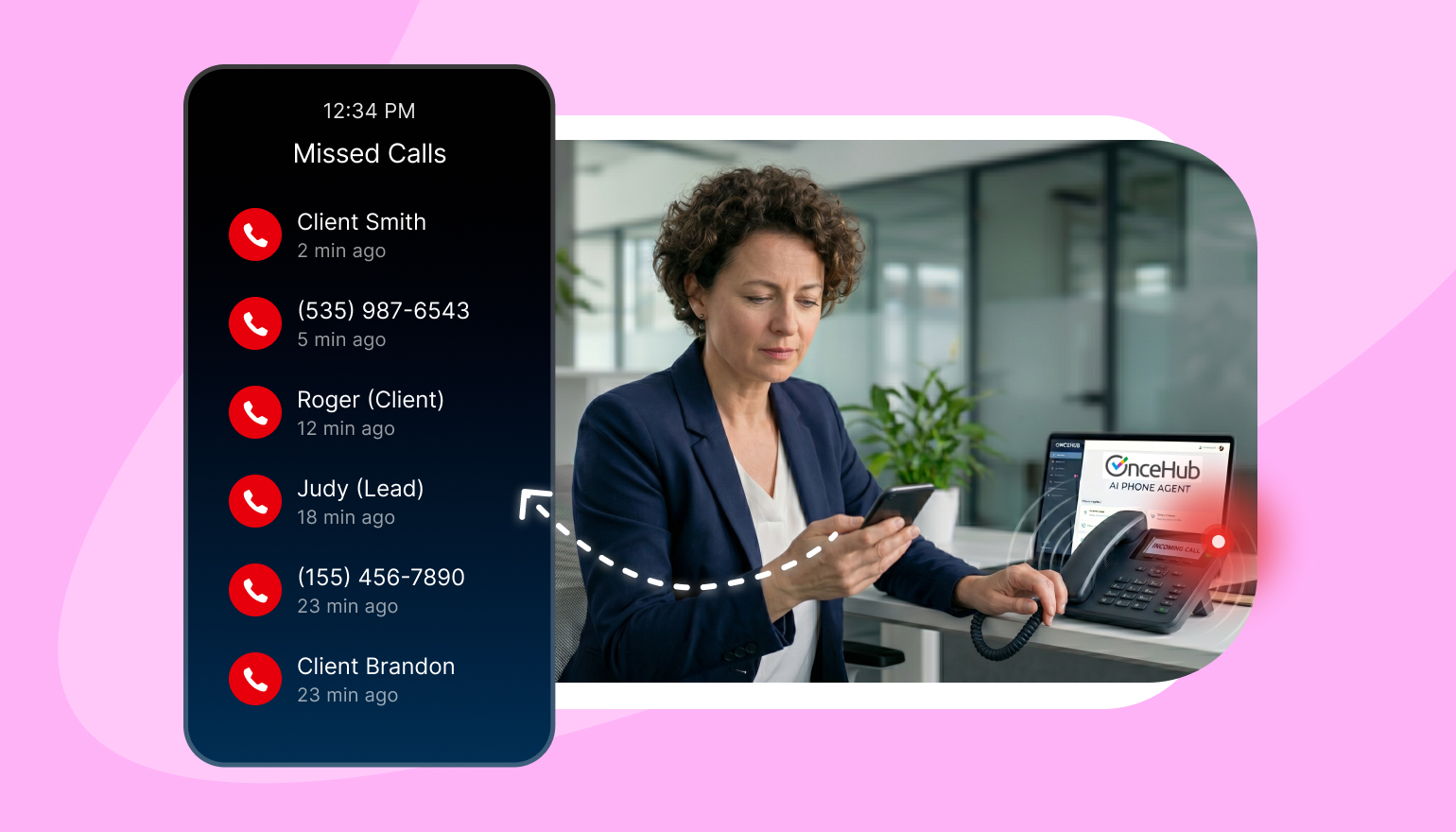
For twenty years, picking a phone system was a cost exercise: compare per-seat rates, count included minutes, choose the cheapest reliable option. That framing is now incomplete because the highest-leverage question isn't what you pay per seat. It's what happens to the call when nobody answers.
According to the latest Invoca Call Conversion Benchmarks report, 38% of answered calls are leads, and 42% of those convert on the call. A routing-first system sends that exact moment to voicemail. So a UCaaS platform and an AI receptionist aren't really competing for the same budget: one is an expense line you're shrinking, the other is a revenue line you're protecting. Most of the businesses OnceHub works with run both.
If that second line is the one you're worried about, OnceHub's AI Phone Receptionist sets up without code and keeps your existing phone system in place. Point it at your after-hours calls first and see what you've been losing.
Frequently asked questions
Is RingCentral cheaper than Nextiva or Dialpad?
On the base license price, they're close. RingCentral Core starts around $20 per user per month on annual billing, while Nextiva and Dialpad both start near $15. The gap widens on AI. Dialpad includes transcription, summaries, and sentiment analysis on its cheapest tier, whereas RingCentral prices conversation intelligence as a roughly $60 per user per month add-on. If AI features are part of your requirement, RingCentral usually ends up more expensive despite comparable headline pricing.
What is the difference between an auto-attendant and an AI receptionist?
An auto-attendant is a menu. It plays recorded options, waits for a keypress or a simple spoken choice, and routes the caller to an extension. Its logic is a fixed decision tree, so anything the tree doesn't anticipate becomes a dead end or a voicemail.
An AI receptionist holds a conversation. It uses natural language understanding to interpret what the caller actually wants, handles interruptions and mid-sentence changes, answers questions from your knowledge base, and can complete an action such as booking an appointment. The practical difference is what happens at the end of the call: an auto-attendant hands the caller off, while an AI receptionist can finish the job. We cover this in more depth in our breakdown of how AI receptionists work across different business types.
What is the best RingCentral alternative for Salesforce integration?
For CRM-first calling, Aircall is the most straightforward to deploy, but budget for the Professional tier at roughly $50 per license per month, because Salesforce isn't included on the $30 Essentials plan. Talkdesk is the stronger pick for enterprises needing deep bidirectional Salesforce integration with custom routing logic.
The pattern worth noticing is that Salesforce is a paywalled integration almost everywhere. On Dialpad, it requires Pro at $25 per user per month rather than the $15 Standard plan. On RingCentral, third-party CRM integrations don't unlock until Advanced at $25. So compare the tier that actually includes Salesforce, not the entry price on the marketing page.
Can an AI phone system actually book meetings for me?
Yes, though the implementation matters more than the claim. Some systems collect the caller's details and send a booking link afterward, which reintroduces the drop-off you were trying to eliminate. Others negotiate the time verbally and confirm it during the call. The question worth asking any vendor is whether the calendar availability check and the booking write happen in the same system or through a separate API call, because that architectural detail determines whether two callers can be offered the same slot seconds apart.
Is there a free RingCentral alternative for appointment booking?
Yes, OnceHub offers a free Basic tier that includes a booking link for a single user, making it a cost-effective alternative for simple appointment needs.
What happens to a RingCentral AI Receptionist call after hours?
If your internal team is unavailable and you haven't configured an AI-based solution, calls typically default to voicemail. OnceHub's AI Phone Receptionist serves as a 24/7 frontline, answering and booking meetings even when your office is closed.
***NOTE: OnceHub published this guide, and OnceHub's AI Phone Receptionist is one of the products recommended in it. Competitor pricing and features were compiled from vendor pricing pages and independent analyses as of mid-2026, and where sources disagreed we've said so in the text rather than picking the flattering number. Prices change often, so verify with any vendor before signing, including us.