

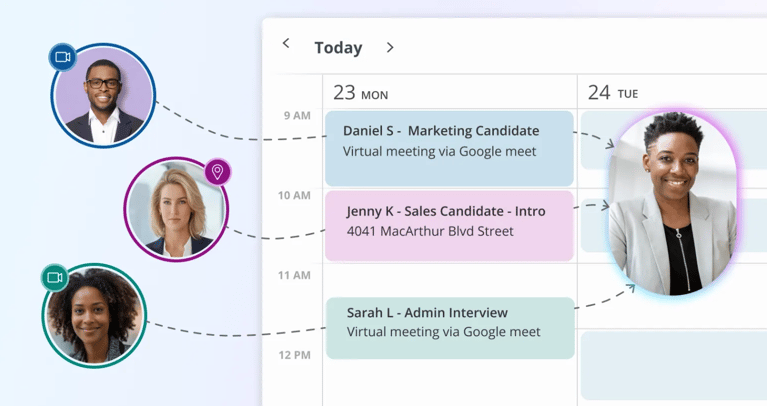
You can fix a broken line of code in minutes, but a hiring decision echoes for years. It is the single most high-stakes game a company plays. The people you bring on board determine your culture, your product velocity, and your bottom line. As an HR professional, you are the protagonist at the center of this mission. You are responsible for finding the talent that will drive the company’s future.
But there is a formidable obstacle standing between you and that top talent. It is not a lack of candidates or a shortage of budget. It is the sheer logistical gridlock of the process itself.
You find yourself trapped in a cycle of emails, calendar cross-checks, and waiting games. You spend more time acting as a travel agent for interview slots than you do evaluating skills and cultural fit. Every hour you spend navigating time zones is an hour lost on building relationships. Worse, every delay in the process gives your competitors a chance to snatch up your best candidates.
To win this game, you do not just need to work harder. You need a better strategy. You need to master the art of interview scheduling. This is not about simply sending a link. It is about constructing a journey that respects your time and the candidate’s experience.
Here is how you can transform your hiring workflow from a chaotic scramble into a strategic advantage.
Setting a Professional Tone From the First Click
The journey begins with the first interaction. This is where friction begins. You send an email asking a candidate for their availability. They reply a day later. You check the hiring manager’s calendar and realize those slots are gone. You email back. The momentum dies before it even starts.
This friction is the enemy of momentum. It signals disorganization to top talent who expect speed. The modern approach flips the script: instead of asking for availability, you offer immediate access. You replace the chore of coordination with a professional booking experience, proving that you respect their time before the first interview even begins.
This creates a psychological shift. The candidate moves from a passive participant waiting for instructions to an active participant engaging with your brand. You eliminate the friction of email tag and replace it with a moment of connection.
But opening the door is only the first step! You must ensure you are opening it for the right people.
Mastering Candidate Screening with Intelligent Routing
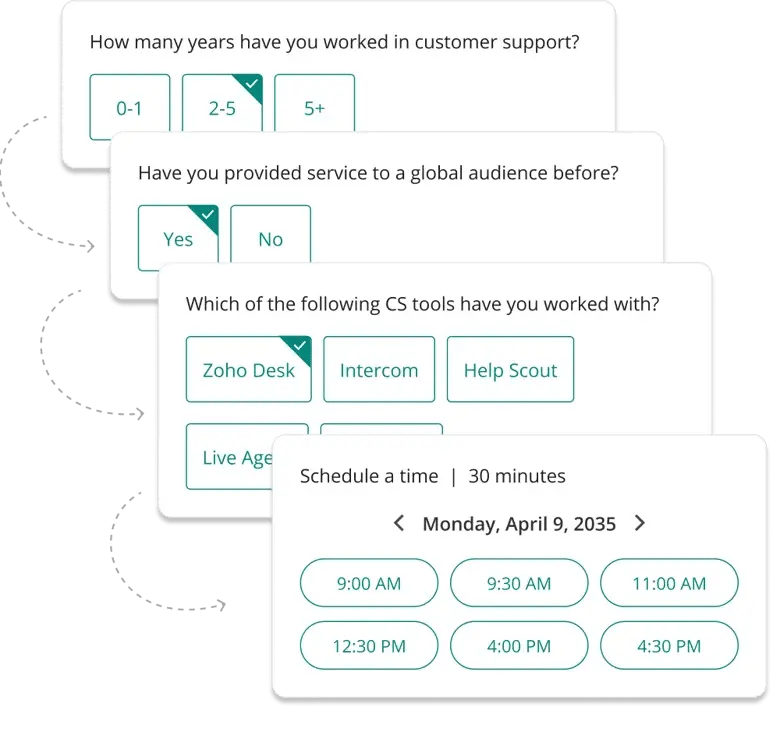
A common fear is that sharing a calendar opens the floodgates to unqualified candidates. A link without a gatekeeper is indeed a liability. That’s why intelligent routing is your ally: it ensures no one books time without passing your qualification layer first.
That’s why, to become great at interview scheduling, you should master the screening test. This is where intelligent routing forms become your most powerful ally. Before a candidate ever sees a time slot, they should pass through a qualification layer.
When a candidate clicks to book, they are presented with a few strategic questions. These are not just administrative fields. They are logic-based checkpoints.
- How many years of work experience do you have?
- Are you located in a specific region?
- Do you require visa sponsorship?
Based on their answers, the system reacts instantly.
If a candidate meets your core criteria, the gates open. They are routed directly to the recruiter or hiring manager whose calendar is best suited for that role. The interview is booked, and the process moves forward without you lifting a finger.
However, if a candidate does not meet the necessary requirements, the system can politely divert them. It might direct them to a general talent pool form or send a message thanking them for their interest while explaining that the role isn't a match.
This ensures that your hiring team never wakes up to a calendar full of unqualified meetings. You protect their time and direct their energy solely to candidates with the potential to go the distance. You turn scheduling into a strategic filter rather than just an administrative open door.
Managing the Scheduling Chaos of Panels and Complex Teams
Once a candidate passes the screening test, the real challenge begins. Scheduling a one-on-one chat is simple enough, but hiring rarely happens in isolation. As the candidate moves deeper into the funnel, the complexity multiplies.
Then you face the villain of logistical chaos. You must simultaneously coordinate three department heads, secure a specific meeting room, and align a technical expert in a different time zone. Attempting to overlay these calendars manually is a recipe for burnout.
In a manual world, this is where the hero gets overwhelmed. Trying to overlay three different Outlook calendars while checking room availability is a recipe for burnout.
Great interview scheduling conquers this chaos by handling the complexity in the background.
The Power of Panel Coordination
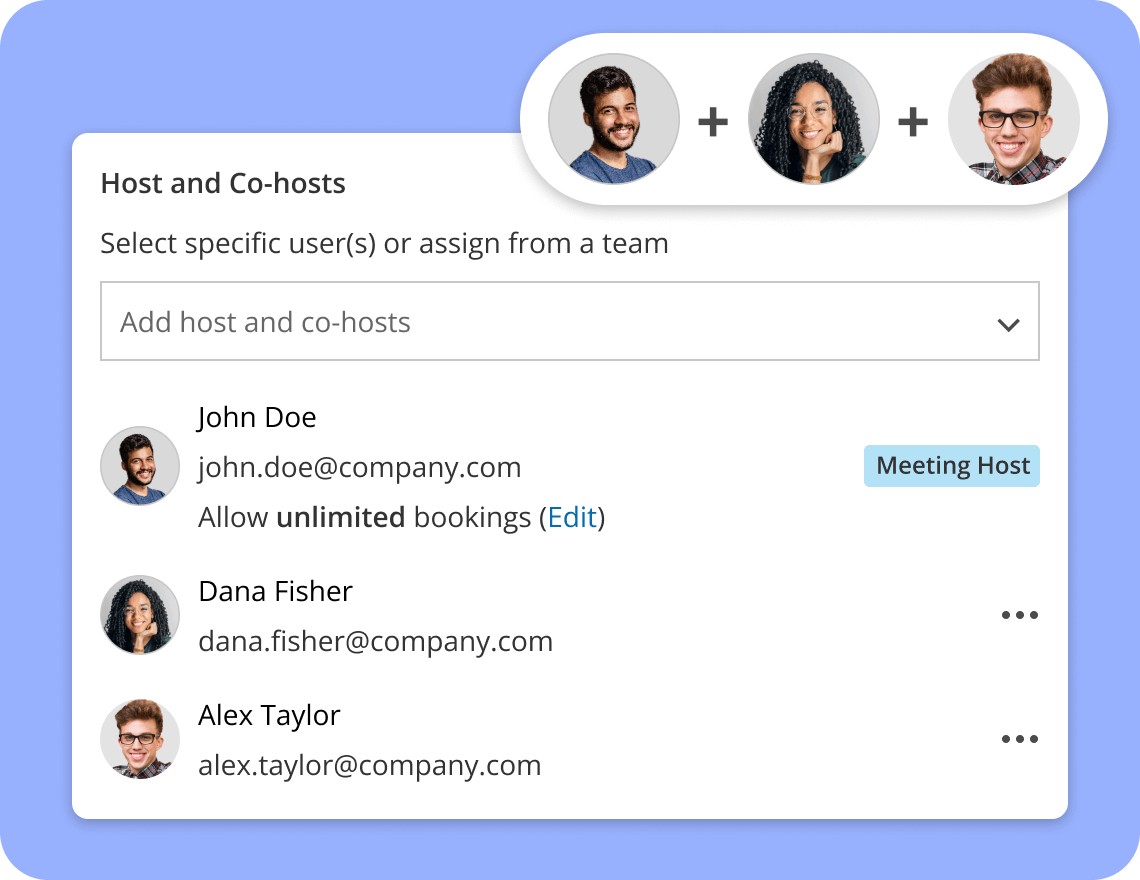
An effective process allows you to define the panel in advance. You tell the system that this interview requires the VP of Sales, a Senior Account Executive, and the HR Lead. The system then looks at all three calendars simultaneously. It only offers time slots to the candidate where all three stakeholders are free.
When the candidate selects a time, the invite is added to everyone’s calendar instantly. No one needs to email to confirm; it is done automatically.
Pooling and Round-Robin Assignments
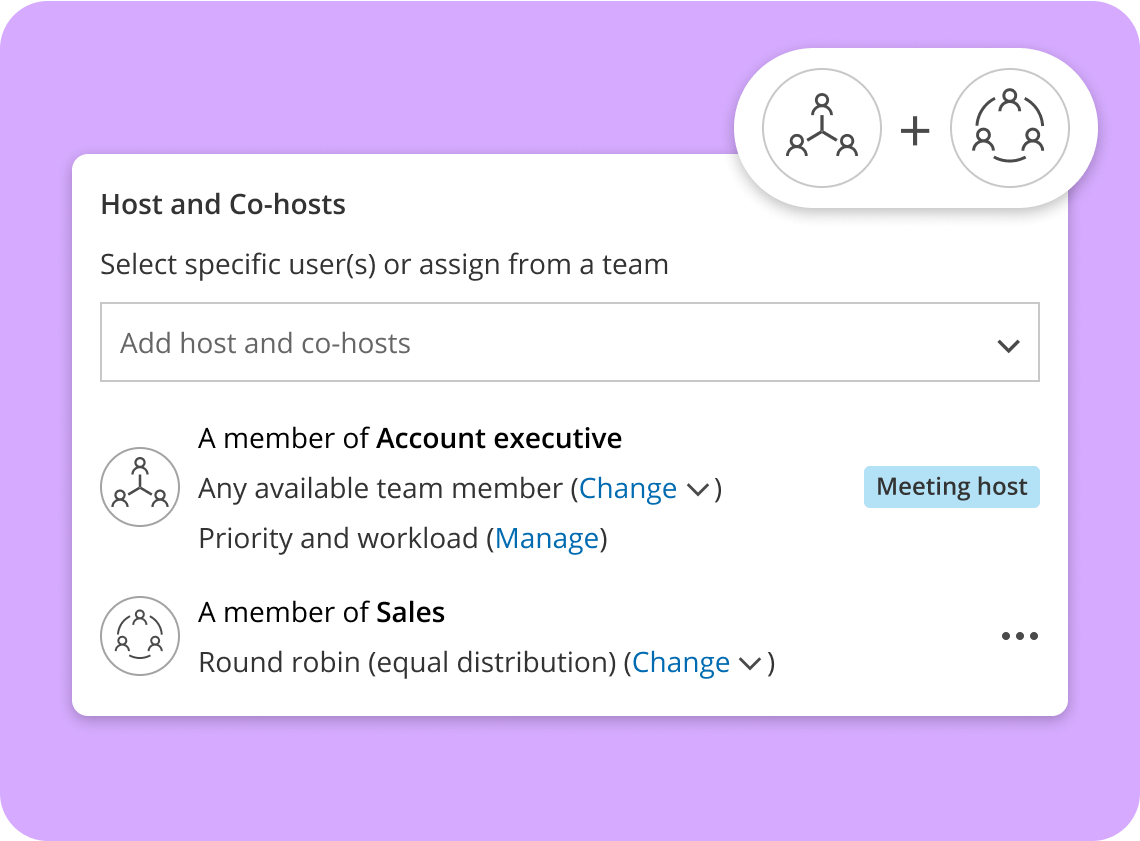
Sometimes the challenge isn't about getting everyone in the room; it is about fair distribution. You might have a team of five recruiters who can all conduct the initial screen. You do not want one person taking ten calls while another takes zero.
Using a pooling or round-robin strategy ensures fairness. The system checks the availability of the entire team. When a candidate books, the meeting is assigned to the person with the most availability or the person who has taken the fewest calls recently. This balances the workload and ensures that the candidate gets the earliest possible slot, regardless of which individual recruiter is free.
By automating these complex scenarios, you remove the bottleneck. You allow the interview process to scale without adding administrative weight to your shoulders.
Reducing No-Shows with Strategic Automated Reminders
With the meeting booked, you face the next ordeal: The No-Show. Gathering a panel of busy executives only to stare at an empty screen wastes resources and kills morale. Often, this isn't a sign of disinterest - it's simply a lack of preparation.
To be great at interview scheduling, you must treat the time between booking and the interview as an active engagement period.
You need a reminder strategy that goes beyond a standard calendar notification. Automated communication flows allow you to nurture the candidate leading up to the event.
- Immediate Confirmation: As soon as they book, they get a confirmation email with all the video links and details.
- The Nudge: 24 hours before the interview, a friendly reminder arrives in their inbox.
- The SMS Safety Net: One hour before the call, a text message ensures they are awake and ready.
But you can go further. Great scheduling isn't just about attendance; it is about quality. Use these automated touchpoints to send preparation materials. Send them the job description link again. Share a video about your company culture. Let them know who they will be meeting.
When a candidate arrives prepared, the interview is more productive. You spend less time on context and more time on substance. By automating this communication flow, you significantly reduce the risk of a no-show and improve the quality of the conversation.
Accommodating the Unexpected: Rescheduling and Reassigning
Even the most perfect plan faces reality. The road back is rarely a straight line. Life happens. A hiring manager calls in sick on the morning of a full day of interviews. A candidate has a family emergency and needs to shift their slot by two hours.
In a manual system, a cancellation is a catastrophe. It triggers a cascade of emails apologizing, rescheduling, deleting old invites, and re-coordinating the panel. It is a high-stress moment that can derail the entire week.
A robust scheduling strategy anticipates the unexpected. It builds flexibility directly into the workflow.
If a candidate needs to reschedule, they shouldn't have to email you. The confirmation link you sent them should include a simple reschedule option. They use it, see the remaining availability, and move their slot. The system updates everyone’s calendar instantly. The crisis is averted without a single email exchange.
On your side, if a key interviewer becomes unavailable, you need the ability to reassign the interview. You should be able to swap the interviewer on the backend without confusing the candidate. The system keeps the time slot but changes the host, sending the updated details to the new interviewer.
This resilience is what separates a good process from a great one. It acknowledges that disruptions occur, but prevents them from breaking the candidate experience or your own sanity.
That's the Impact of a Streamlined Workflow. But don't just take the theory for it.
Here is how our own HR team describes the shift from manual coordination to automated strategy:
"Traditionally, finding a suitable time for interviews required a lot of back and forth. Now, we simply share a link that reflects our availability, whether it's a one-on-one or panel interview. With just one click, the candidate can quickly select a time that works for them. If something comes up, they can reschedule on their own, which significantly reduces no-shows. This frees us from acting as calendar agents so we can focus on assessing fit for the role, whilst giving the candidate a seamless experience."
Returning with the Prize: A Human-Centric Process
When you master these elements - the professional reach-out, the intelligent screening, the complex coordination, the strategic reminders, and the flexible recovery, you return to your team with a prize greater than mere efficiency.
You return with time.
By stripping away the administrative burden, you free yourself to focus on the human side of hiring. You have the mental space to listen more deeply to candidates. You have the time to strategize with hiring managers about what they really need. You have the bandwidth to build a culture rather than just filling seats.
The elixir for you is the hiring process that moves at the speed of talent. It is a system that respects everyone involved and projects an image of excellence to the market. Automation in this context is not about replacing the recruiter. It is about elevating the recruiter. It removes the robot work from your plate so you can be the human connection your company needs.
If you are ready to stop fighting the calendar and start mastering the art of the interview process, it is time to look at the tools that make this strategy possible.
Explore OnceHub today to see how intelligent routing and scheduling can transform your interview scheduling process from a logistical challenge into your greatest competitive advantage.