

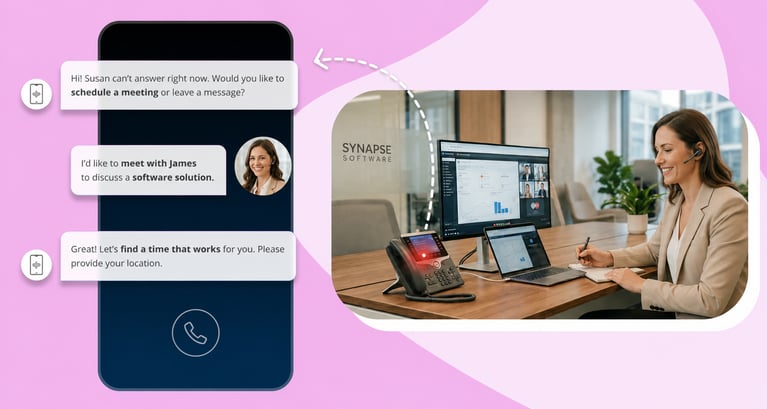
The best AI phone assistants for SMBs autonomously answer inbound calls, qualify leads, and book appointments in real time to eliminate the revenue loss associated with missed calls.
Industry data reveals that 85% of callers who reach voicemail never call back. They hang up and contact a competitor instead. If you are actively losing revenue to missed calls, evaluating software to fix the problem is your top priority. However, choosing the wrong platform leads to frustrated callers, wasted budget, and broken internal processes.
TL;DR: Here are the 11 best AI phone assistants for SMBs in 2026:
- OnceHub — Best for lead capture and automated scheduling & no-code setup
- Smith.ai — Best for human-in-the-loop call handling
- Aloware — Best for sales teams using HubSpot
- Synthflow — Best for no-code voice automation
- Bland AI — Best for developer teams
- Retell AI — Best for compliance-heavy industries
- Vapi AI — Best for technical prototyping
- PolyAI — Best for enterprise multilingual support
- Voiceflow — Best for designing conversation flows
- Lindy — Best for general task automation
- VOCALLS — Best for multichannel automation
What Is an AI Phone Assistant?
An AI phone assistant is intelligent voice software that uses natural language processing to understand callers, answer questions, and execute tasks like appointment booking in real time.
Instead of forcing your customers to navigate rigid legacy phone menus by pressing numbers on a keypad, this technology holds dynamic two-way conversations. The assistant listens to the caller, identifies their specific intent, and provides an immediate verbal response. It performs backend actions instantly, ensuring prospects receive the same level of service they would expect from a live receptionist without the wait time.
How Do the Best AI Phone Assistants for 2026 Compare?
Here's a quick side-by-side comparison of the best AI voice agents for SMBs in 2026:
|
Tool |
Best For |
Core Strength |
Pricing Model |
Ideal SMB Type |
|---|---|---|---|---|
|
OnceHub's AI Phone Agent |
Lead capture and scheduling |
Native AI scheduling with live calendar booking and zero setup |
Seat-based monthly pricing |
Consultants, advisors, agencies, service businesses |
|
Smith.ai |
High-touch or sensitive calls needing human judgment |
Hybrid AI triage with live receptionist escalation |
Per-call / per-minute, with stacking add-ons |
Legal, medical, and high-value consulting practices |
|
Aloware |
CRM-driven sales teams |
Deep HubSpot and Salesforce calling automation |
Per-user monthly pricing |
Outbound sales and SDR teams |
|
Synthflow |
No-code voice automation |
Drag-and-drop AI call flow builder |
Subscription + usage pricing |
SMBs wanting customizable AI without developers |
|
Bland AI |
Developer-built voice systems |
Fully programmable voice infrastructure |
Usage-based pricing |
Engineering teams and AI startups |
|
Retell AI |
Compliance-heavy industries |
HIPAA and SOC 2 compliant voice AI |
Per-minute pricing |
Healthcare, finance, and legal firms |
|
Vapi AI |
API-first voice development |
Flexible voice stack with custom LLM support |
Usage-based pricing |
Product and engineering teams |
|
PolyAI |
Enterprise contact centers |
Advanced multilingual conversational AI |
Enterprise custom pricing |
Large support operations |
|
Voiceflow |
Conversation design |
Collaborative visual AI workflow builder |
Editor and credit-based pricing |
Product teams and AI agencies |
|
Lindy |
Workflow automation |
Combines calls, email, scheduling, and CRM automation |
Monthly subscription pricing |
Solo professionals and small teams |
|
VOCALLS |
Multichannel automation |
Unified voice, email, and chat automation workflows |
Custom pricing |
Customer support and high-touch service teams |
All pricing subject to change — verify directly with each vendor.
How Did We Evaluate the Best AI Phone Assistants?
We evaluated the best AI phone assistants based on voice quality, scheduling capabilities, setup complexity, and pricing transparency.
Bottom of funnel buyers must look past flashy marketing and examine how the software functions in a real business environment. When evaluating these platforms, small and medium businesses must prioritize these three critical factors:
- Setup complexity: Business owners need no-code deployment rather than complex developer APIs. Hiring software engineers to build and maintain your phone system drains resources and delays launch times.
- Scheduling and lead capture capabilities: The strongest platforms do more than answer calls. They qualify prospects, sync with live calendar availability, and secure appointments automatically without human involvement.
- Native scheduling: Direct calendar integration matters more than basic third-party webhooks. The system must read your exact live availability to prevent double booking. Tools built with native scheduling logic secure appointments instantly, whereas platforms relying on external connections often suffer from lag.
- Compliance and security: For industries like healthcare, legal, insurance, and financial services, certifications such as SOC 2, HIPAA, and GDPR compliance are critical for protecting sensitive customer conversations and maintaining regulatory standards.
- Pricing transparency: Per-minute billing causes unpredictable budget overruns during busy seasons. Businesses should prioritize software that offers predictable monthly subscription models.
Note: Not all AI phone assistants are built for the same business needs. Factors like scheduling reliability, integration depth, compliance standards, and pricing transparency are often what separate scalable solutions from expensive operational headaches.
What Are the 11 Best AI Phone Assistants for SMBs?
The best AI phone assistants for SMBs include OnceHub, Smith.ai, Aloware, Synthflow, Bland AI, Retell AI, Vapi AI, PolyAI, Voiceflow, Lindy, and VOCALLS, each serving different technical needs and business goals.
1. OnceHub AI Phone Agent: Best for Lead Capture and Automated Scheduling
%20(1).jpg?width=1540&height=748&name=OH%20Screenshot%20(1)%20(1).jpg)
OnceHub's AI Phone Agent is a scheduling engine that requires zero configuration, eliminates hallucination risks, and captures high-intent leads around the clock. Unlike generic answering tools that bolt a calendar feature on as an afterthought, the Phone Agent is built from the scheduling layer up, reading your live calendar availability, asking qualifying questions, and confirming the appointment before the caller hangs up. Calendar availability is read and confirmed directly within OnceHub's own system rather than through an external API, removing the lag associated with third-party calendar connections — if a time slot is offered, it reflects live availability.
We tested the Phone Agent against an inbound discovery-call scenario for a coaching practice: caller states their goal, gets asked two qualifying questions, and is offered a live calendar slot before the call ends. Because scheduling runs natively inside OnceHub's own workflow engine rather than through a third-party calendar sync, the availability check and booking confirmation happened in the same call turn — there's no handoff lag to an external calendar API, which is the step where competitor platforms most often introduce a delay or a sync error.
Key Features
- Zero configuration setup: The Phone Agent inherits your existing routing rules from the moment it is set up — round-robin logic, buffer times, and lead qualification criteria — without requiring a technical build-out.
- Native calendar sync: Reads your live Google or Microsoft calendar in real time during the call, ensuring no double bookings and accurate availability at every hour.
- Intelligent lead qualification: Asks callers screening questions configured by your business before offering a time slot, so only vetted prospects reach your calendar.
- Instant live handoff: When the AI identifies a high-priority prospect, it can transfer the call directly to a human team member while the prospect is still on the line.
- Always-on booking: Phone agents answer calls and book meetings around the clock, even when the team is offline.
- Full conversation logging: After every interaction, the system logs a complete audio recording and written text transcript, accessible directly in the OnceHub Activities dashboard.
Use Cases
- A prospect calls after hours, the Phone Agent qualifies them by service type and budget, then books directly into the right advisor's calendar before the conversation ends.
- A professional coach uses OnceHub to handle inbound consultation requests, asking callers about their primary goals and challenges before securing a discovery session directly on their live calendar.
- A multi-advisor firm uses round-robin phone routing to distribute inbound calls evenly across the team without any manual coordination.
- A wealth management team uses the Phone Agent to identify a caller's specific concern and securely book a portfolio review session, ensuring high-value clients never feel ignored during periods of market volatility.
User sentiment: 4.4/5 on G2 (58 reviews), 4.6/5 on Capterra (127 reviews), 4.1/5 on Trustpilot — reviewers most often cite ease of use and integration simplicity, with a learning curve during initial setup as the most common friction point.
Pricing
OnceHub offers five pricing tiers: Basic at $0, Schedule at $12/seat/month, Route at $23/seat/month, Engage at $47/seat/month, and Enterprise at custom pricing. A 14-day free trial is available.
Get started here
2. Smith.ai: Best for Human-in-the-Loop Call Handling
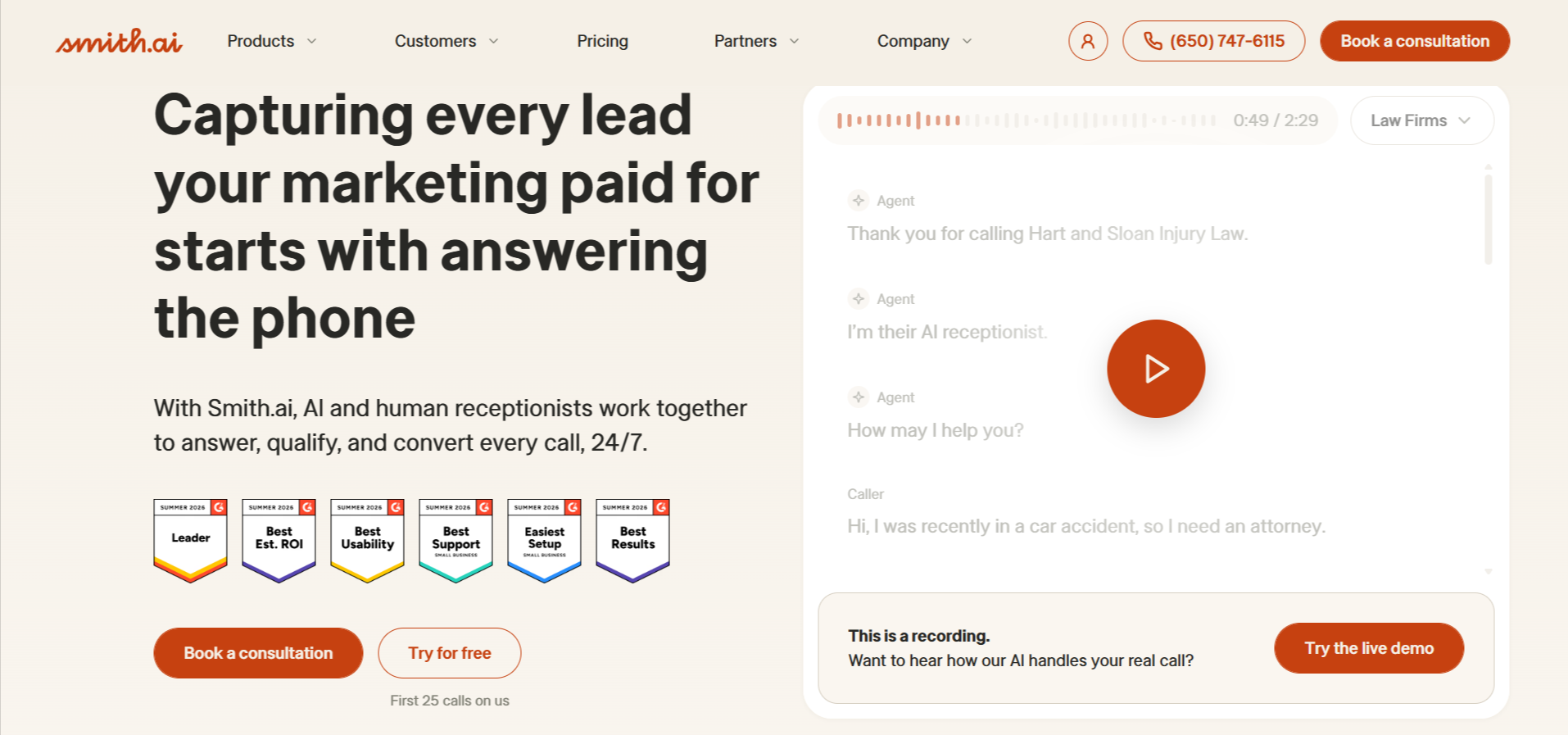
Smith.ai combines AI-driven triage with live, trained receptionists — a distinct position among the tools on this list, since every other platform here is AI-only. For businesses where certain calls genuinely benefit from human judgment in the first response — a distressed client, a high-value prospect, an ambiguous legal question — Smith.ai is built specifically for that gap.
We tested Smith.ai's onboarding and call-handling model directly. Script configuration is guided by the Smith.ai team rather than fully self-serve, which shortens time-to-launch but shifts more of the setup work off your team's plate — a meaningfully different tradeoff than the fully self-configured platforms elsewhere on this list. Calls are triaged by a blend of AI and trained human receptionists working from your intake script, with escalation and judgment calls handled by a person rather than a scripted fallback.
Key Features
- Human escalation as the core model: Live receptionists handle judgment calls and ambiguous questions natively, not as a bolted-on fallback.
- Guided onboarding: Script and intake configuration is set up by the Smith.ai team — the lowest technical lift of any platform on this list.
- Real-time customization: Scripts and intake logic can be adjusted on the fly as call patterns change.
- Appointment booking coordination: Receptionists book appointments through your preferred calendar tool.
- Call recording and detailed logging: Every interaction is logged for review and quality tracking.
- Native live transfer: Escalation to your team is built into the service model, not a configuration add-on.
Use Cases
- A law firm uses Smith.ai to triage inbound calls, with receptionists handling routine intake questions and escalating urgent or sensitive matters directly to an attorney.
- A medical practice uses Smith.ai's live receptionists to handle patient scheduling calls with the warmth and judgment a fully automated system can't replicate.
- A high-value B2B consultancy uses Smith.ai to ensure every prospect call gets a human-quality first impression, even outside business hours.
- A small accounting firm during tax season uses Smith.ai to absorb call volume spikes without hiring temporary staff.
User sentiment: 4.7/5 on G2 for the AI Receptionist product (review count not separately published for this SKU), 4.4/5 on Trustpilot (334 reviews) — reviewers consistently note that callers don't realize they've reached an answering service; the most common complaint is add-on fees accumulating beyond the base price.
Pricing
Per-call/per-minute pricing with stacking add-ons — appointment booking, call recording, SMS notifications, and live transfers each bill separately, which can push real monthly cost 40–75% above the listed base plan. (Verify current pricing/features directly with vendor)
3. Aloware: Best for CRM-Driven Sales Teams using HubSpot
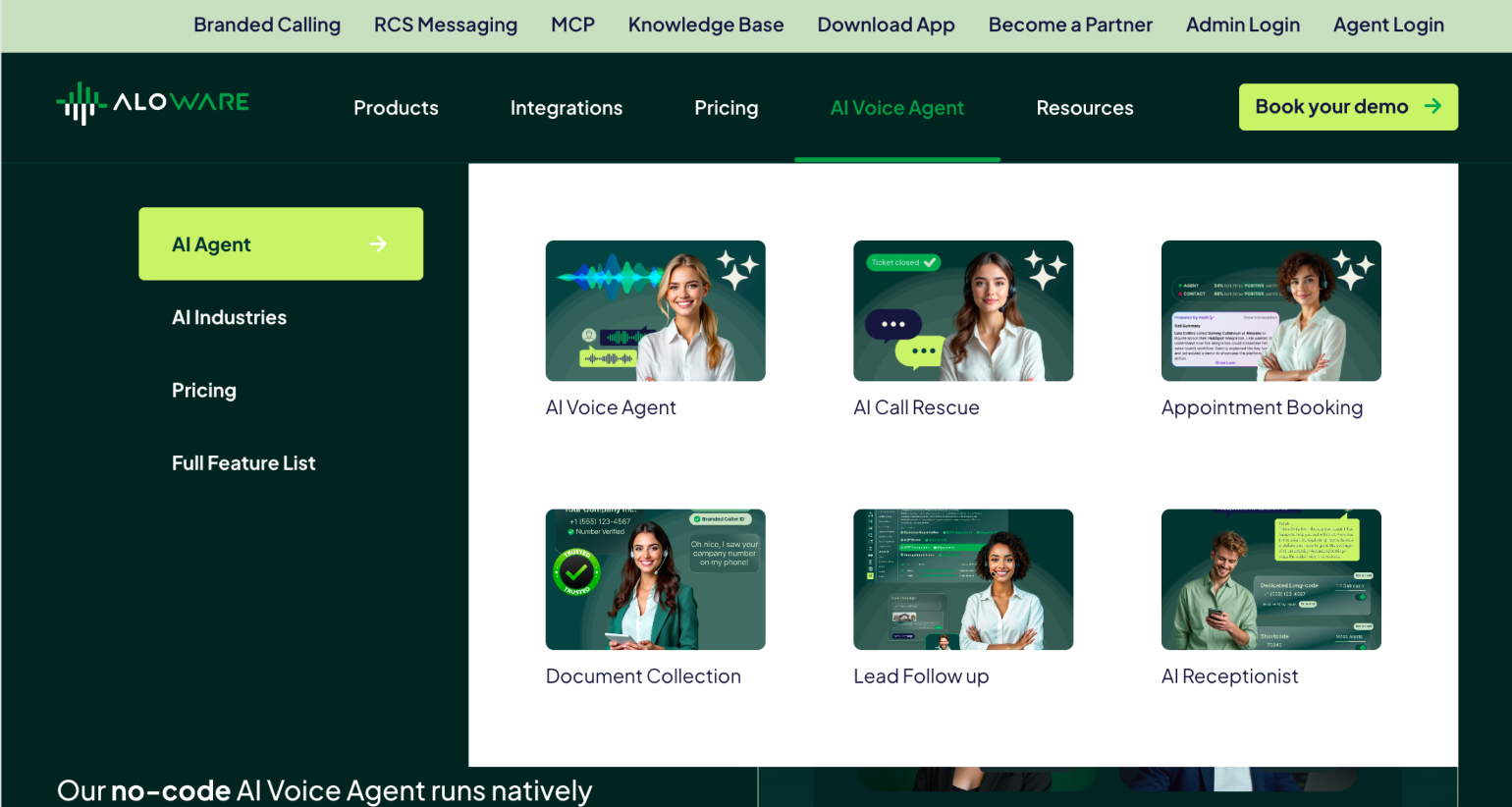
Aloware is an all-in-one contact center platform that gives sales and support teams the tools to engage with customers via call, text message, and social messengers, with unlimited inbound and outbound agent minutes included across all plans. It is built specifically for teams embedded in HubSpot and Salesforce, centralizing dialing, SMS sequences, and CRM data into a single interface. For high-volume outbound sales operations that live inside their CRM, Aloware removes the need to bounce between tools.
Key Features
- Power dialer: Automatically dials leads in sequence, allowing sales reps to move through a high-volume prospect list without manual dialing.
- SMS automation: Triggers automated text messages based on deal stage changes in HubSpot and Pipedrive, keeping leads engaged between calls without manual follow-up.
- Conversation intelligence: Records and transcribes every call, with sentiment tracking and key discussion point detection for coaching and performance review.
- Native CRM sync: Logs all call recordings, notes, and interaction history directly into HubSpot and Salesforce records automatically after each conversation.
- Multi-channel support: Handles voice, SMS, email, and social messaging from a single unified interface.
- AI text bot: Automates text-based conversations with leads using contextual AI that understands intent and keeps prospects engaged between calls.
Use Cases
- A HubSpot-centric sales team uses Aloware's power dialer to work through hundreds of outbound leads per day without switching between tools.
- A sales manager uses conversation intelligence to review call recordings and coach reps on objection handling without listening to every call manually.
- A business development team triggers automated SMS follow-up sequences the moment a lead moves to a new deal stage in HubSpot.
- A contact center uses Aloware's shared inbox and multi-channel support to manage voice, text, and social inquiries from one dashboard.
Pricing
Plans start at $30/user/month for the iPro AI plan, rising to $60/user/month for uPro and $85/user/month for xPro, with a 10-user minimum on the entry plan, making the real monthly floor $300. A 14-day free trial is available. (Verify current pricing/features directly with vendor)
4. Synthflow: Best for No-Code Custom Voice Automation
Synthflow provides enterprise-ready voice AI agents that automate inbound and outbound phone calls, handling appointment scheduling, lead qualification, customer support, and call routing through natural conversational voice technology. Its visual no-code builder means non-technical teams can design, deploy, and iterate on voice agents without writing a single line of code. For businesses that want control over their call flow without hiring developers, Synthflow is a strong no-code option for customizable voice workflows.
We configured a Synthflow agent for a 15-question intake flow simulating a coaching-practice discovery call — collecting name, goal area, budget range, and availability before offering a slot. Build time from a blank workspace to a working flow was roughly 90 minutes using the drag-and-drop builder, without writing code. The flow held up well on linear paths; it broke down the moment a test caller asked a question outside the script ("can I bring a friend to the session?") — the agent defaulted to a scripted fallback rather than reasoning through it, a pattern echoed in user reviews describing awkward phrasing and difficulty with ambiguous requests.
Key Features
- Visual drag-and-drop builder: Design complete call flows using a point-and-click interface, with branching logic based on caller responses.
- Multilingual support: AI agents operate in 30-plus languages with sub-500ms latency and meet SOC 2, HIPAA, and GDPR compliance standards globally.
- 200-plus integrations: Connects with CRMs, calendars, helpdesks, and automation platforms, including HubSpot, Salesforce, Zapier, and Google Calendar.
- Real-time call automation: Handles inbound and outbound calls simultaneously with live monitoring and call analytics built into the dashboard.
- Test center: Simulates calls to measure agent accuracy, response quality, and compliance against key performance indicators before going live.
- White label and reseller toolkit: Available for agencies building and managing AI voice products for multiple clients under their own branding.
Use Cases
- A real estate agency deploys a Synthflow agent to qualify inbound buyer inquiries by location, budget, and timeline before routing to the right agent.
- A restaurant group builds a reservation bot using the visual flow builder, handling bookings, dietary requests, and cancellations across multiple locations.
- A healthcare provider uses Synthflow's HIPAA-compliant agents to handle patient appointment requests and send automated reminders.
- An agency builds white-labeled voice agents for multiple SMB clients using a single Synthflow account with branded sub-accounts per client.
User sentiment: 4.5/5 on G2 (hundreds of reviews; ranked #4 in AI agents worldwide), 4.5/5 on Trustpilot — ease of use is the most-cited strength (364 mentions), while cost at scale is the most-cited complaint ("Expensive" — 145 mentions), alongside reports of latency spikes and difficulty handling interruptions.
Pricing
Plans start at $29/month for 50 minutes, rising to $450/month for the Pro plan at 2,000 minutes. These base prices do not include AI usage costs, which typically add $0.07 to $0.16 per minute on top of the subscription fee. (Verify current pricing/features directly with vendor)
5. Bland AI: Best for Developer Teams Building at Scale
Bland AI is a programmable voice infrastructure for engineering teams building custom voice applications at high volume. It is not a plug-and-play tool for business owners; it is the underlying architecture that technical teams build on top of. For teams that need total control over every element of the call flow, Bland provides the infrastructure without the constraints of a pre-built product.
We tested a 5-question BANT-style outbound qualification script against a 50-contact list. The Pathways builder allowed precise branching — separate paths for "budget confirmed," "budget unclear," and "no budget" — and webhook delivery into a CRM-style endpoint logged call summaries automatically. The tradeoff shows up in responsiveness: on multi-turn exchanges, response gaps were noticeable enough that test callers began talking over the agent, a friction point more pronounced on longer, exploratory outbound calls than short scripted ones.
Key Features
- Programmable call flows: Every pause, response, retry, and routing decision is controlled via programmatic scripts or webhook triggers.
- Voice cloning: Supports multiple voice clones per account, allowing teams to match the agent's voice to a specific brand or persona.
- High volume concurrency: Built to handle thousands of simultaneous calls, making it suited for enterprise-scale outbound campaigns.
- Multilingual support: Supports voice interactions across multiple languages and regional accents.
- Call transfer and voicemail fallback: Prevents calls from stalling by triggering a live transfer or voicemail option when the AI reaches its scope limit.
- Compliance certifications: HIPAA, GDPR, and SOC 2 Type II certified for use in regulated industry deployments.
Use Cases
- An engineering team builds a fully custom inbound qualification bot that integrates with a proprietary CRM via webhooks, bypassing any native integration requirement.
- A large-scale outbound sales operation automates thousands of prospecting calls per day with personalized scripting logic built on Bland's infrastructure.
- A fintech startup uses Bland to power a white-label voice agent embedded inside their own client-facing product without surfacing third-party branding.
- A developer building a healthcare voice product uses Bland's HIPAA-certified infrastructure as the underlying call engine with full conversation customization.
User sentiment: G2 data is too thin to be reliable — 5.0/5 from just 3 reviews on one listing, versus roughly 3.3/5 cited elsewhere from a broader review pull. Treat both figures with caution; the more consistent qualitative signal across independent reviews is strong marks for voice quality and flexibility, offset by reports of hallucinated responses and inconsistent human-transfer behavior.
Pricing
Bland switched to plan-based pricing in December 2025. A 500-minute month on the entry Build plan costs approximately $359, combining the monthly fee and per-minute call charges. (Verify current pricing/features directly with vendor)
6. Retell AI: Best for Compliance-Heavy Industries
Retell AI is built for regulated industries that need secure, compliant voice interactions without the heavy engineering overhead of fully developer-first platforms. For SMBs in healthcare, financial services, legal, and insurance, Retell offers enterprise-grade compliance at accessible pricing.
Key Features
- SOC 2 and HIPAA compliance: Full platform access, enterprise-grade security, and compliance certifications are included on every plan with no feature gating.
- Conversation flow builder: Low-code visual builder for designing voice agent logic without requiring developer involvement for standard deployments.
- Performance analytics: Real-time dashboard tracking call resolution rates, sentiment, and custom performance metrics.
- Sub-500ms latency: Fast, natural-sounding conversations with barge-in support so callers can interrupt and redirect the AI naturally.
- Precise billing: Every call is tracked to the nearest second with no rounding up per call and no inflated bills.
- Enterprise tier: Dedicated support, white-glove setup, and volume pricing for high-call-volume organizations.
Use Cases
- A healthcare provider deploys Retell to handle inbound patient appointment requests with HIPAA-compliant call handling and data logging.
- A financial services firm uses Retell's compliance stack to automate client intake calls with a full audit trail and secure data handling.
- A legal practice uses Retell's flow builder to qualify inbound inquiries by case type and urgency before routing to the right attorney.
- An insurance agency uses Retell to handle after-hours policy inquiries and book callbacks for the following business day.
Pricing
Starts at $0 with $10 in free credits. Pay-as-you-go rate begins at $0.07/minute. Real-world costs typically reach $0.13 to $0.31/minute once LLM, voice engine, and telephony fees are factored in. (Verify current pricing/features directly with vendor)
7. Vapi AI: Best for Technical Prototyping
Vapi AI is an API-first voice platform designed for developers who want full control over every component of their voice stack. Every feature of Vapi AI is accessible through its API, which developers can programmatically control, with thousands of possible configurations including LLM choice, voice providers, speech-to-text engines, and telephony routing. For technical teams building custom voice products from scratch, Vapi offers extensive API-level customization options.
Key Features
- API-first architecture: Full programmatic control over every element of the voice agent, from the LLM powering responses to the voice and telephony providers.
- Bring your own providers: Choose between OpenAI, Anthropic Claude, Gemini, and other LLMs, as well as ElevenLabs, Azure, and custom voice providers.
- Multichannel capabilities: Supports inbound customer queries, outbound sales campaigns, and market research use cases across multiple deployment targets.
- Sub-500ms latency: Fast response times for natural-sounding conversations at scale.
- 100-plus language support: Broad multilingual coverage for teams operating across multiple regions.
- Webhook and integration support: Connects to CRMs, databases, and third-party tools via webhooks and API endpoints.
Use Cases
- A developer team builds a fully custom outbound prospecting agent using their preferred LLM and voice provider, assembled through Vapi's API layer.
- A SaaS company uses Vapi to power a white-label voice assistant embedded in their own platform, with full control over branding and conversation logic.
- A technical team prototypes and tests multiple voice agent configurations quickly using Vapi's flexible infrastructure before committing to a production build.
- An enterprise engineering team uses Vapi to build a complex multi-step qualification flow connected to their proprietary CRM via webhooks.
Pricing
Base rate starts at $0.05/minute, but total real-world costs typically reach $0.20 to $0.33/minute when third-party speech, language model, and voice provider fees are added. HIPAA compliance adds $1,000/month on top. (Verify current pricing/features directly with vendor)
8. PolyAI: Best for Enterprise Multilingual Contact Centers
PolyAI is purpose-built for enterprise contact centers, with voice agents that consistently achieve 80-plus percent containment rates, meaning four out of five calls are fully resolved without human intervention. Its patented dialogue management handles interruptions, diverse accents, and complex multi-turn conversations better than any self-serve platform in this category. It is not designed for SMBs and has no self-serve evaluation path.
Key Features
- Domain-specific pre-training: Models trained on massive datasets of real contact center conversations, handling the edge cases and emotional dynamics of customer service out of the box.
- 75-plus language support: Natively supports over 75 languages with the ability to detect and switch between them dynamically during a live conversation.
- Patented dialogue management: Handles interruptions, emotional cues, and complex multi-turn queries more naturally than standard self-serve platforms.
- Managed deployment: PolyAI's team builds and deploys the voice assistant on your behalf, a fundamentally different model from every self-serve tool in this list.
- Enterprise compliance: SOC 2 Type II, HIPAA, GDPR, PCI DSS, and ISO 27001 certifications with built-in knowledge-based authentication for caller identity verification.
- Real-time analytics: Dashboard tracking containment rates, sentiment, and custom performance metrics across every interaction.
Use Cases
- A global hotel chain deploys PolyAI to handle multilingual reservation inquiries across 20 countries with dynamic language detection mid-call.
- A health insurance provider uses PolyAI to handle Tier 1 policy inquiries at scale, reducing live agent workload during peak enrollment periods.
- A retail brand uses PolyAI's managed service to handle seasonal call volume spikes without hiring temporary staff.
- A bank deploys PolyAI for secure customer authentication and account inquiry handling, meeting strict financial services compliance requirements.
Pricing
PolyAI pricing starts at $150,000 or more per year, requires a dedicated sales engagement, and has no self-serve trial or transparent public pricing page. (Verify current pricing/features directly with vendor)
9. Voiceflow: Best for Conversation Workflows
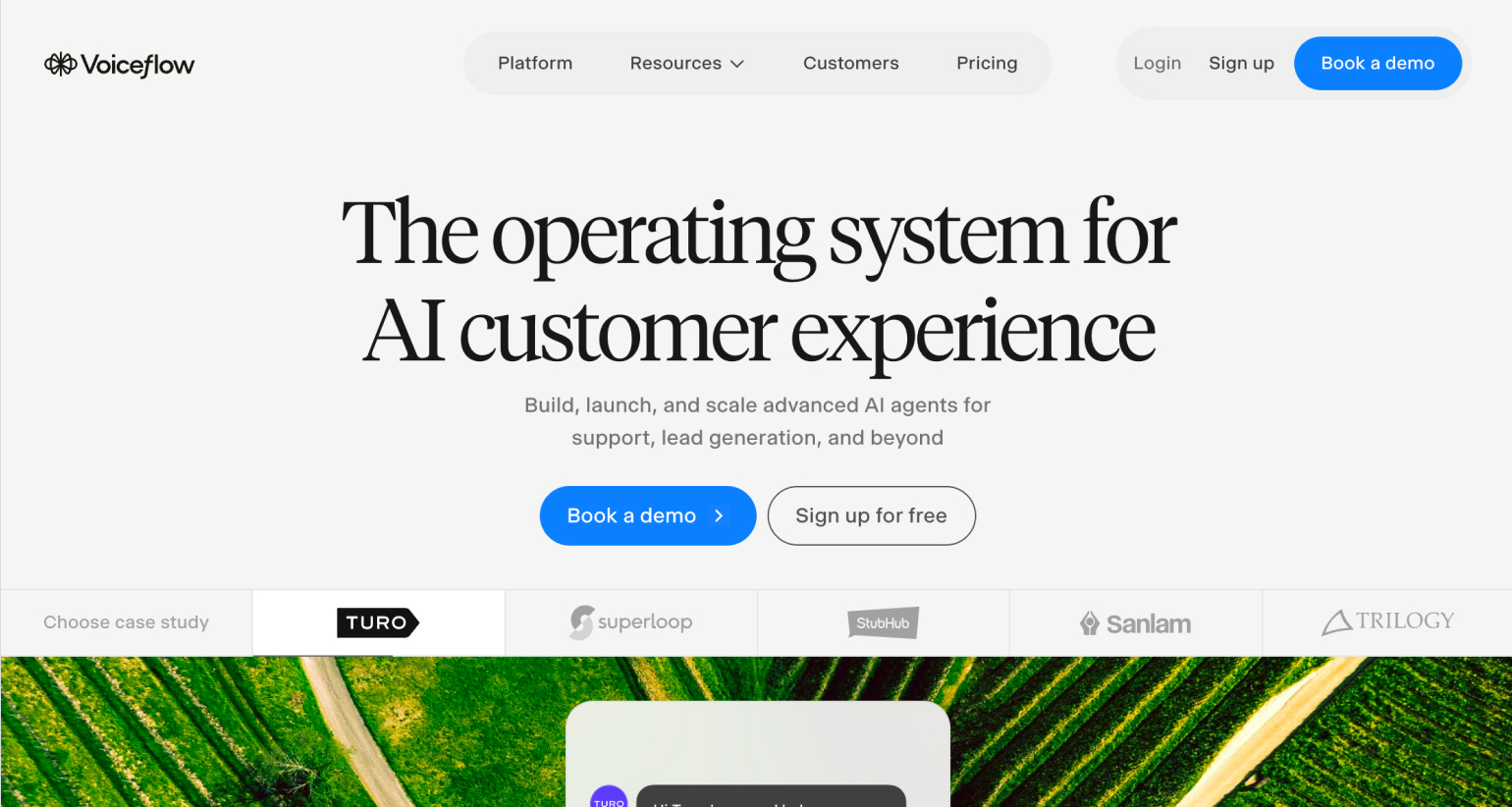
Voiceflow is a conversation design platform first and a deployment tool second — a collaborative workspace where designers, product managers, and developers can prototype, test, and iterate on conversation flows together using a drag-and-drop canvas. It is technology-agnostic, meaning teams are not locked into a specific LLM, voice provider, or telephony stack. Note that Voiceflow handles the design and logic layer only; you will need external infrastructure for actual phone calls.
Key Features
- Drag-and-drop canvas: Map out complex dialogue trees, test them in real time with your team, and ship to production from the same visual interface.
- Team collaboration tools: Enables designers, product managers, and developers to work on the same conversation flow simultaneously.
- Technology-agnostic architecture: Connects to any LLM, voice provider, or telephony stack without locking teams into a single vendor.
- Multi-channel deployment: Supports voice, chat, and SMS channel outputs from a single design environment.
- Credit-based usage system: Tracks LLM token usage, voice calls, and API interactions through a consumable credit model.
- Enterprise security: Advanced security, compliance, and dedicated support are available on Enterprise plans.
Use Cases
- A product team uses Voiceflow's canvas to map and test a complex customer service dialogue before handing it off to engineers for production deployment on Retell or Vapi.
- A design agency uses Voiceflow to prototype and present conversational AI flows to clients before committing to a build.
- A cross-functional team uses Voiceflow's collaboration tools to align on script logic, test edge cases, and iterate rapidly before going live.
- An enterprise team uses Voiceflow to standardize conversation design across multiple AI products built on different underlying platforms.
Pricing
Free tier available with 1,000 credits per month. Pro plan starts at $60/editor/month, and the Team plan starts at $150/editor/month. Additional editor seats cost $50/month each; a five-person team on Pro costs $260/month in practice, not $60. (Verify current pricing/features directly with vendor)
10. Lindy: Best for General Task Automation
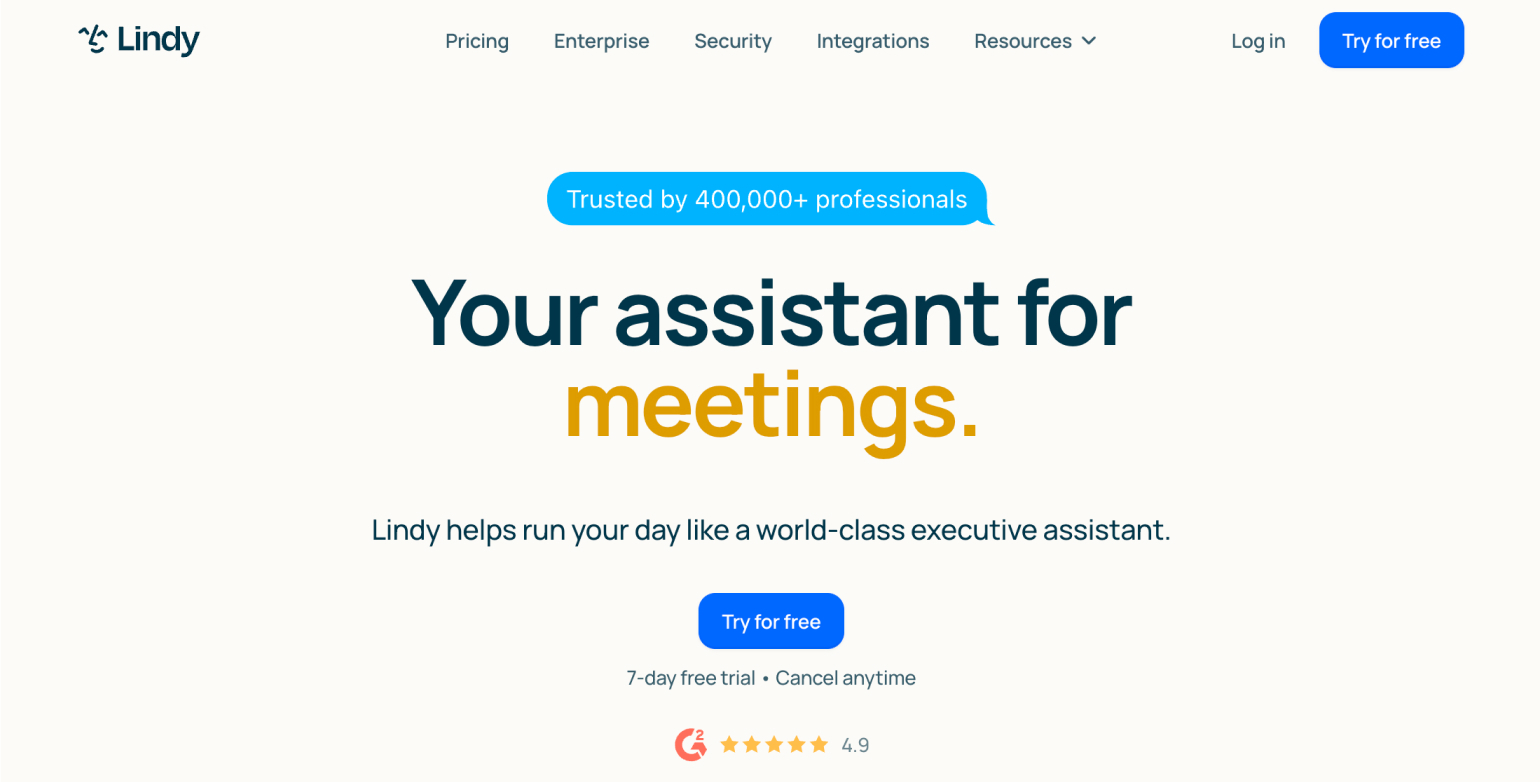
Lindy is an AI assistant platform that connects phone calls, email, calendar management, and CRM activity into a single workflow layer, best suited for individual professionals and small teams rather than high-volume call centers. It is not a dedicated voice routing platform; it is a broader productivity tool that includes voice as one of several automated channels. For solo advisors or small teams that want a single AI layer connecting their communications and scheduling, Lindy removes the need for multiple point solutions.
We tested Lindy's phone handling as part of a connected workflow: an inbound call triggering both a calendar check and an automatic CRM field update in the same flow. Setup used natural-language configuration rather than code, and the workflow correctly chained the call outcome into a CRM update without a separate integration step — a genuine strength for teams that want one automation layer instead of stitching together point tools. The limitation is depth: phone handling itself doesn't carry the qualification granularity — conditional routing, round-robin distribution across multiple hosts — that dedicated inbound-scheduling platforms are built around.
Key Features
- Multi-channel automation: Connects voice calls, email drafting, calendar coordination, and CRM updates in a single workflow without switching tools.
- Large integration library: Integrates with Gmail, Outlook, Google Calendar, Slack, Notion, and hundreds of additional platforms through native connections and Zapier.
- iMessage and SMS access: Reach your AI assistant directly via iMessage or SMS for on-the-go task management without opening a separate app.
- Multi-agent orchestration: Deploy multiple specialized AI agents for different functions — inbox management, scheduling, and CRM updates — that work together automatically.
- Automatic email drafting: Learns your communication style over time to draft replies that match your voice and tone.
- 7-day free trial: Full access to Plus features without a credit card requirement before committing.
Use Cases
- A solo financial advisor uses Lindy to manage inbound calls, draft client follow-up emails, and update their CRM automatically after every interaction.
- A small consulting team uses Lindy's multi-agent setup to split inbox management, meeting scheduling, and proposal follow-up across specialized agents.
- A coach uses Lindy to handle routine scheduling inquiries via SMS while staying in their existing iMessage workflow.
- A freelancer uses Lindy to automate email triage, calendar blocking, and client onboarding tasks that previously consumed hours of administrative time each week.
User sentiment: 4.9/5 on G2 (170 reviews) versus 1.7/5 on Trustpilot — a striking gap. G2 reviewers overwhelmingly cite ease of use (125 of 171 reviews), while the Trustpilot stream is dominated by billing disputes tied to Lindy's credit-based pricing system, the single most-cited complaint across both platforms.
Pricing
Plans start at $49.99/month for Plus, $99.99/month for Pro, and $199.99/month for Max. Each plan includes a 7-day free trial. Phone number access costs an additional $10/month per number on top of the subscription fee. (Verify current pricing/features directly with vendor)
11. VOCALLS (Now acquired by CallMiner): Best for Multichannel Automation
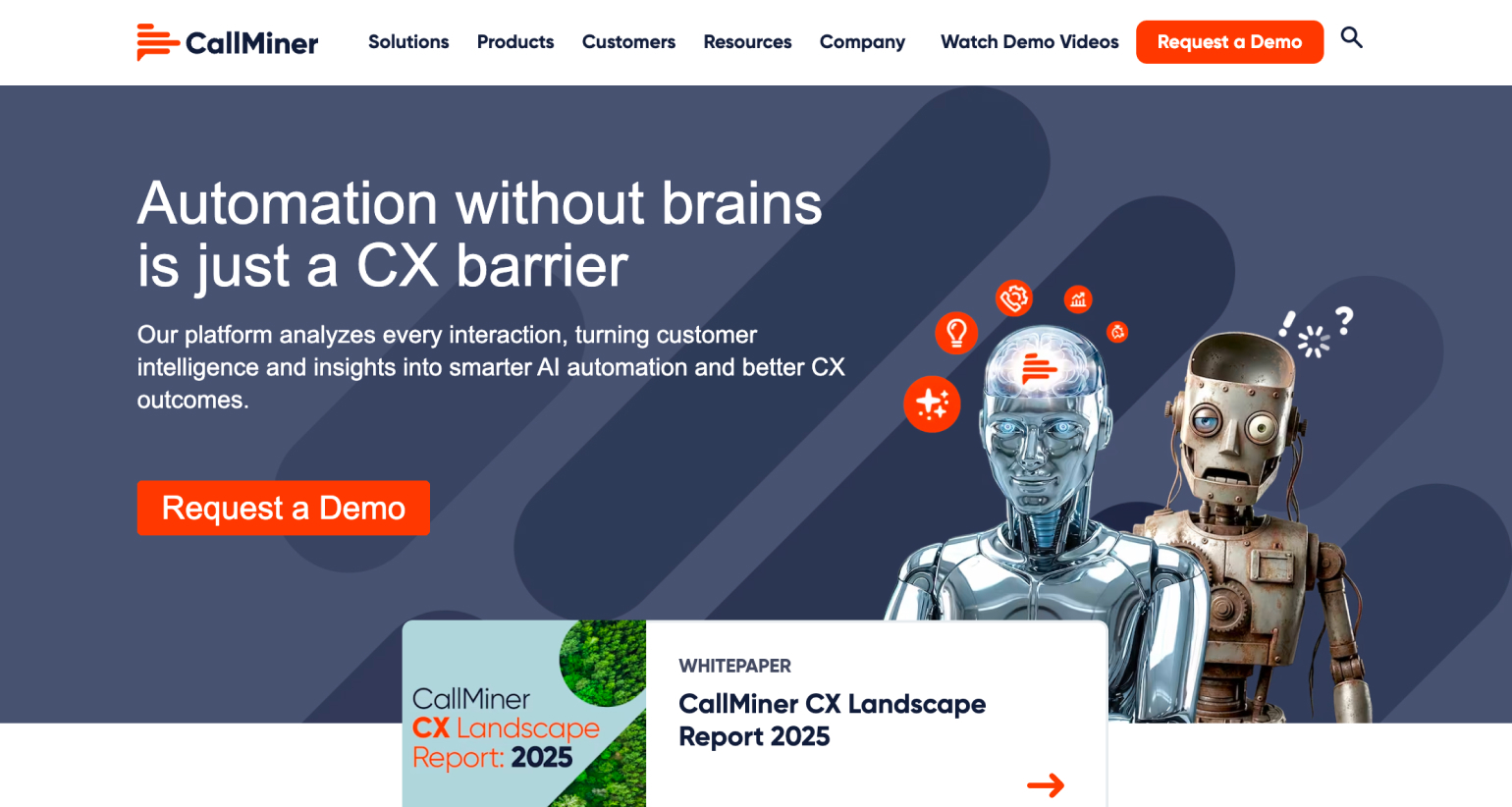
VOCALLS focuses on managing multi-channel automation rather than just standalone phone tasks. It is designed to unify customer dialogues across voice, email, and chat for complex customer engagement scenarios where a single channel is not enough. For businesses that need AI to hold nuanced conversations across multiple platforms from one centralized hub, this platform is built specifically for that use case.
Key Features
- Integrated voice and chat capabilities: Maintains full conversational context across multiple channels, preventing the reset issues that trip up single-channel AI systems.
- Real-time translation: Build and deploy AI personas capable of communicating accurately with global audiences in their native language.
- Low-code automation builder: Designed specifically for teams that want to visually map out workflows across phone, email, and web chat without engineering help.
- Cross-channel routing: Prioritizes transferring context seamlessly from a chat window directly to a live phone call or email thread.
- Enterprise-grade deployment: Applied across sales, customer success, and high-touch support workflows where unified communication matters as much as task completion.
Use Cases
- A customer support team uses the platform to hold extended troubleshooting conversations over the phone while simultaneously emailing the customer a visual guide.
- A financial services firm relies on this multi-channel system to conduct in-depth client retention chats that require contextual awareness before transferring to a voice agent.
- A SaaS company leverages the software to handle complex onboarding inquiries that span both website chat and inbound phone calls.
- A healthcare organization manages extended patient intake processes that begin over email and conclude with a secure automated phone screening.
Pricing
Custom pricing requires a direct sales engagement. No self-serve trial or public pricing available. (Verify current pricing/features directly with vendor)
AI Phone Assistant Platforms: Review Scores at a Glance (2026)
|
Tool |
G2 Rating |
Capterra |
Trustpilot |
Top Praised Themes |
Top Complaint Themes |
|---|---|---|---|---|---|
|
OnceHub |
4.4/5 (58 reviews) |
4.6/5 (127 reviews) |
4.1/5 |
Ease of use, flexibility, easy integrations, easy setup |
Learning curve during initial setup |
|
Smith.ai |
4.7/5 (AI Receptionist product) |
— |
4.4/5 (334 reviews) |
Callers don't realize they've reached an answering service; real-time script customization |
Add-on fees stack quickly — often 40–75% above the listed base price |
|
Synthflow AI |
4.5/5 (hundreds of reviews; #4 in AI agents worldwide) |
Not published |
4.5/5 |
Ease of use (364 mentions), fast setup (148 mentions) |
Cost at scale ("Expensive" — 145 mentions); latency spikes on interruptions |
|
Bland AI |
5.0/5 from just 3 reviews — too small a sample to treat as representative; ~3.3/5 cited elsewhere |
Not published |
Not published |
Pathways flexibility, webhook control, low latency (vendor-claimed) |
Reported hallucinated info, conversational loops, refusal to transfer to a human on request |
|
Lindy |
4.9/5 (170 reviews) |
Not published |
1.7/5 |
Ease of use (125 of 171 G2 reviews cite it) |
Credit-based pricing unpredictability — the single most-cited complaint; billing disputes dominate Trustpilot |
Ratings pulled from G2, Capterra, and Trustpilot. Where sources conflicted, the most consistently cited figure is shown, with sample size noted so readers can weigh confidence accordingly — Bland AI's 5.0/5 in particular reflects only 3 reviews and should not be read as a reliable signal either way. Retell AI, Vapi AI, PolyAI, Voiceflow, VOCALLS, and Aloware are not included in this table pending a sourced review-data pass.
Industry-Specific Considerations
|
Industry |
Key Requirement |
Best-Fit Platform Type |
|---|---|---|
|
Financial advisory & wealth management |
Compliance, audit logging, AUM capture in natural tone |
Scheduling-led platform with regulated industry certifications |
|
Legal practices |
Sensitive intake, professional tone, human routing for complex matters |
Hybrid human-AI or highly configurable voice agent |
|
Coaching & consulting |
Discovery call capture, booking precision, multi-host support |
Scheduling-led platform with native booking workflows |
|
High-ticket sales |
Speed-to-lead, qualification filtering, live transfer to closers, CRM push |
Platform with strong routing logic and native CRM integration |
|
Healthcare & wellness |
HIPAA compliance, warm intake tone, clinical vs. booking call distinction |
HIPAA-compliant platform with professional intake configuration |
How Do You Choose the Right AI Phone Assistant?
You choose the right AI phone assistant by matching your daily call volume, integration requirements, and technical resources to the software capabilities.
To avoid overspending on features you do not need, apply this simple decision framework:
- If you need to book meetings automatically, choose OnceHub's AI agent. It provides native calendar integration out of the box to capture inbound leads.
- If sensitive or high-stakes calls need human judgment, choose Smith.ai. It pairs AI triage with live receptionists for calls where automation alone isn't enough.
- If you run a high-volume outbound call center, choose Aloware. It offers robust power dialing features for aggressive sales outreach.
- If you have an engineering team building custom apps, choose Bland AI. It provides the developer infrastructure needed to code your own voice platform from scratch.
Also read: What is an AI Answering Service? The 2026 Guide to Automated Call Handling
What Are the Next Steps to Automate Your Phone Calls?
The next steps to automate your phone calls include selecting a platform that fits your technical resources and launching a pilot program to handle your inbound leads.
You no longer need to accept the revenue loss associated with missed calls and ignored voicemails. Upgrading your phone system removes the heavy administrative burden from your staff and ensures every caller receives immediate service. Stop losing potential clients to a frustrating voicemail inbox.
Sign up for a free OnceHub account today to deploy your own automated voice agent and transform your inbound scheduling process.
For a deeper comparison specifically focused on the SMB no-code evaluation, see our SMB buyer's guide to AI phone agents. For a breakdown of how AI phone agents differ from legacy IVR systems, see IVR vs AI Phone Agents. Also read: Narrow AI vs General AI for Scheduling: Which Converts More Meetings?
Frequently Asked Questions
What happens when an AI phone assistant cannot answer a complex customer question?
When an AI phone assistant cannot answer a complex customer question, it automatically transfers the call to a live agent or takes a detailed message. This seamless handoff ensures your prospects always receive proper support without getting trapped in a frustrating automated loop.
How long does it take to deploy a no-code AI phone assistant for a small business?
It takes most small businesses only a few minutes to deploy a no-code AI phone assistant using modern visual builders. You do not need to wait for lengthy IT provisioning or engineering sprints to start capturing inbound leads and scheduling appointments.
How does an AI phone assistant prevent double booking on my live calendar?
An AI phone assistant prevents double booking on your live calendar by reading your schedule in real time before offering any available time slots to the caller. Native scheduling integrations instantly sync the new appointment across your business software so that the specific time slot becomes immediately unavailable to anyone else.
What is the difference between per-minute billing and monthly subscriptions for AI voice software?
The difference between per-minute billing and monthly subscriptions for AI voice software is that subscriptions provide predictable budget security while per-minute costs fluctuate based on daily call volume. Small businesses usually prefer predictable monthly seats to avoid sudden and massive software expenses during peak seasonal rushes.
Are AI phone assistants secure enough to handle sensitive customer contact data?
AI phone assistants are highly secure and fully capable of handling sensitive customer contact data when you choose platforms built with strict compliance standards. Top-tier business software encrypts voice transcripts and integrates safely with your CRM to protect client information during every single interaction.
When does a hybrid AI-and-human platform make more sense than a fully automated one?
A hybrid platform like Smith.ai makes more sense when a meaningful share of your inbound calls involve sensitive, ambiguous, or high-stakes situations where human judgment reduces risk — legal intake, medical scheduling, or high-value consultative sales. For businesses where most calls are routine booking or FAQ traffic, a fully automated platform is typically more cost-effective at volume.
Read next: Narrow AI vs General AI: What Works Best for Businesses?