

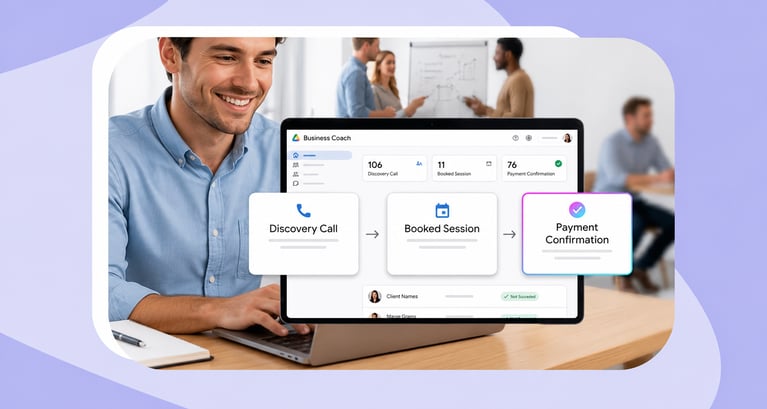
Strength and conditioning coaches hit an income ceiling because they sell hours. The five ways to break it are: 1. narrow to a specific niche, like tactical athletes or youth sports, instead of general fitness; 2. build a hybrid model that combines in-person and remote programming; 3. automate athlete intake and scheduling so leads are qualified and booked 24/7; 4. set up referral pipelines with local physical therapists; and 5. turn client performance data and case studies into lead magnets. Automating intake is the fastest to put in place and often shows results within a week. For multi-coach practices that need callers screened before a consultation is booked, OnceHub's AI Phone Agents apply the same qualifying rules by phone and on the web.
You can program a macrocycle, fix a squat that has been wrong for six years, and take two tenths off a 40. None of that taught you how to run a business.
That is not a criticism. It is the actual problem. The certification covers physiology, periodization, and program design. It does not cover pricing, positioning, or what to do when a promising athlete messages you at 9:00 PM on a Sunday while you are coaching a session.
Most coaches hit the same wall. You fill your calendar, your income caps at whatever your hourly rate multiplied by available hours produces, and the only way up is to raise the rate or find more hours. Neither scales far.
Here are five ways out, in the order I would tackle them.
1. Pick a niche narrow enough to feel uncomfortable
If you market to "anyone who wants to get in shape," you are competing with a $20 gym membership and a YouTube channel. Specialists do not have that problem, because there is no cheap substitute for someone who understands their exact situation.
The instinct to stay broad comes from a fear of turning people away. In practice, broad positioning turns everyone away, because nobody reads "strength and conditioning coach" and thinks this person understands what I need.
Three niches worth looking at in 2026
Youth and high school athletes. The market data here is genuinely striking. According to the Aspen Institute's Project Play 2024 National Youth Sports Parent Survey, conducted with Utah State University and Louisiana Tech University across a nationally representative sample of 1,848 parents, the average US family spent $1,016 on their child's primary sport in 2024, a 46% increase since 2019. That is roughly double the rate of general inflation over the same period. Families spent close to $1,500 per child across all activities, and top spenders reported $9,000 or more for a single child. In total, Aspen estimates American families now spend more than $40 billion a year on youth sports, which Project Play's executive director notes is nearly twice the annual revenue of the NFL.
Parents are already spending this money. The question is whether any of it comes to you.
Tactical athletes: Firefighters, police, and military personnel with genuine operational requirements and, often, departmental budgets. Training for job performance rather than aesthetics, with clear, testable standards.
Post-rehab and return to play: The gap between being discharged from physical therapy and being ready to compete. Nobody owns this space well, and it feeds directly into strategy four below.
How to test whether your niche is narrow enough
One question: could an athlete repeat your positioning to a teammate accurately after hearing it once? If not, it is still too vague.
"I help high school baseball players add velocity without shoulder pain" passes. "I help athletes reach their potential" does not.
2. Build a hybrid model so income stops tracking hours
One-to-one coaching has a hard ceiling and you can calculate it exactly. Your hourly rate times the hours you can physically coach, minus the hours you need for everything else.
Two structures break it.
Hybrid delivery: See the athlete in person once a week for the things that genuinely need your eyes, like lifting technique and speed mechanics, and deliver the other three sessions through an app. The athlete gets more coaching. You get more athletes per hour on the floor. The in-person session becomes more valuable, not less, because it is now the technical session rather than a supervised workout.
Cohort programs: An eight-week off-season camp built around one specific outcome, like a velocity program or a combine prep block, running with ten to fifteen athletes at once. Your effective hourly rate multiplies, and something less obvious happens: the athletes push each other in a way they will not when training alone with you.
A practical note from watching coaches make this shift. The ones who struggle are usually the ones who try to run the hybrid model with the same admin process they used for one-to-one. Three athletes is a manageable text thread. Fifteen is not. Which leads directly to the next section.
3. Automate athlete intake so leads stop going cold
This is the one I would fix first, because it costs nothing, takes an afternoon, and the other four strategies all get harder without it.
Here is the sequence most coaches are running right now.
An athlete or a parent messages you on Instagram. You are mid-session, so you reply four hours later. You ask what sport and what they are training for. They reply the next morning. You ask about injury history. They reply that evening. You suggest a call. They ask what times work. Two days have passed, and somewhere in there they messaged two other coaches.
Nothing about that process is unprofessional. It is what happens when a person who coaches for a living also has to be the front desk.
Why the delay costs more than it looks
According to Artemis GTM's 2026 speed-to-lead benchmark, which analyzed 253,817 inbound lead responses across 1,247 companies, businesses responding within five minutes convert roughly 21% of leads into opportunities, whereas delaying response past 24 hours drops conversion to just 2.3%.
What to build instead
Replace "DM me for coaching" with an actual intake process.
- Screening questions first: When someone clicks your link, ask three or four things before offering any calendar time. Are you an athlete or a parent? What sport and position. Current training age. Any injury history or recent surgery. Routing forms handle this branching logic, so a parent of a twelve-year-old and a college junior get different follow-up questions.
- Qualified athletes see your calendar immediately: If the answers fit what you actually coach, they get live availability and book a consultation on the spot. On the Route plan, the agent screens and qualifies callers before offering a slot; on Schedule, it books first and collects intake questions after. No message, no callback, no waiting for you to finish a session.
- Everyone else gets sent somewhere useful: An athlete who is not a fit for your premium one-to-one work does not need to be turned away. Redirect them to a lower-tier product, a template program, a group cohort, or a resource. They get something, you keep the relationship, and your calendar stays clear for the people who are ready.
There is more detail on how screening forms developed from static submission boxes into routing layers in our guide to smart forms.
AI Phone Agents: Turning Phone Inquiries into Booked Athletes
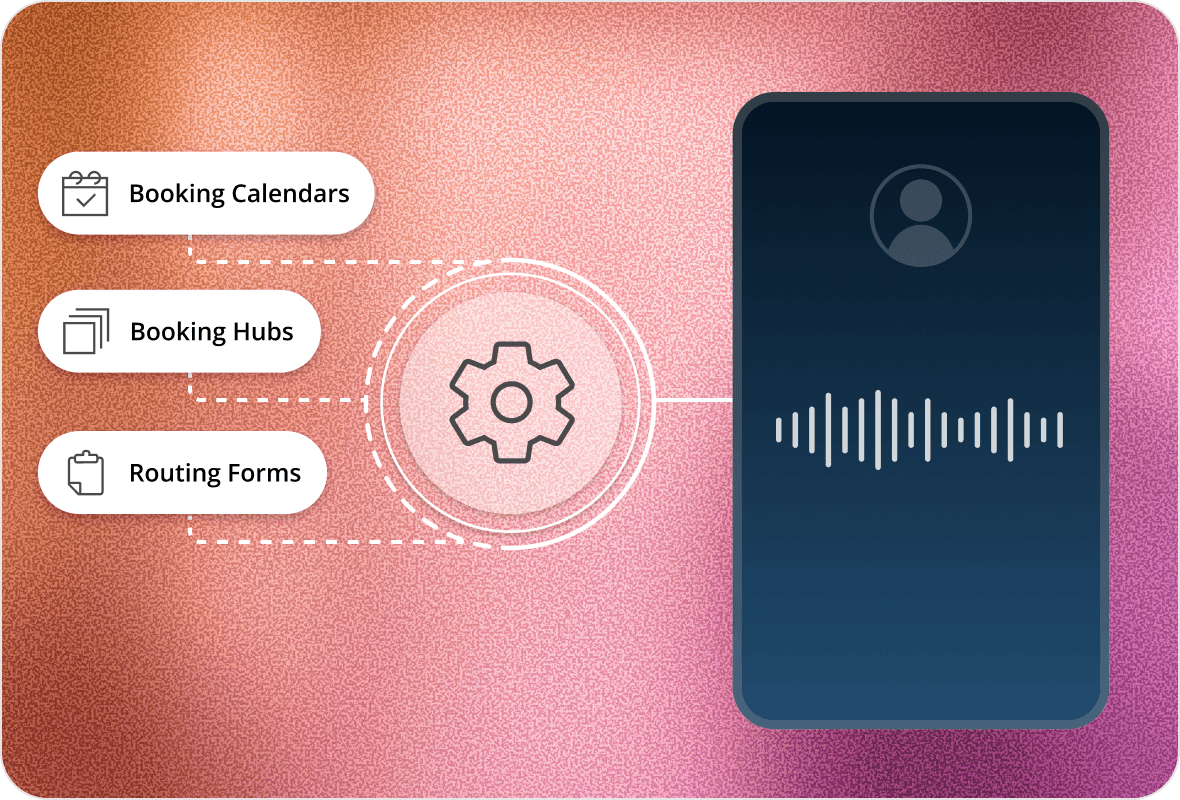
Phone calls remain the highest-intent lead source for strength coaches, but picking up during a coaching session is impossible. Deploying an AI Phone Agent solves this without missing calls. When an athlete or parent calls, the AI receptionist asks your customized screening questions, verifies eligibility, checks real-time availability, and schedules the consultation directly onto your calendar. On Route, callers are fully qualified before a slot is provided, whereas on Schedule, the call is booked first and intake details are captured immediately after.
Quick Setup Checklist for Automated Intake
- Define qualification criteria: List 3-4 essential questions (e.g., sport, training age, injury status, budget).
- Configure routing logic: Map qualified prospects to live consultation slots and unsuited leads to lower-tier products or resources.
- Connect calendar sync: Link Google Workspace or Microsoft 365 to allow single-engine real-time booking without double-booking windows.
- Set up phone forwarding: Forward unanswered calls to your dedicated AI Phone Receptionist line.
One technical detail worth knowing. When a tool checks calendar availability through an outside connection, there is a gap between showing a slot and writing it, and two athletes can be offered the same Saturday morning. Booking systems that check and write in the same engine do not have that gap. We explain the mechanics in our guide to double booking.
The outcome coaches notice first: you finish a Saturday session, look at your phone, and there are two qualified consultations already on the calendar that you had nothing to do with.
4. Build a real referral pipeline with physical therapists
Most coaches ask PTs for referrals. Almost none of them make it easy to send one.
The synergy is obvious once you see it. A physical therapist gets an athlete out of pain and cleared to return. What they usually cannot do, because of time, equipment, or scope, is rebuild that athlete to competitive speed and strength. That handover is where athletes get lost, reinjured, or both.
How to actually build it
- Offer a role, not a favor: "Send me referrals" asks the PT to do something for you. "I will be your return-to-play specialist" offers to solve a problem they already have.
- Give them something to hand over: A dedicated booking link specifically for their patients, going to a "Post-Rehab Assessment" rather than your general consultation. Different intake questions, different duration, different preparation on your side. If you work with several referral partners, Booking Hubs group these under one page so each clinic can have its own path without you maintaining separate systems.
- Report back: This is the part almost everyone skips and the part that actually compounds. Send the PT a short progress note at week four and week eight. Metrics, not adjectives. They find out their referral worked, which makes the next one automatic, and you have quietly demonstrated that you know what you are doing.
A pipeline built this way takes about three months to produce anything and then produces steadily. It is slower than social media and considerably more reliable.
5. Turn results into marketing assets
In strength and conditioning you have something most service businesses do not: measurable outcomes.
A four-inch vertical jump increase. Two tenths off a 40. A pitcher back to pre-injury velocity in eleven weeks. That is not a testimonial, it is evidence, and it converts differently.
Three things to do with it
- Document everything, with permission: Before and after numbers, timeline, and what you actually changed. The specificity is the persuasion. "Great coach, highly recommend" moves nobody. "Added 4 inches to my vertical in one off-season" moves every parent of a high school basketball player who reads it.
- Build a lead magnet that gives away something real: A pre-game mobility routine. A speed checklist. A return-to-throwing progression. It should be genuinely useful on its own, because a lead magnet that disappoints costs you more than no lead magnet at all.
- Connect the follow-up to a booking, not a reply: Feed those emails into a short sequence that shares two or three case studies, and end it with a link that books a consultation directly rather than inviting a response. Every step between interest and a confirmed time loses people.
The same intake logic from strategy three applies here. The link at the end of the email sequence should screen before it books, so you are not spending Tuesday evening on calls with people who were never going to buy.
Where to start
If you implement one thing this week, make it the intake system. It takes an afternoon, it costs nothing to test, and it makes the other four strategies workable rather than exhausting.
Niching takes a quarter to play out. Hybrid delivery needs programming work. Referral pipelines take three months. Case studies take a training cycle to produce.
Automated intake works the first time someone clicks the link.
OnceHub has a free Basic tier for single users that covers online booking. Paid plans start at $10/seat monthly for Schedule, $19/seat monthly for Route (which adds screening and conditional routing), and AI Phone Agents are available to manage phone bookings natively.
Frequently asked questions
How can I make more money as a strength and conditioning coach?
Stop selling hours and start selling outcomes. The three changes that move income most are narrowing to a specific niche so you can charge specialist rates rather than competing with gym memberships, adding hybrid or cohort delivery so one hour of your time serves more than one athlete, and removing the admin that eats the hours between sessions. That last one is where most coaches find time they did not know they had. OnceHub's free Basic tier handles essential booking, while Schedule ($10/seat/mo) and Route ($19/seat/mo) scale with advanced screening and AI Phone Agents.
What is the best way to get online coaching clients?
A combination of proof and speed. Documented results with real numbers convert far better than general claims, and a lead magnet that solves one specific problem earns the email address. The part most coaches get wrong is what happens next: a follow-up email inviting a reply adds a step, where a booking link that screens and schedules removes one. OnceHub's routing forms let you ask qualifying questions first, then show live availability only to athletes who fit what you coach.
How do I automate my personal training or S&C scheduling?
Put a screening form in front of your calendar rather than behind it. Three or four questions covering sport, training age, goals, and injury history, with the answers deciding what the athlete sees next. Qualified athletes get live availability and book immediately; everyone else gets redirected to a group program or a template. In OnceHub this runs through routing forms connected to your booking calendar, with buffers between sessions set once so nothing books back to back against your floor time. You can also deploy AI Phone Agents on the Route plan ($19/seat/mo) to screen callers by phone using the exact same qualification rules before offering a consultation slot.
How do strength coaches partner with physical therapists?
By offering to be their return-to-play specialist rather than asking for referrals. Give the clinic a dedicated booking link that goes to a post-rehab assessment with its own intake questions, so their patients can book without the PT having to broker an introduction. Then send progress reports at four and eight weeks. If you work with several clinics, OnceHub's Booking Hubs let each one have its own path under a single system rather than you juggling separate links.
How much should I charge for strength and conditioning coaching?
Price against the outcome and the alternative rather than against other coaches. A parent already spending over $1,000 a year on their child's primary sport, per Aspen Institute 2024 survey data, is evaluating you against that context rather than against a gym membership. Narrow positioning supports a higher rate because there is no cheap substitute for a specialist. Whatever you land on, screen before you book so you are not spending consultation slots explaining your rate to people out of range.
Do I need a website to run a coaching business?
Not to start. A booking link in your Instagram bio and email signature does more immediate work than a five-page site, because it converts interest into a confirmed session rather than into a page view. Most coaches are better off proving the offer with a booking page and a lead magnet first, then building the site later with revenue rather than before it with hope. OnceHub's free Basic tier covers that booking link with no cost and no card.
How do AI Phone Agents differ between Schedule and Route plans?
On the Schedule plan ($10/seat/mo), the AI agent schedules the meeting first and collects free-text booking responses after. On the Route plan ($19/seat/mo), the agent evaluates screening questions and qualifies callers before offering a consultation slot.
What is the best Smith.ai alternative for multi-coach practices?
The best Smith.ai alternative for multi-coach practices that need to qualify callers before booking is OnceHub's Route plan, which screens by phone and web using the exact same logic.