

Best AI Call Answering Services for Coaches: 2026 Guide
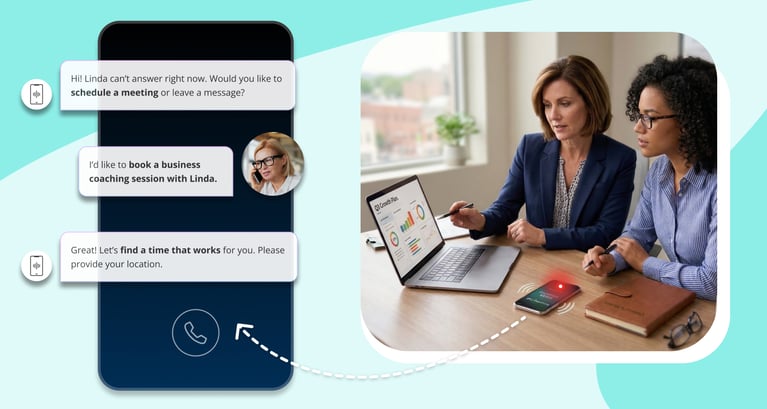
For coaches, every missed call is a potential client who never comes back. AI call answering services promise to fix that, but most fall into two categories: basic responders or full-service booking systems.
The right choice depends on how you run your business. If your goal is simply to capture inquiries, a lightweight solution may be enough. But if you want to qualify prospects and book calls automatically, you’ll need something more advanced.
TL;DR
AI call answering tools for coaches fall into two camps:
message-takers vs revenue-generating booking systems.
- If your goal is just capturing inquiries → basic AI responders work.
- If your goal is turning calls into clients → you need AI that qualifies and books calls instantly.
The core insight:
For coaching businesses, the real bottleneck isn’t missed calls — it’s missed bookings.
- Leads lose interest fast (minutes, not hours)
- Follow-ups create friction and drop-offs
- A transcript ≠ revenue, but a booked discovery call does
What actually works:
The most effective AI answering services:
- Qualify leads in real time
- Sync with your calendar
- Book discovery calls
- Send confirmations + reminders
Bottom line:
- Passive tools = cost center (more admin work)
- Active scheduling AI = revenue engine (captures demand instantly)
👉 The right choice depends on whether you want to manage inquiries or convert them automatically into booked sessions.
Unlike traditional services that act as passive message-takers, OnceHub operates as a purpose-built AI scheduling engine. It captures high-intent prospects, qualifies them dynamically, and securely books discovery calls directly to your calendar while you are busy in client sessions or even driving to a client’s place.
For coaches and consultants, every inbound call represents potential revenue, but also a severe interruption. Between client sessions, deep work, and personal time, answering every call (and turning it into a booked meeting) isn’t always feasible.
That's where AI call answering services like OnceHub come in. The best solutions don't just take messages or route calls; they actively qualify leads, handle real-time conversations, and book appointments directly onto your calendar. With 37% of coaching discovery call leads lost to scheduling friction alone, the real decision for any coaching or consulting business isn't which AI call-answering service to use — it's whether your solution passively takes messages or actively eliminates the drop-off.
In this guide, we compare the leading AI call answering services across these use cases — including tools like OnceHub’s Phone Agent — to help you choose the right fit for your business.
What Is an AI Answering Service and How Does It Work for Coaches?
An AI answering service uses conversational artificial intelligence to answer inbound phone calls, interact with callers using natural language, and perform administrative tasks.
Legacy answering services often trap callers in a simple "leave a message" loop, creating another administrative task for you to handle later. Modern AI systems are designed to drive the conversation forward. They process the caller's needs in real-time and guide them to a logical next step.
Instead of acting like a voicemail, a sophisticated AI system intelligently handles enquiries:
- Intent Detection: Recognizing if the caller is a current client needing support or a new prospect looking for services.
- Niche-Specific Information Capture: Asking tailored questions (e.g., "What is the primary goal of your leadership team right now?").
- Direct-to-Calendar Booking: Securing a commitment while the prospect is highly engaged.
Turn missed calls into booked meetings
Use our AI scheduling engine to capture high-intent coaching leads while you're in client sessions.
Why Coaching Workflows Differ From Traditional Businesses
Not all businesses handle inbound calls the same way. Most answering services were originally designed for transactional businesses (like plumbers or retail) where the goal is immediate resolution or quick dispatch.
Coaching and consulting operate on a completely different model built around time leverage, rigorous qualification, and structured conversations. That fundamental shift changes what an effective answering service must do:
- Protecting Deep Work: Consultants cannot afford interruptions during billable sessions or focused work blocks.
- Strict Pre-Qualification: High-ticket coaches need to filter out poor-fit leads before they ever reach the calendar, protecting their limited inventory of time.
- Reliance on Discovery Calls: The goal of an inbound call isn't resolution; it's securing a structured strategy session that can convert into a paid engagement.
- Solopreneur by Default: Coaching is predominantly a one-person business — without a team to absorb the admin overhead, the right operational stack isn't optional; it's what keeps a coach client-facing and revenue-generating.
What Coaches Need from an AI Phone Answering Service
Because coaching workflows are built around time protection and lead quality, the bar for an effective AI answering service is always set high. A call transcript doesn't generate revenue; a booked meeting does. The AI-based phone answering solution must execute a specific set of advanced functions, such as:
- Strict Lead Qualification: Asking about budget, timeline, and fit before offering access to your calendar.
- Seamless Calendar Synchronization: Coordinating availability across multiple calendars to prevent double-booking.
- Automated Booking for Discovery Calls: Locking in a future session during the call itself.
- Pre-Call Intake: Capturing key context so you enter each discovery call fully prepared.
- SMS Follow-Ups: Sending instant confirmations and reminders to drastically reduce no-shows.
Traditional Call Answering Service vs AI Call Answering Service with Scheduling Capability
This is the most critical distinction to make when evaluating software for your practice.
Scenario A: The Cost Center (Traditional Call Answering). A traditional service listens to a caller, transcribes the conversation, and sends you an email summary. This requires you to follow up. It is a passive activity. You are effectively paying a service to give you more administrative work.
Scenario B: The Revenue Engine (AI Scheduling). An AI scheduling call answering service captures inbound demand and secures it. When a high-intent prospect calls after reading your LinkedIn post, their motivation is at its peak — and it decays within minutes, not hours. Waiting for a callback is not a minor friction point; it is a revenue leak. Securing a firm time commitment on your calendar during that initial call is what actually drives revenue.
Best AI Call Answering Services for Coaches and Consultants
To find the right fit for modern consulting practices, we evaluated tools based on their fundamental design: booking capability, qualification depth, calendar intelligence, and pricing sustainability.
OnceHub: AI Scheduling with Native Calendar Integration
OnceHub is built as a real-time booking engine for inbound demand. Its calendar integration is native rather than connected through a third party, which keeps the booking step inside the same call flow.
- Inbound Call: A prospect calls while you are in a client session.
- Qualification: OnceHub's voice AI asks your custom pre-screening questions.
- Calendar Sync: The AI checks your real-time availability directly.
- Booked Session: The prospect selects a time, and the Discovery Call is confirmed.
Best suited for scheduling-led practices where booking a qualified call is the primary conversion event. For workflows that rely heavily on live human judgment during the call, a hybrid service may serve you better. See pricing.
Smith.ai: Best for Hybrid Call Triage
Smith.ai pairs AI with live receptionists, making it a strong option for practices that want a human in the loop for nuanced or complex calls. It handles broad call volumes well and is particularly suited to multi-service businesses where call intent varies significantly.
- Inbound Call: A prospect calls and is greeted by either an AI or a live receptionist, depending on your plan configuration.
- Qualification: Receptionists follow your custom intake script, escalating or routing based on call complexity.
- Scheduling: Appointments are booked via your preferred calendar tool through third-party integration.
- Follow-Up: Call summaries and next steps are logged and sent to your team after each interaction.
Best suited for practices that receive a high volume of varied inbound calls and want human oversight as a consistent layer in the process. See pricing.
Synthflow AI: Best for Highly Custom Intake Scripts
Synthflow gives technical users deep control over how their voice agent behaves and what it asks. It is designed for teams that want to build intake workflows from the ground up rather than work within a predefined structure.
- Inbound Call: A prospect calls and is handled entirely by a configurable AI voice agent.
- Qualification: The agent follows a custom script you design, with branching logic based on prospect responses.
- Scheduling: Via its Actions and Tool-calling features, Synthflow now supports near-native scheduling through direct API integrations with Cal.com or Calendly — booking is triggered seamlessly at the end of the qualifying flow.
- Flexibility: Voice, tone, and question sequencing are fully customisable at the prompt level.
Best suited for coaches who already run a deliberate tech stack and want precise control over how their AI agent sounds, what it captures, and how it connects to the tools they've already built around. See pricing.
Goodcall: Best for Basic Solopreneur FAQs
Goodcall is a straightforward AI receptionist built for small businesses that need reliable, always-on call handling for predictable enquiries. It is one of the faster tools to get running and requires minimal configuration.
- Inbound Call: A prospect calls and is greeted by an AI receptionist available 24/7.
- Qualification: The agent handles common questions — availability, services, location — based on information you provide upfront.
- Scheduling: Appointment booking is available through integration with standard calendar tools.
- Simplicity: Designed to be operational quickly, with a straightforward setup process suitable for solo operators.
It is worth noting that Goodcall is particularly strong for multi-location coaches or those running physical studios — think fitness instructors or wellness practitioners who need consistent front-desk coverage across sites. For digital-first or fully remote consultants, however, OnceHub is the stronger fit, built specifically around the complexity of virtual discovery calls, lead qualification, and calendar-driven conversion.
Best suited for independent practitioners who need consistent call coverage for routine enquiries without a steep setup investment. See pricing.
Quick Comparison: What Job is the Tool Fundamentally Designed to Do?
When comparing platforms, looking at shared features misses the bigger picture. You must evaluate the core structural job the tool was built to perform.
|
Platform |
Primary Job |
Scheduling Workflow |
Coaching Specific Fit |
Ease of Setup |
Revenue Impact |
|
OnceHub |
Active scheduling engine — converts inbound interest into confirmed sessions |
✓ Native scheduling, zero config overhead ✓ Verbal booking confirmation ✓ Missed-call SMS recovery ✓ Returning caller recognition ✓ Intake forms before calendar link ✓ CRM routing ✓ Multi-coach routing |
Ideal for solo coaches, group practices, and course sellers with discovery calls. |
✓ No additional setup beyond existing Booking Calendar configuration. |
Efficiently captures leads at peak intent with no drop-off from follow-up links. |
|
Smith.ai |
Human + AI triage — live receptionists handle nuanced or sensitive calls |
✓ AI greets, human confirms booking ✓ Human hand-off adds booking step ✓ Custom call scripts supported |
Strong fit for high-touch/executive coaching. Human warmth builds trust. Best for premium 1:1 coaches prioritizing personal tone. |
✓ Guided onboarding with script setup. |
Reliable when relationship quality on the first call outweighs booking speed. |
|
Synthflow AI |
Custom scripting engine — build-your-own voice agent with full control |
✓ Near-native scheduling (Cal.com/Calendly) ✓ Outbound follow-up calls ✓ Highly configurable for complex workflows |
Flexible for diverse intake designs. Best for coaches with a deliberate tech stack wanting full control. |
✓ Requires technical setup to build intake and booking flows. |
High potential when configured well; best for teams with resources to build/maintain custom workflows. |
|
Goodcall |
FAQ routing layer — answers common questions and captures basic contact info |
✓ Google and Outlook two-way sync ✓ Standard booking available ✗ No multi-coach routing or complex branching |
Handles routine inquiries reliably. Strong fit for multi-location coaches/physical studios. Best for straightforward, always-on call handling. |
✓ Simple to set up with minimal configuration. |
Well-suited when the primary goal is reliable call coverage rather than active lead conversion. |
How to Choose the Right AI Answering Service for Your Practice
Selecting the right tool isn't about finding the one with the most features; it's about removing friction from your daily consulting operations.
Before committing to a platform, evaluate your business against these core coaching bottlenecks:
- Protecting Client Sessions: Does the tool handle inbound calls without requiring you to step away from an active session?
- Discovery Call Qualification: Can the AI work through your specific pre-screening questions, coaching budget, commitment level, and primary business challenges, before offering a calendar slot?
- Complex Calendar Coordination: Coaches often juggle personal, client, and business calendars. Does the tool read real-time availability across all of them to prevent double-booking?
- Cost vs. Coaching LTV: Pay-per-minute models can spike unexpectedly during busy periods. Flat-rate SaaS models tend to be more predictable for growing consultancies.
- Setup Friction: How much technical lift does onboarding actually require? For solo coaches and small practices, a tool that demands developer configuration or custom scripting before it's usable is a signal it was built for teams — not solopreneurs.
Use Cases of AI Answering Services in Coaching and Consulting
Different consulting niches require different approaches to intake.
- Executive and Leadership Coaches: Benefit from discreet intake handling and the ability to manage complex, high-level schedules without manual involvement.
- Business and Management Consultants: Need systems that can capture B2B inbound leads and route them to the right team member based on project scope.
- Life and Health Coaches: Benefit from automatic booking of initial assessments while maintaining a professional, steady presence on more sensitive calls.
- Marketing and Agency Consultants: Rely on rapid qualification of a prospect's budget and timeline before committing time to a discovery call.
Benefits of AI Answering Services for Independent Professionals
Implementing an AI answering service shifts the administrative burden away from client delivery time. Here is how an active scheduling engine can change day-to-day operations for an independent practice:
- Uninterrupted Sessions: Inbound calls are handled automatically while you remain focused on your current session or deep work block, no voicemails to check, no calls to return.
- Capturing Intent at the Right Moment: When a prospect calls after engaging with your content, their motivation is at its highest. An AI scheduling engine that confirms a booking on that call captures the lead before follow-up friction sets in.
- Fewer Scheduling Back-and-Forths: Cross-referencing live availability and confirming a time verbally on the call removes the email exchange that typically follows an inbound enquiry.
- Consistent First Impression: Every caller receives the same responsive, professional experience, regardless of when they call or how busy the practice is.
- Smarter Business Management: Every call generates a structured record, qualification answers, booking status, and caller context, that feeds directly into your CRM or calendar. Over time, this creates visibility into lead patterns, conversion rates, and pipeline health that a missed call or voicemail never could.
Limitations to Consider When Evaluating Any AI Answering Service
Not every tool in this category is built for the same job. When assessing options, watch for these gaps:
- Transcripts Without Action: A call transcript is useful context, but it does not move a prospect forward. Look for tools that complete a booking step rather than just logging the conversation.
- Follow-Up Gaps: A tool that takes a message rather than confirming a time creates a follow-up task. The longer that gap, the greater the drop-off risk, particularly over weekends or busy periods.
- Calendar Limitations: Some tools cannot read across multiple calendars simultaneously, which creates double-booking risk for coaches managing several concurrent schedules.
AI Answering Service vs. Virtual Assistant for Consultants
Human Virtual Assistants bring genuine value for nuanced client relations and custom administrative work. AI offers different structural advantages in scheduling-specific environments:
- Availability: AI handles calls at any hour; VAs operate within set working hours.
- Pricing Predictability: SaaS-based AI tools carry a fixed monthly cost; VA arrangements are typically hourly and variable.
- Consistency: An AI agent follows your intake script precisely on every call, no missed qualification questions, no accidental bookings on blocked days.
The right choice depends on how much of your intake process benefits from human judgment versus consistent execution.
When Should a Coach Implement an AI Answering Service?
Consider making the switch if you are:
- Spending more than two hours a week following up with prospects who did not leave a voicemail or book a time.
- Losing inbound referrals and enquiries because no one was available to answer.
- Moving from a solo practice toward a small agency and needing a standardised intake process that scales without adding headcount.
- Noticing that high-intent prospects are going cold between the initial call and a confirmed booking time.
- Running paid campaigns or active outreach where every inbound call represents a meaningful acquisition cost you cannot afford to waste.
- Managing more than one calendar — personal, client, and business — and finding that coordination errors are creating friction for prospects trying to book.
- Approaching a revenue ceiling in your practice where the bottleneck is not lead generation but how efficiently inbound interest gets converted into scheduled sessions.
Conclusion
For coaches and consultants, the gap between a prospect calling and a session confirmed on the calendar is where revenue is won or lost. The tools in this category take different approaches to closing that gap, from human-assisted triage to fully automated booking flows.
The right fit depends on your practice structure, your clients, and how much of the intake process you want to automate. What matters most is that the tool you choose completes the job, not just answers the call.
Better scheduling starts here
Build a customized AI revenue engine for your consulting practice in minutes.
FAQ
What is the best AI answering service for coaches?
The right AI answering service depends on how your practice is structured. For scheduling-led practices where booking a qualified discovery call is the primary goal, a native scheduling engine like OnceHub is a strong fit. For practices that prioritise human presence on sensitive or high-touch calls, a hybrid service like Smith.ai may be more appropriate. The best starting point is identifying whether your priority is booking speed or call nuance.
Can an AI answering service book discovery calls directly to my calendar?
Yes. Platforms built around scheduling integrate directly with Google Workspace and Microsoft 365 to read your real-time availability and confirm appointments on the call — without manual follow-up or double-booking risk. The depth of that integration varies by platform, so it is worth confirming whether a tool uses native calendar sync or relies on third-party connections.
How does an AI answering service help consultants get more clients?
By removing the gap between a prospect's first call and a confirmed booking. When someone reaches out after engaging with your content or receiving a referral, their intent is at its highest in that moment. An AI service that qualifies and books on that same call captures the lead before follow-up delays erode interest. Tools that only take messages create an additional step — and an additional opportunity for the prospect to disengage.
Will an AI answering service integrate with Google Calendar and Zoom?
Most scheduling-focused platforms integrate with Google Calendar, Microsoft Outlook, and video conferencing tools like Zoom or Microsoft Teams. This allows the AI to find available slots in real time and generate unique meeting links automatically. Check whether the integration is native to the platform or requires a third-party connector like Zapier, as this can affect reliability and response speed.
What happens when a prospect calls outside of business hours?
AI answering services operate around the clock, so a prospect calling at any hour receives an immediate response rather than a voicemail. Depending on the platform, the AI can qualify the caller, check your availability, and confirm a booking — all without anyone on your team being available. This is particularly valuable for coaches who receive inbound interest from different time zones or run paid campaigns that generate calls at unpredictable hours.
Do I need technical skills to set up an AI answering service?
This varies significantly by platform. Some tools are designed to work within your existing calendar configuration with minimal additional setup. Others — particularly those that allow fully custom voice agents and intake scripts — require technical knowledge or developer support to configure properly. If you are a solo practitioner without a technical team, it is worth prioritising platforms that are operational quickly over those that offer more flexibility at the cost of complexity.
How do I know if my practice is ready for an AI answering service?
A few clear signals suggest the timing is right: you are regularly missing inbound calls during client sessions, prospects are going cold between their initial enquiry and a confirmed booking, or you are scaling beyond a solo practice and need intake to run consistently without manual oversight. If your current process depends on you being available to answer the phone or return calls promptly, an AI answering service removes that dependency.
Can an AI answering service handle pre-screening questions before booking?
Yes. Most platforms in this category allow you to configure qualification questions that the AI works through before offering a calendar slot. Common examples include coaching budget, availability, primary goals, and how the prospect heard about you. The depth of this capability varies — some platforms support simple linear scripts while others allow branching logic based on the prospect's responses.
Editorial Note: Pricing information for the products mentioned in this article is subject to change and may vary based on promotions, regional availability, or plan updates. Readers are encouraged to refer to the respective official pricing pages for the most current details.
This article is written and reviewed by the editorial team at OnceHub. As such, it includes references to OnceHub products where relevant to the topic, alongside other market solutions, to provide a structured, research-informed comparison for readers evaluating their options.
Better scheduling starts here
No credit card required